


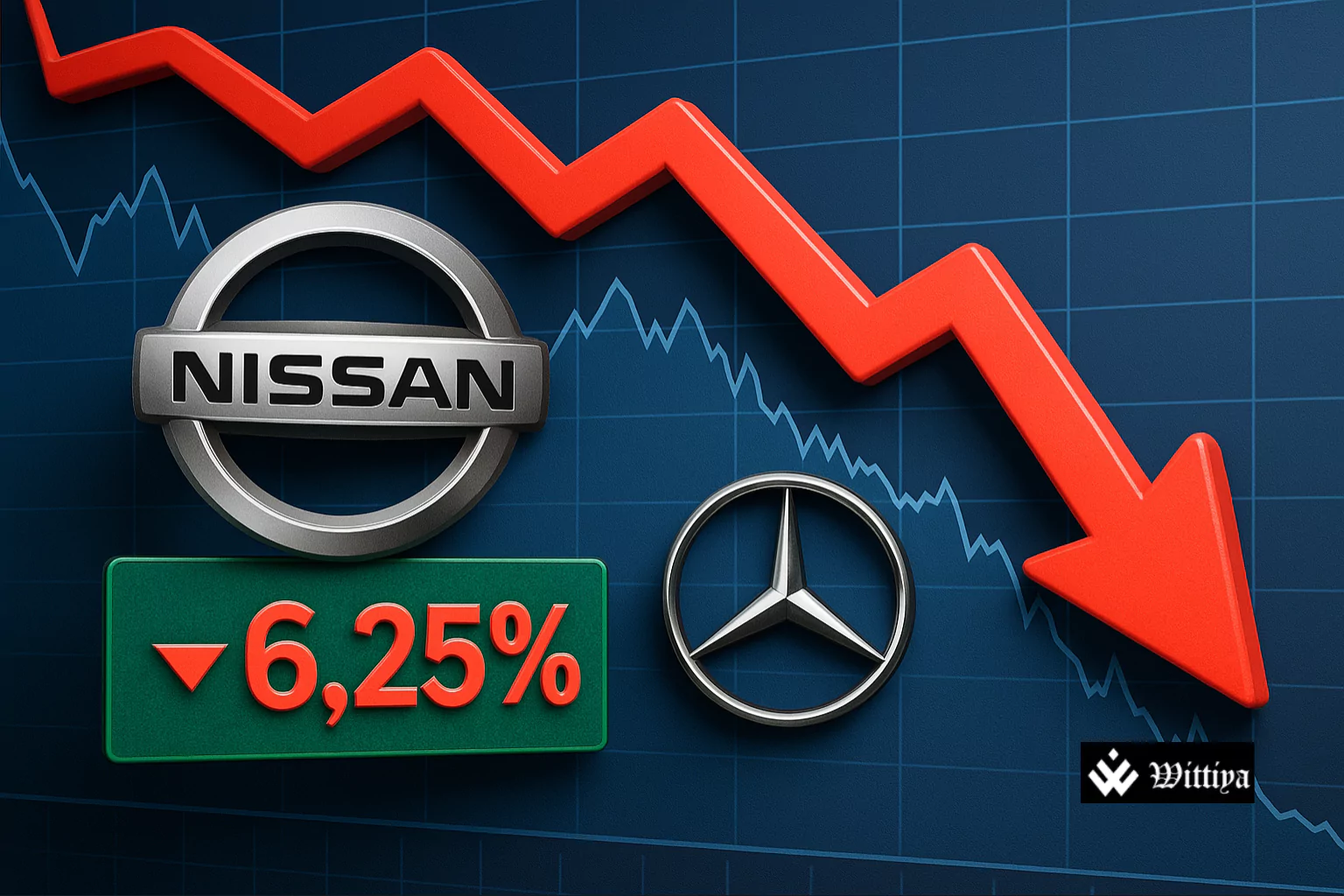
Nissan shares fall over 6% as Mercedes-Benz exits 3.8% stake amid restructuring, tariffs, and EV competition.
Shares of Nissan Motor, one of Japan’s top car-makers, dropped more than 6% on Tuesday after the pension fund of Mercedes-Benz announced plans to sell the 3.8% stake it held in the company, worth about $346 million.
Initially, Nissan’s shares that are listed in Tokyo decreased by 6.7% before cutting the losses and trading at a level about 6% lower. The decision to divest comes as the automaker deals with internal problems, such as declining sales, tariffs in the US, and the shift that is taking place in the industry toward EVs. In addition, the competition from Chinese manufacturers in this sector is fierce.
Nissan’s second-largest shareholder after Renault was the one who commented on the matter the most. The parent company of Mercedes-Benz, holding 3.8% in the Japanese automaker, said the sale of the shares was a step towards cleaning the portfolio, emphasizing that the shares held in the pension trust since 2016 were not of strategic use. Of the total volume of shares, 2.7% were accounted for by Mercedes-Benz, while the share of Daimler Truck was almost 93%.
The disposal puts more pressure on Nissan, which is facing a lot of challenges:
- In May 2025, the company made known its intentions to eliminate 11,000 work positions and close seven factories as stage one of a major restructuring plan.
- Negotiations between Honda and Nissan for the creation of the world’s third-largest automaker were temporarily suspended in February 2025.
- The tariffs that had been imposed at 25% were later brought down to 15% in July 2025, thus giving only a little elbow room to the Japanese car industry.
Nissan CEO Ivan Espinosa has stated over and over that the company should concentrate first of all on stabilizing operations and then on making the transition to EV profitable. Despite all the efforts, Nissan’s shares have dropped by more than 29% since the beginning of the year which can be interpreted as a sign of caution on the part of investors given the situation in the sector as a whole.
READ MORE ON