






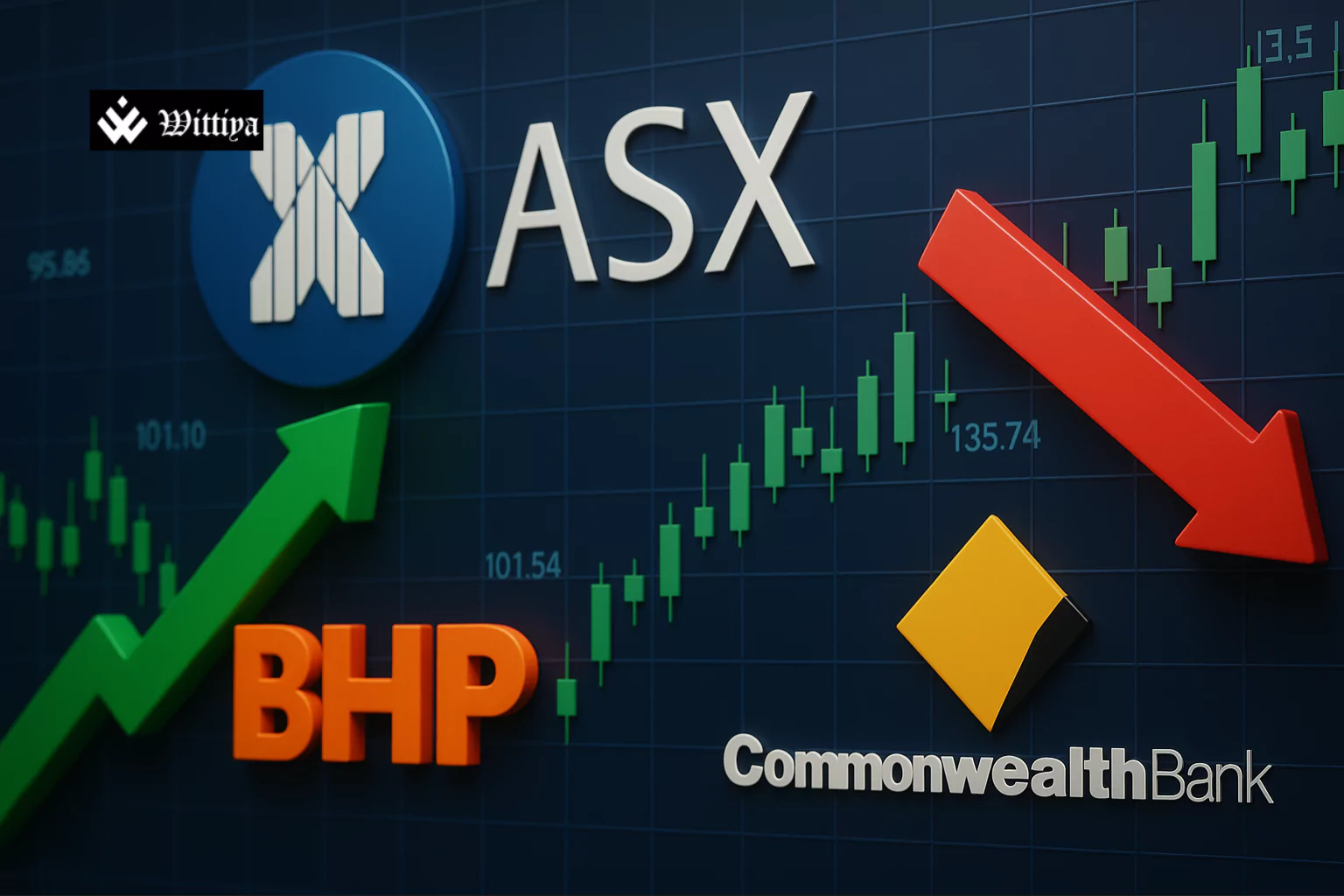
Australian shares closed flat as profit-taking in banks such as Commonwealth Bank of Australia offset a strong rebound in mining stocks like BHP and Rio Tinto. The S&P/ASX 200 hovered just below record highs, driven by a potential sectoral rotation.
Australia’s stock market remained largely unchanged on July 4, as a strong rally in mining stocks was offset by profit-booking in financials, particularly banks. The S&P/ASX 200 index settled at 8,595.80—just 1.9 points below its all-time closing high from the previous session.
Investors showed renewed interest in undervalued mining stocks, reversing a long trend of underperformance relative to financials. The mining sub-index surged more than 3% during the session, marking a three-week high.
Leading the charge was mining giant BHP, which climbed 5.6%—its most robust performance since January 2021. Peer Rio Tinto also posted solid gains, advancing 1.8%, reflecting optimism around Chinese demand for Australian iron ore.
Lochlan Halloway, Equity Market Strategist at Morningstar, commented, “It’s too early to call a full sector rotation, but miners present far better value than banks right now.”
Despite the mining surge, financials were the biggest drag on the benchmark index, falling over 1%. The Commonwealth Bank of Australia (CBA) led the decline, losing 2.2% and extending its losses to over 6% since hitting a record high last week.
“After such a strong rally in banks, it’s understandable some investors are locking in profits,” Halloway added, noting a 50% surge in bank stocks over the last two fiscal years.
In other sectors, consumer discretionary stocks dropped 1.1%, while energy stocks gained 0.8%. IPO activity was notable as GemLife Communities, a retirement resorts operator, debuted strongly—rising 4.1% in its first session, marking Australia’s largest IPO of the year.
Meanwhile, across the Tasman, New Zealand’s S&P/NZX 50 index declined 0.6% to close at 12,704.48, snapping a five-day winning streak.
The market’s mixed signals reflect growing investor uncertainty around valuation and sector momentum, particularly amid shifting interest in commodity-driven equities.