


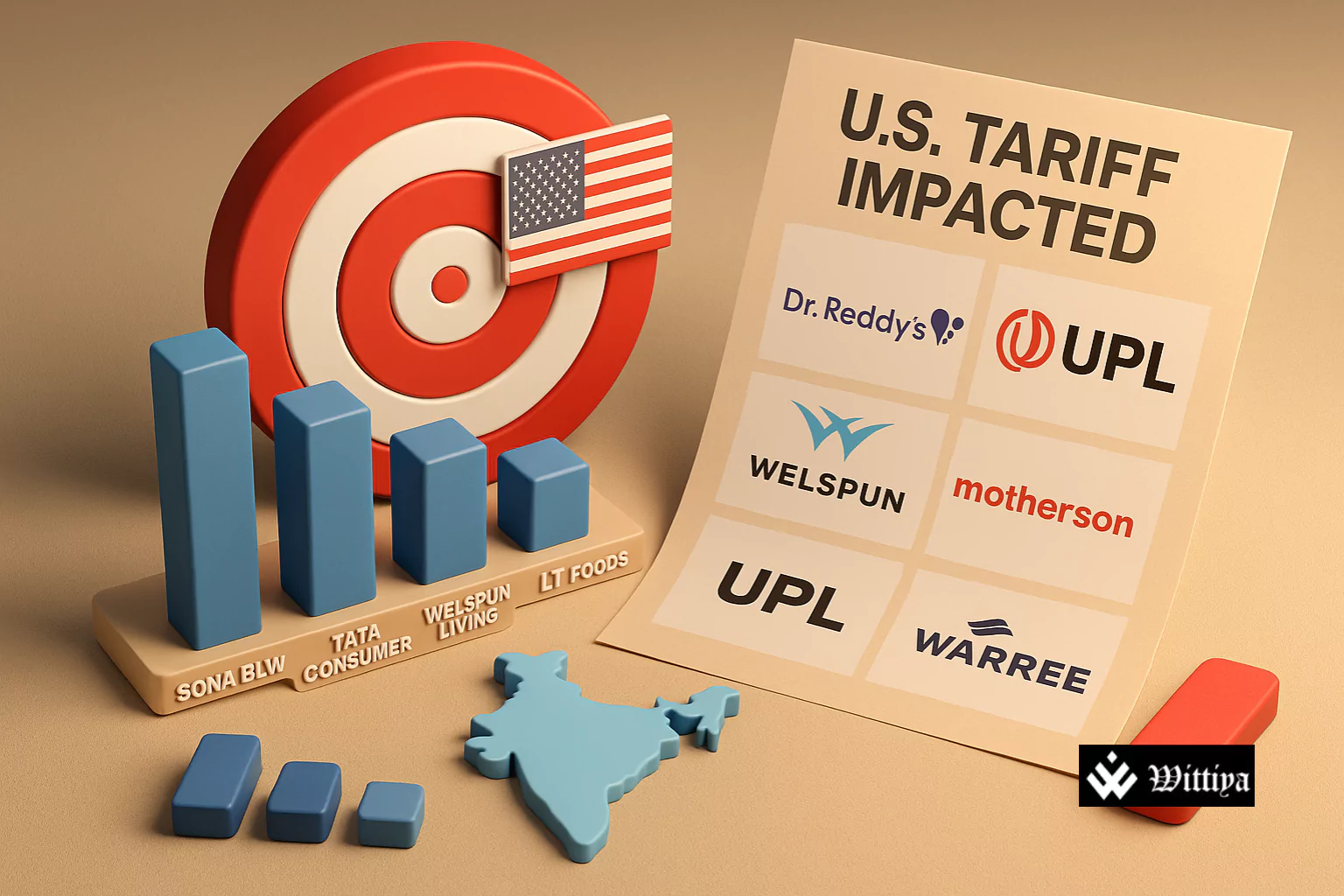
With the United States imposing 25% tariffs on a wide range of Indian imports, the focus has shifted to publicly listed Indian companies most reliant on U.S. revenues. Sectors such as auto components, chemicals, textiles, and seafood exports now face margin pressures, volume loss, and competitive disadvantages. While pharma is currently shielded, geopolitical risks persist. Here’s a detailed breakdown of sectoral exposure and the companies that could see the sharpest impact.
With the U.S. imposing 25% tariffs on a broad set of imports from India, investor attention has swiftly turned to companies most exposed to the American market. The United States remains India’s top export destination, accounting for 17.7% of India’s $81 billion merchandise exports in 2024. The sectors most at risk span from auto components to textiles and chemicals, all of which have a sizeable footprint in the U.S. market.
Why This Matters
While India has diversified its export markets over the years, a significant share of revenue for many listed Indian companies still flows from the United States. Tariffs will reduce pricing competitiveness, impact volume growth, and potentially dent EBITDA margins. Let’s break down the sectors and companies most vulnerable to these new U.S. trade barriers.
1. Auto and Auto Ancillary Companies
The auto sector has deep ties with U.S. OEMs and aftermarket networks. Component suppliers and manufacturers will be directly hit by increased costs, squeezing margins and reducing order volumes.
| Company Name | US Revenue Share (%) |
| Sona BLW | 40% |
| Ramkrishna Forgings | 27% |
| Bharat Forge | 25% |
| Tata Motors | 23% |
| Samvardhana Motherson | 18% |
| Balkrishna Industries | 18% |
| Sansera Engineering | 9% |
| Apollo Tyres | 3% |
These companies export critical drivetrain parts, precision forgings, and tires. The tariff impact will vary depending on long-term contracts, but near-term pressure is inevitable.
2. Pharma Companies (Low Immediate Risk)
Pharma has been excluded from the current tariff list. However, since the U.S. is the largest market for Indian pharma exports, it’s important to assess exposure for potential future regulatory shifts.
| Company Name | US Revenue Share (%) |
| Gland Pharma | 50% |
| Aurobindo Pharma | 50% |
| Dr. Reddy’s | 45% |
| Lupin | 38% |
| Glenmark Pharma | 35% |
| Sun Pharma | 30% |
| Cipla | 28% |
| Torrent Pharma | 9% |
So far, pharma remains safe, but increasing geopolitical tension could lead to non-tariff barriers such as FDA scrutiny or pricing regulations.
Also Read: Made in India, Taxed in America: Which Indian Sectors Will Bleed the Most?
3. Chemical Sector
Chemicals are already under scrutiny globally due to environmental compliance, and tariffs further compound cost pressures.
| Company Name | US Revenue Share (%) |
| UPL | 25% |
| SRF | 20% |
| Jubilant Ingrevia | 9% |
Other companies with significant U.S. exposure include:
- Aarti Industries
- PI Industries
- Navin Fluorine
- Deepak Nitrite
- Vinati Organics
- Alkyl Amines
- Gujarat Fluorochemicals
These companies export a range of specialty and agrochemicals, crucial for pharma, crop sciences, and electronics.
4. Textile & Apparel
The U.S. accounts for nearly 28% of India’s textile exports, making this sector particularly vulnerable to duties that could trigger loss of orders to Vietnam, Bangladesh, or Mexico.
| Company Name | US Revenue Share (%) |
| Himatsingka Seide | 83% |
| Welspun Living | 63% |
| Alok Industries | 45% |
| Trident | 38% |
| Arvind | 37% |
| KPR Mill | 19% |
Margins are already under pressure from cotton price volatility and sluggish global demand. Tariffs will only deepen these woes.
5. Seafood Exporters
The U.S. is a key market for Indian shrimp and seafood exporters, and tariffs here directly threaten earnings.
| Company Name | US Revenue Share (%) |
| Apex Frozen Foods | 63% |
| Waterbase | 40% |
| Avanti Feeds | 14% |
The sector is already grappling with higher freight costs and stringent quality checks. A 25% duty could derail recovery and force a pivot to other geographies like Japan or the Middle East.
Also Read: Markets Defy Tariff Tensions with a Stunning 500-Point Rally
6. Consumer and FMCG
Although relatively low in percentage terms, companies like LT Foods and Tata Consumer Products have established a steady U.S. retail presence.
| Company Name | US Revenue Share (%) |
| LT Foods | 39% |
| Tata Consumer | 12% |
| KRBL | 10% |
The primary exports include rice, tea, and packaged goods. The tariff impact could erode competitiveness against Southeast Asian exporters.
7. Energy & Renewables
Indian renewable energy firms exporting modules or components could also be at risk, especially as U.S. inflation and IRA benefits favor domestic players.
| Company Name | US Revenue Share (%) |
| Waaree Energies | 50%+ |
| Premier Energies | 1% |
In addition, traditional oil & gas companies could face indirect pressure due to geopolitical tensions with Russia.
The 25% U.S. tariff is a wake-up call for Indian exporters and investors. It threatens to trim margins, impact capacity utilization, and create price-driven substitution across key sectors. While diversified revenue streams and long-term contracts may shield some companies temporarily, the strategic risk is real—and markets will price it in.
READ MORE ON