


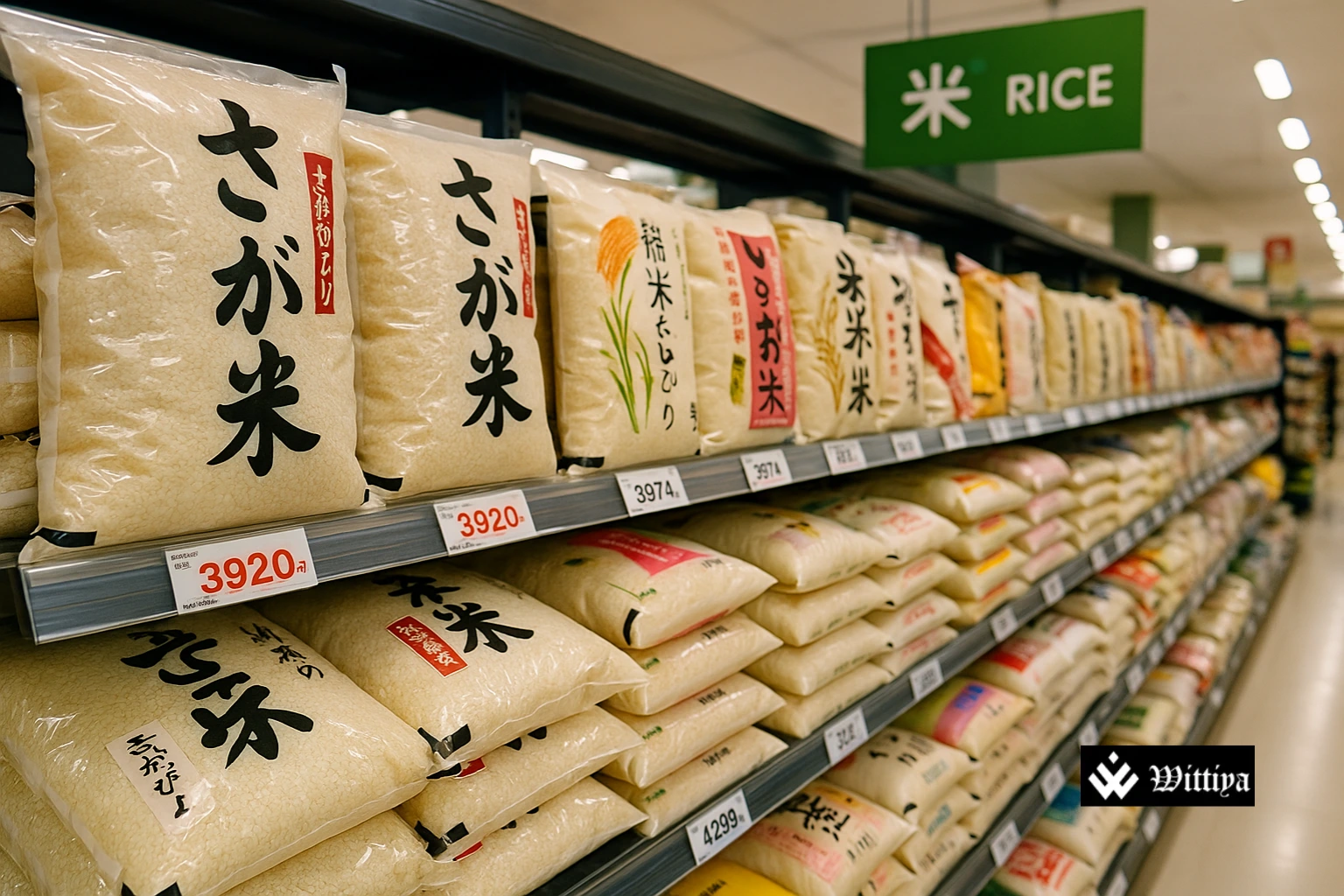
Japan’s rice crisis appears to be easing as prices dip below 4,000 yen for the first time since March. After months of surging costs and supermarket shortages, recent government intervention and rice imports from the United States and South Korea are stabilizing the market. However, concerns about price and quality persist among consumers as branded rice remains costly, and the supply recovery remains uneven across the country.
The rice shortage that gripped Japan for months appears to be easing, as retail prices begin to stabilize and rice stocks reappear on supermarket shelves. Data from the Ministry of Agriculture, Forestry and Fisheries (MAFF) revealed that as of the week ending June 15, the average price for a 5-kilogram bag of rice had dipped to 3,920 yen (USD 27.03). This marks the first time since early March that prices have fallen below the 4,000-yen mark.
The development aligns with the target set by Prime Minister Shigeru Ishiba, who had publicly declared in May that rice prices needed to fall into the 3,000-yen range. Ishiba had taken personal responsibility for the issue amid growing public pressure over inflation and food shortages.
The crisis began with a poor 2023 harvest and was further fueled by a surge in tourism demand, pushing prices to historic highs earlier in 2024. According to a Tokyo resident, Yoichi Ryu, “The increase was very drastic this year… prices were going up a couple hundred yen almost every day.”
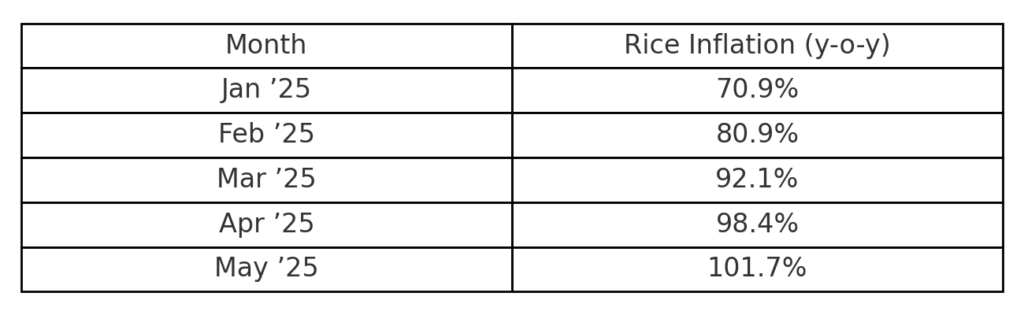
Rice prices in May had doubled year-on-year — a 101.7% spike — marking the sharpest increase in over 50 years, according to government statistics.
The National Supermarket Association of Japan confirmed that the situation is improving, citing the release of government stockpiles and the arrival of imported rice from the United States Department of Agriculture and South Korea’s The O Global. On June 6, supermarket chain Aeon began selling California rice, and in April, Japan imported South Korean rice for the first time since 1999.
A recent contract between The O Global and Japanese retailers includes the export of 200 tons of South Korean rice — the largest private export volume for general consumer sales between the two countries, according to the Korea Times.
Despite these developments, the recovery remains inconsistent. Professor Roy Larke of JapanConsulting.com noted that while larger chains have been restocked, smaller stores in Tokyo continue to experience shortages. “Some chains don’t seem to be having a problem, but regional disparities exist,” he said.
Even as rice becomes more available, prices remain elevated and concerns over quality persist. Many retailers still hold unsold premium rice, and stockpiled rice from government reserves — often older and less flavorful — has drawn skepticism.
“Shoppers are worried about the taste,” Larke added, noting that aged rice lacks the freshness of shinmai (new rice), a term reserved for rice harvested and packaged by December 31 of the same year. Once past this period, the rice becomes komai (old rice), and some government reserves now date back to 2021, jokingly called ko-ko-komai (old-old-old rice) by consumers.
Bank of Japan (BOJ) Governor Kazuo Ueda acknowledged the spike in food inflation at the BOJ’s June meeting, attributing it to rising import costs and rice prices. “We expect such pressures to dissipate,” Ueda said, signaling cautious optimism.
While the worst of the rice shortage may be behind Japan, the road to full recovery appears uneven. Affordability and quality will continue to shape consumer behavior as the country navigates ongoing food inflation challenges.