






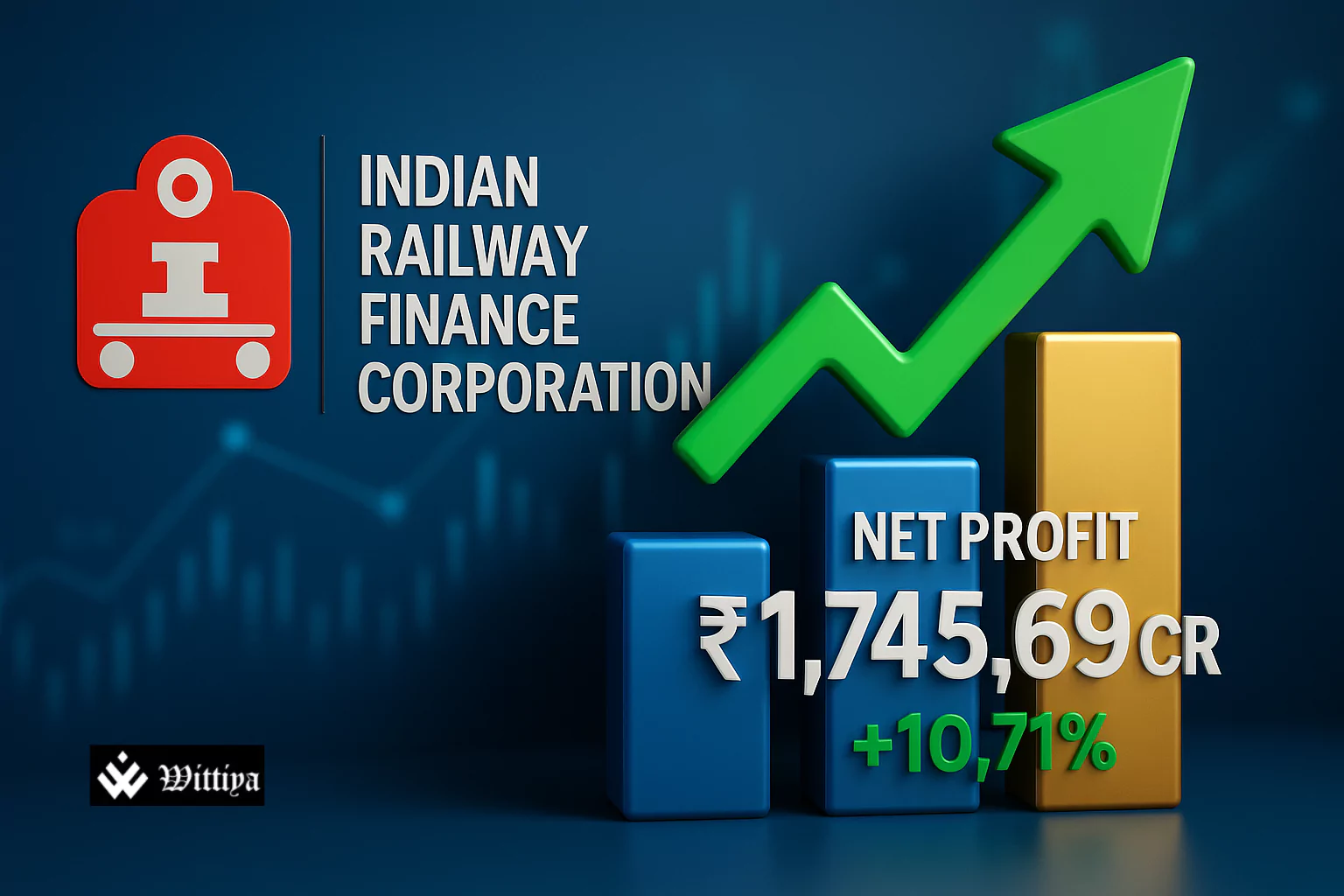
India’s Indian Railway Finance Corporation (IRFC) has posted a 10.71% rise in standalone net profit for Q1 FY26, backed by steady sales growth and stable margins.
The Indian Railway Finance Corporation (IRFC), a key financing arm of the Indian Railways, has reported a 10.71% year-on-year increase in its standalone net profit for the first quarter ended June 30, 2025. The net profit stood at ₹1,745.69 crore, compared to ₹1,576.83 crore in the corresponding quarter of the previous fiscal.
The company’s total standalone revenue rose 2% to ₹6,901.07 crore, up from ₹6,765.63 crore a year earlier, reflecting continued operational strength despite tight economic and capital markets.
IRFC’s Operating Profit Margin (OPM) remained nearly unchanged at 99.53%, indicating efficient cost management and the company’s robust leasing model. Profit before depreciation and tax (PBDT) rose to ₹1,747.02 crore, up 11% from ₹1,578.42 crore in Q1 FY25.
With a steady top-line expansion and strong bottom-line performance, IRFC continues to demonstrate its resilience as a specialized financial institution catering to the railway infrastructure sector. The company has consistently played a critical role in mobilizing capital for Indian Railways’ capacity expansion and modernization projects.
Also Read: Railway Rally Derails: Market Sell-Off Slams Sector
Analysts observe that IRFC’s dependable cash flows, underpinned by long-term lease arrangements with Indian Railways, allow the corporation to maintain high margins and credit stability, even during periods of macroeconomic uncertainty.
The quarter’s results are aligned with the firm’s long-term trajectory of growth and operational discipline, positioning it as a key pillar of railway-focused infrastructure financing in the country.
Shares of IRFC remained stable ahead of the earnings announcement, reflecting investor confidence in its business fundamentals and public-sector backing.
IRFC’s performance in the June 2025 quarter reinforces its strategic role in India’s infrastructure financing ecosystem and signals continued investor interest in state-backed, dividend-yielding financial instruments.
READ MORE ON