





Despite earlier concerns, the United States’ effective tariff rates under former President Donald Trump’s trade policies appear to be settling below feared levels, easing Wall Street’s recession anxieties and giving the Federal Reserve more room for cautious optimism.
Fears of a steep economic downturn triggered by trade tensions are beginning to fade across Wall Street, as tariff rates imposed by the United States appear to be stabilizing below initial worst-case expectations.
According to leading economists and financial strategists, the effective tariff rate—now expected to settle between 15% and 20%—is significantly lower than the 25% or higher range that loomed large following the April announcement by former President Donald Trump. Although still above early-year levels, this shift has helped cool widespread recessionary concerns.
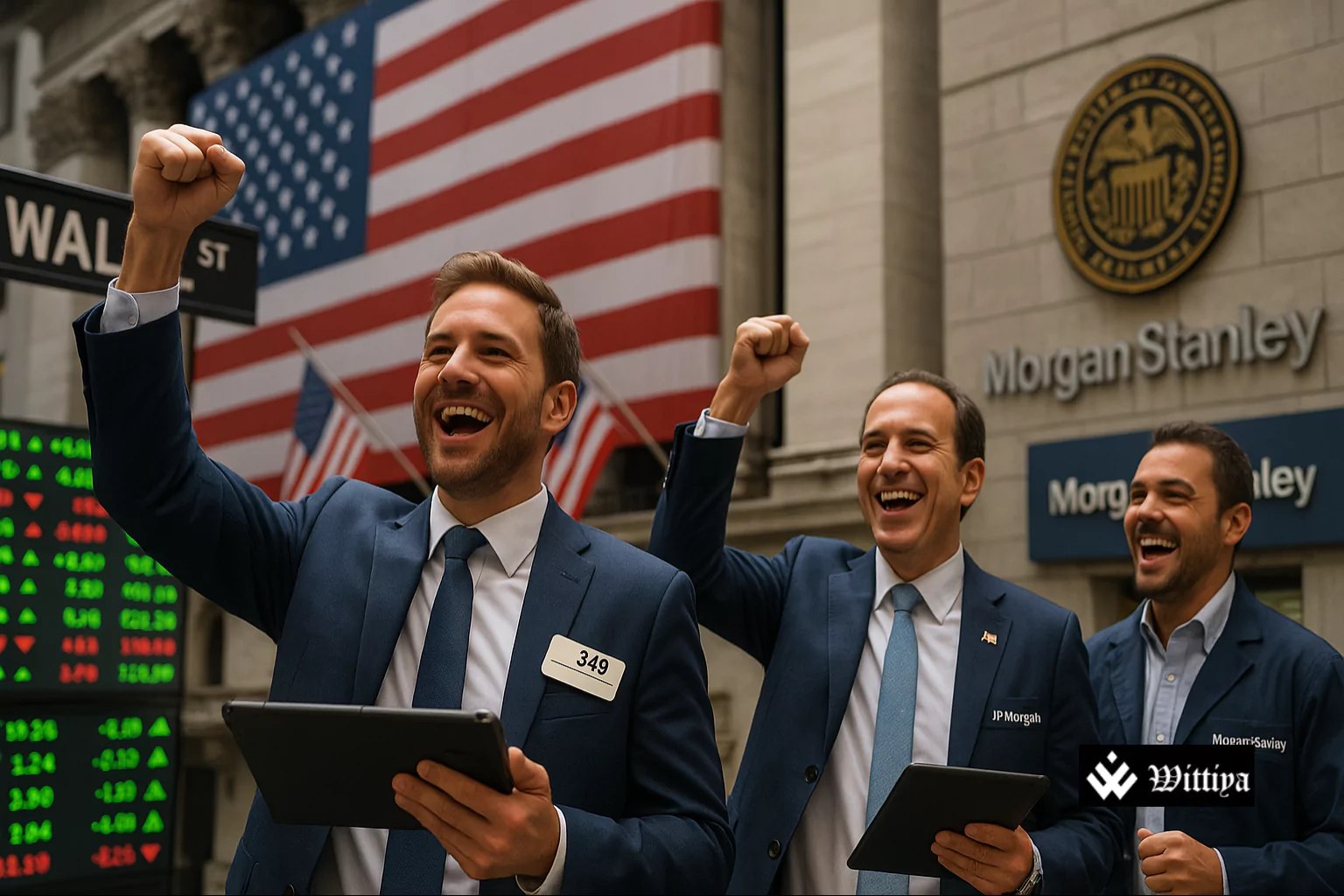
Strategists at JPMorgan Chase recently revised their recession risk estimates downward, citing moderating inflationary pressures and a relatively supportive global growth environment. “Tariffs are essentially a tax on U.S. imports, but the drag appears manageable given current growth dynamics,” stated the bank’s chief economist.
Also Read: Wall Street Feels the Earthquake of a Renewed U.S.-China Clash
In tandem, Morgan Stanley has also noted that while trade controls may hinder growth, deregulation and prior fiscal measures are providing enough support to prevent an outright contraction. Their current outlook points toward slow growth and persistent inflation, but not a technical recession.
The Federal Reserve is closely monitoring the trade developments. With the next interest rate decision on the horizon, stable inflation amidst rising tariffs could influence policy direction. Market expectations suggest a potential rate cut as early as September, particularly if growth signals weaken.
Economists also highlight that the trade environment has shifted from aggressive posturing to more measured negotiations. Although issues with key U.S. trade partners remain unresolved ahead of the August deadline, early signs of cooperation have reduced the likelihood of an immediate escalation.
Despite that, risks are not off the table. A reintensification of trade conflicts or further tariff hikes could still tip the economy toward a mild slowdown, though experts stress the probability has diminished.
Financial analysts are now positioning themselves for a scenario where tariffs persist but do not drastically undermine broader economic stability. As the Fed recalibrates its stance and global trade stabilizes, Wall Street appears to be regaining its footing—at least for now.
READ MORE ON