


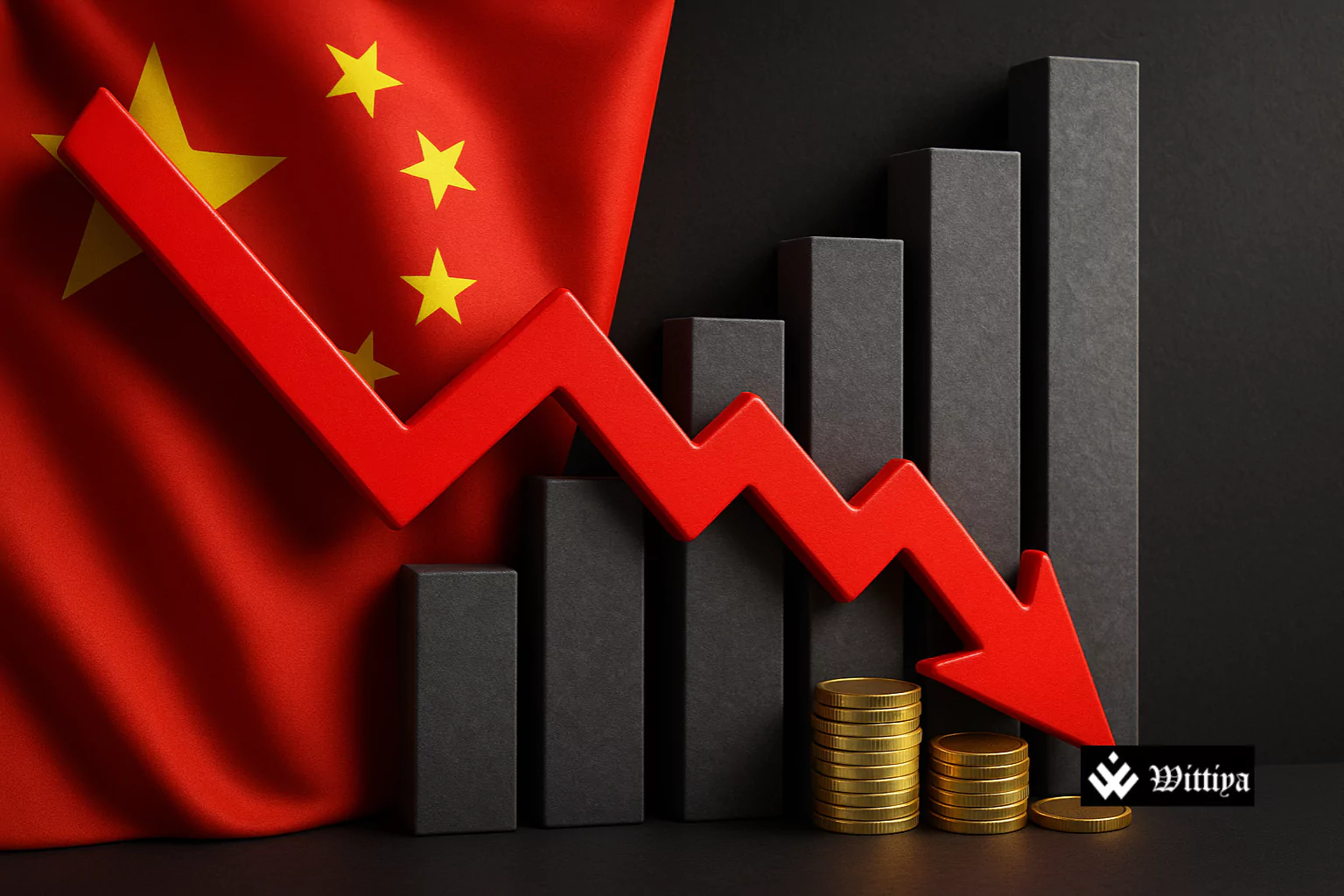
China’s economy slowed in July 2025, with retail sales, industrial output, and fixed-asset investment missing forecasts. Weak domestic demand, a slump in property investment, and extreme weather weighed on growth, raising concerns over Beijing’s 5% full-year target.
China’s economy showed fresh signs of strain in July 2025, as multiple growth indicators fell short of expectations, raising concerns about the country’s ability to sustain its annual growth target of 5%.
Data from the National Bureau of Statistics revealed that retail sales grew just 3.7% year-over-year in July, well below the 4.6% expected and slowing from June’s 4.8%. The weak consumer spending highlights persistent domestic demand challenges, despite earlier government efforts to stimulate consumption.
Meanwhile, industrial output rose 5.7% from a year earlier, marking its slowest pace since November last year. Analysts had expected closer to 5.9%, reflecting how external headwinds and domestic policy constraints are curbing factory activity.
Also Read: China’s Bond Market Cracks Under the Weight of Equity Fever
Investment activity also softened. Fixed-asset investment expanded only 1.6% in the January–July period, compared to forecasts of 2.7%. Within that, property investment contracted sharply by 12%, worsening from earlier months. The property sector, once a key growth driver, continues to drag overall momentum, with developers facing weak demand and limited financing access.
Extreme weather added further strain. Record-high temperatures, heavy rains, and flooding disrupted factory operations and construction activity across multiple regions. These climate-related shocks compound structural challenges, leaving industries vulnerable to volatility.
Despite these headwinds, China’s economy expanded 5.3% in the first half of the year, keeping it broadly aligned with Beijing’s annual target. However, economists caution that the fading effects of government stimulus and pre-emptive trade gains may weigh more heavily in the second half.
The government has also maintained policies to rein in excessive industrial capacity, particularly in steel and coal. While these measures are aimed at stabilizing long-term growth and profitability, they are contributing to a near-term slowdown.
Unemployment trends provide further warning signs. The urban jobless rate edged up to 5.2% in July from 5% in the prior months, while youth unemployment excluding students remains above 14%, reflecting persistent labor market stress.
With risks of undershooting the 5% growth target mounting, markets will watch closely for fresh policy support in the coming months. A balanced approach between stimulus and structural reform will be critical in determining whether China can stabilize growth while avoiding financial imbalances.
READ MORE ON