






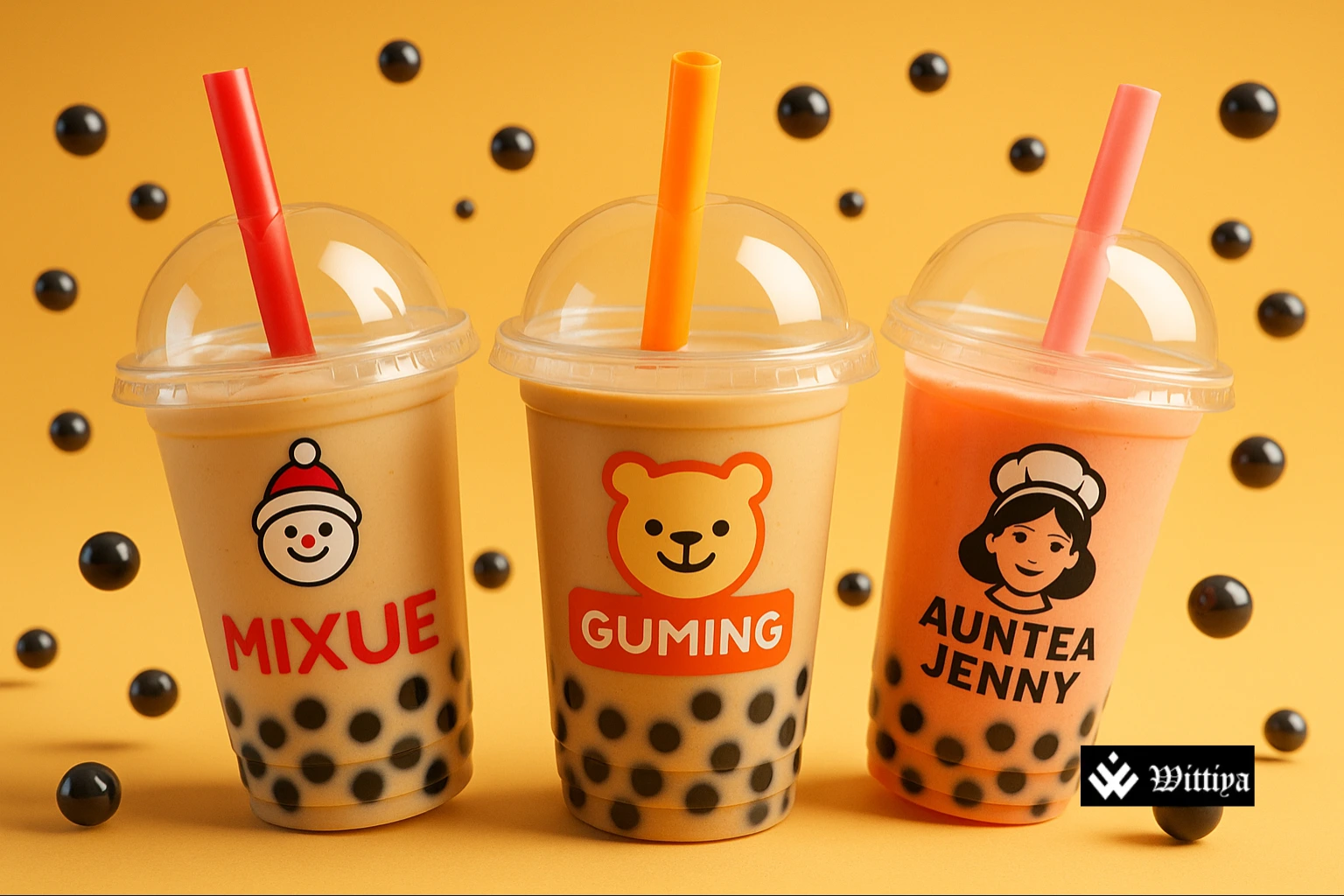
China’s bubble tea market has grown into a multi-billion-dollar industry, driven by domestic consumption and franchising. Leading chains have raised hundreds of millions through IPOs, but rising costs, store closures, and global expansion challenges may test the sector’s staying power.
Industry Growth and Market Size
Bubble tea has evolved from a niche beverage into a mainstream industry in China. The global market is projected to grow from $2.83 billion in 2025 to $4.78 billion by 2032, according to Fortune Business Insights, reflecting robust consumer demand. Domestic Chinese consumption is the backbone of this growth, as younger generations increasingly favor customizable, playful drinks.
This year, three major Chinese bubble tea chains—Mixue Group, Guming Holdings, and Auntea Jenny—successfully listed in Hong Kong, collectively raising over $700 million. Investors are betting on China’s expanding consumer market, especially sectors less vulnerable to international trade disruptions such as U.S. tariffs.
Franchising: Engine of Expansion
Franchising is the cornerstone of China’s bubble tea model. Mixue Group, the sector heavyweight, operated over 46,000 stores worldwide by the end of 2024, surpassing global giants like McDonald’s, Starbucks, and Subway in outlet count. Ultra-low pricing and high-volume sales, combined with franchise fees and supply agreements, allow parent companies to scale rapidly.
Franchisees bear operational costs, including rent, labor, and utilities, and typically recover their investment within 18–24 months. Despite rapid expansion, the closure rate for new outlets hovers around 20%, highlighting the challenges of maintaining consistent quality and avoiding cannibalization of sales in densely saturated markets.
Also Read: Lahori Zeera’s Surge Prompts Coca-Cola to Double Down on RimZim
Challenges of Profitability and Overseas Expansion
While domestic growth remains strong, sustaining profitability is increasingly difficult. Rising ingredient and labor costs, intense price wars, and market saturation are pressuring margins. Analysts note that the balance between scale and quality is critical for maintaining valuations and long-term investor confidence.
Global expansion presents additional hurdles. Replicating domestic success abroad requires adapting to local tastes, managing complex supply chains, and navigating differing regulatory landscapes. Some brands have experimented with regional flavors and innovative store formats to attract overseas customers, but success is uneven.
Also Read: How Lahori Zeera Grew into One of India’s Fastest-Growing Beverage Brands
Financial and Strategic Insights
Investors are closely monitoring key metrics, including same-store sales, franchise fees, and new store openings. Mixue’s reported 22% growth in new store openings in 2024 demonstrates aggressive expansion, but sustaining profitability without eroding brand value remains the key test. Guming and Auntea Jenny also face pressure to balance rapid growth with operational efficiency.
Industry experts emphasize that while bubble tea continues to attract investor interest, only brands that manage cost efficiency, franchise quality, and international adaptability will maintain relevance in the long term. The sector’s evolution from a novelty to a mature industry hinges on its ability to combine scale with consistent product experience.
READ MORE ON