






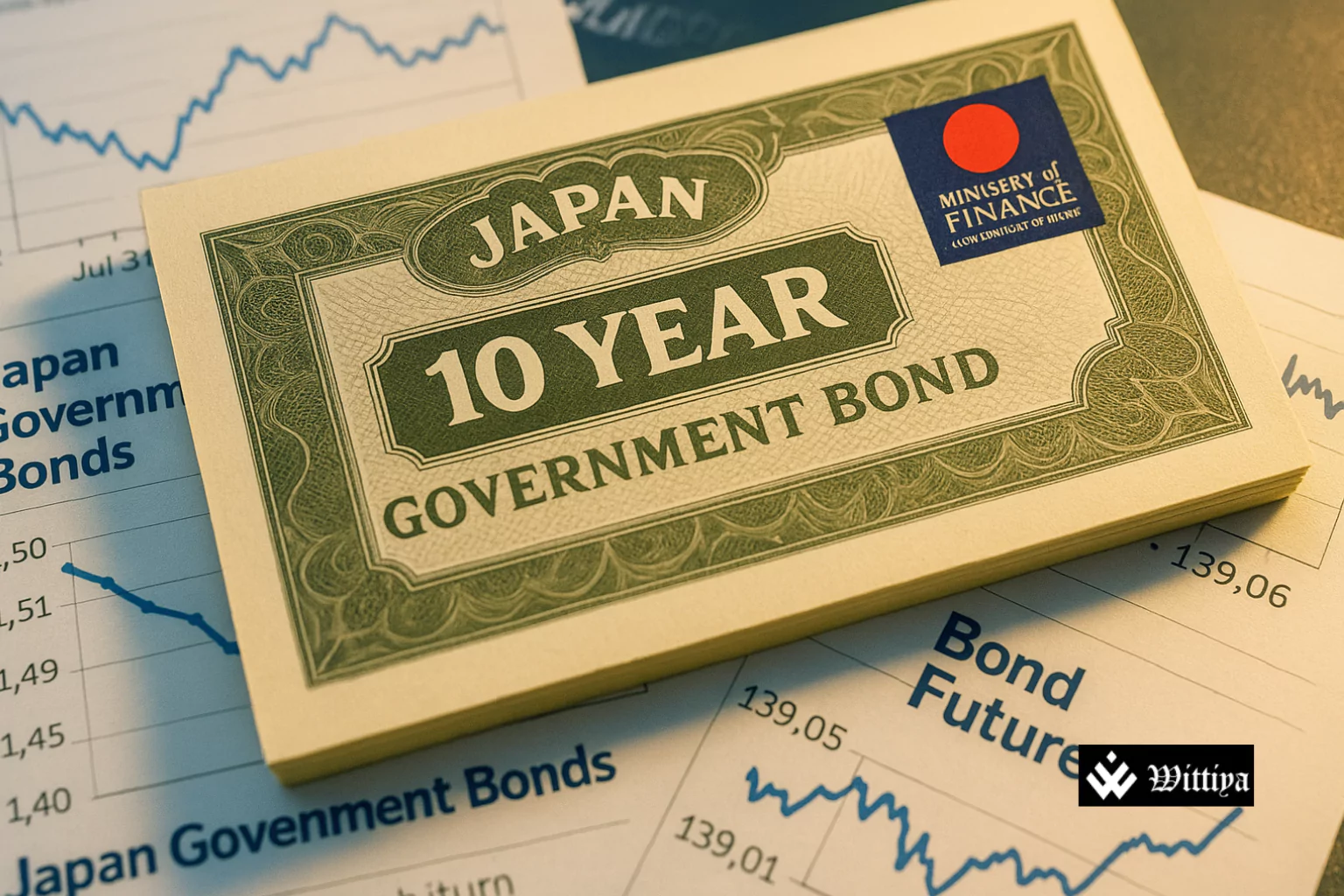
Strong demand in Japan’s 10-year bond auction on July 2, 2025, offered a much-needed lift to investor sentiment as the market braces for a critical 30-year bond sale. The Ministry of Finance, Japan’s central authority for fiscal management, recently adjusted bond issuance volumes amid heightened scrutiny on long-term debt.
Japan’s Ministry of Finance witnessed robust demand during its 10-year government bond auction, offering relief to a jittery debt market ahead of a critical 30-year bond issuance later this week. The auction posted a bid-to-cover ratio of 3.51, significantly above the 12-month average of 3.14, reflecting rising investor confidence as interest rate hike fears subsided.
This comes after market turbulence in late May, when a weak 20-year bond auction sent super-long bond yields to record highs, forcing the ministry to adjust issuance plans for July. While the 10-year issuance volume remained steady, the Ministry announced cuts in 20-, 30-, and 40-year bond offerings to reduce pressure on long-term debt instruments.
Japan’s 10-year bond yield fell 4 basis points to 1.39%, the lowest since June 13. Bond futures rose 20 ticks to 139.22, showing optimism from investors as the auction was deemed “very strong” by Miki Den, a senior strategist at SMBC Nikko Securities Inc.
Meanwhile, Anmol Agrawal, strategist at Intouch Capital Markets Pte, stated the real market test would come during the 30-year auction on July 4. The ongoing pressure from the auto sector, still reeling from the June Tankan survey, is seen as a major constraint on the Bank of Japan’s ability to raise interest rates soon.
Despite a slight drop in profit margins across the manufacturing sector, a modest improvement in business sentiment and a reduction in long-term bond issuance have helped stabilize investor expectations. Still, 30- and 40-year yields have not shown a significant decline, indicating that caution lingers over the long end of the curve.
The Ministry’s efforts, including reduced issuance and continued support from the Bank of Japan, suggest a targeted strategy to manage volatility in the JGB market and maintain control over borrowing costs as Japan navigates fiscal pressures and global economic uncertainties.