


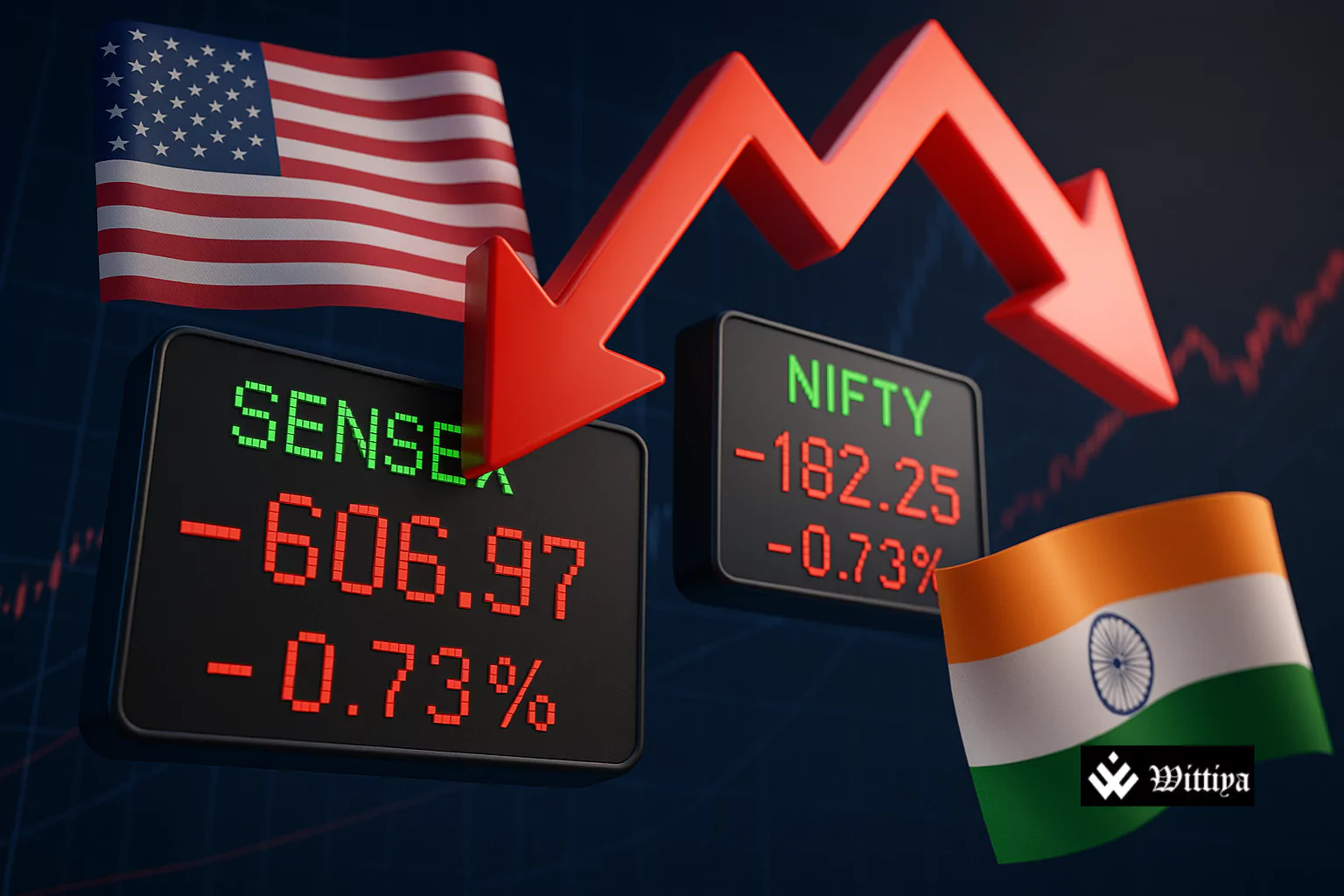
Following the announcement that the United States will impose an additional 25% tariff on Indian imports with effect from August 27, 2025, the Indian stock market faltered and Sensex and Nifty both slid. The fall was aggravated by weak Asian cues and the outflow of foreign funds.
Today, the US stock market and Trump administration darkened the skies over the Indian stock market as they filed a draft order to impose an additional 25% tariff on Indian imports starting August 27, 2025.
During the early hours of trading, the BSE Sensex was down by 606.97 points, or 0.74%, at 81,028.94 while the NSE Nifty went down 182.25 points, or 0.73%, to 24,785.50.
In early trading, the BSE Sensex lost 606.97 points, or 0.74%, to 81,028.94, while the NSE Nifty dipped 182.25 points, or 0.73%, to 24,785.50. The actors of the decline were reckoned to be the external headwinds and the domestic investor sentiment in tune with each other.
The proposed regulation says that goods from India will have to face increased tariffs if they arrive in the US market after August 27. This higher tariff has thus been defined as one more step in the trade and geopolitical strategy of Washington. Global investors moved quickly to minimize their exposure to risk, which caused India to have the brunt of the impulse.
Also Read: Markets Retreat in Asia After Trump Removes Fed Governor Lisa Cook
Experts in the field confirmed that tariff hikes will negatively impact the export-intensive sectors of the Indian economy such as the steel, pharmaceutical and engineering goods industries. Stock markets were the first to raise this alarm. SCG was among the decliners in which were Sun Pharmaceutical, Tata Steel, Adani Ports, ICICI Bank, Bharti Airtel, Power Grid, Bharat Electronics Ltd, HDFC Bank, NTPC, and Tata Motors.
At one time Hindustan Unilever and Tata Consultancy Services were the only top performers with resilient demand being the driver for consumer and IT segments.
Moreover, the withdrawal of foreign institutional investors from Indian equities amid global uncertainty worsened the situation. The tariff situation may already be weighing on regional sentiment given the lack of enthusiasm across Asian markets.
According to market experts, at present, the immediate response showing prudence, the severity of the drop will depend on whether the tariff steps are further extended and on India’s diplomatic and economic countermeasures. In these days of high volatility, the situation is as such, and investors should be prepared for quick turnarounds in the short term until they have a clear idea of trade relations.
READ MORE ON