





BigBasket’s revenue and losses reflect growing challenges from quick commerce rivals, prompting a strategic shift toward private labels and long-term customer retention.
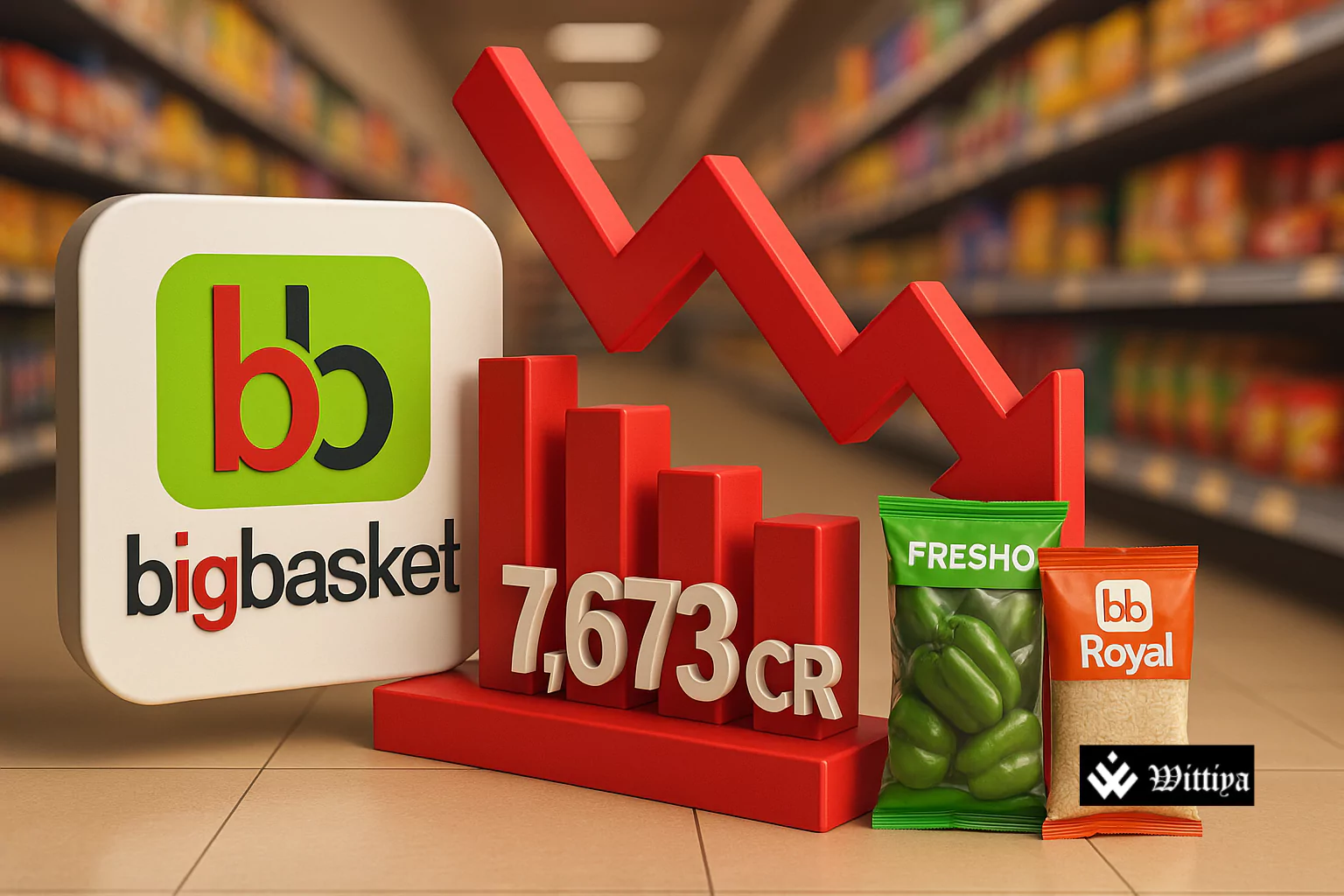
India’s quick commerce battleground is heating up, and BigBasket is feeling the impact. As per Tata Digital’s latest report, BigBasket’s B2C arm, Innovative Retail Concepts, saw its revenue decline by 3% to ₹7,673 crore in FY25 from ₹7,885 crore in FY24. Net losses surged 46% to ₹1,851 crore, signaling mounting pressure in the high-speed delivery market.
The B2B vertical, Supermarket Grocery Supplies, also faced a 7% revenue drop to ₹2,227 crore from ₹2,391.8 crore in the previous fiscal. However, it trimmed its net losses by 20.2% to ₹102.2 crore from ₹128.1 crore.
Acquired by Tata Digital in 2021, BigBasket has evolved from a conventional online grocery service to a hybrid player in the quick commerce race with its 10-20 minute delivery model, BBNow. The competition, however, is fierce, with rivals aggressively scaling their dark store networks and delivery capabilities.
Despite the market squeeze, BigBasket’s private label strategy continues to be its stronghold. In-house brands such as Fresho, BB Royal, and Tasties now contribute nearly 40% of total sales. This approach not only boosts margins but also ensures customer stickiness, with more than half of its user base opting for repeat purchases through slotted deliveries.
The company is diversifying private label offerings into impulse-led categories and seasonal merchandise to strengthen its competitive edge. BigBasket’s focus remains on building a sustainable ecosystem rather than competing solely on delivery speed.
READ MORE ON