


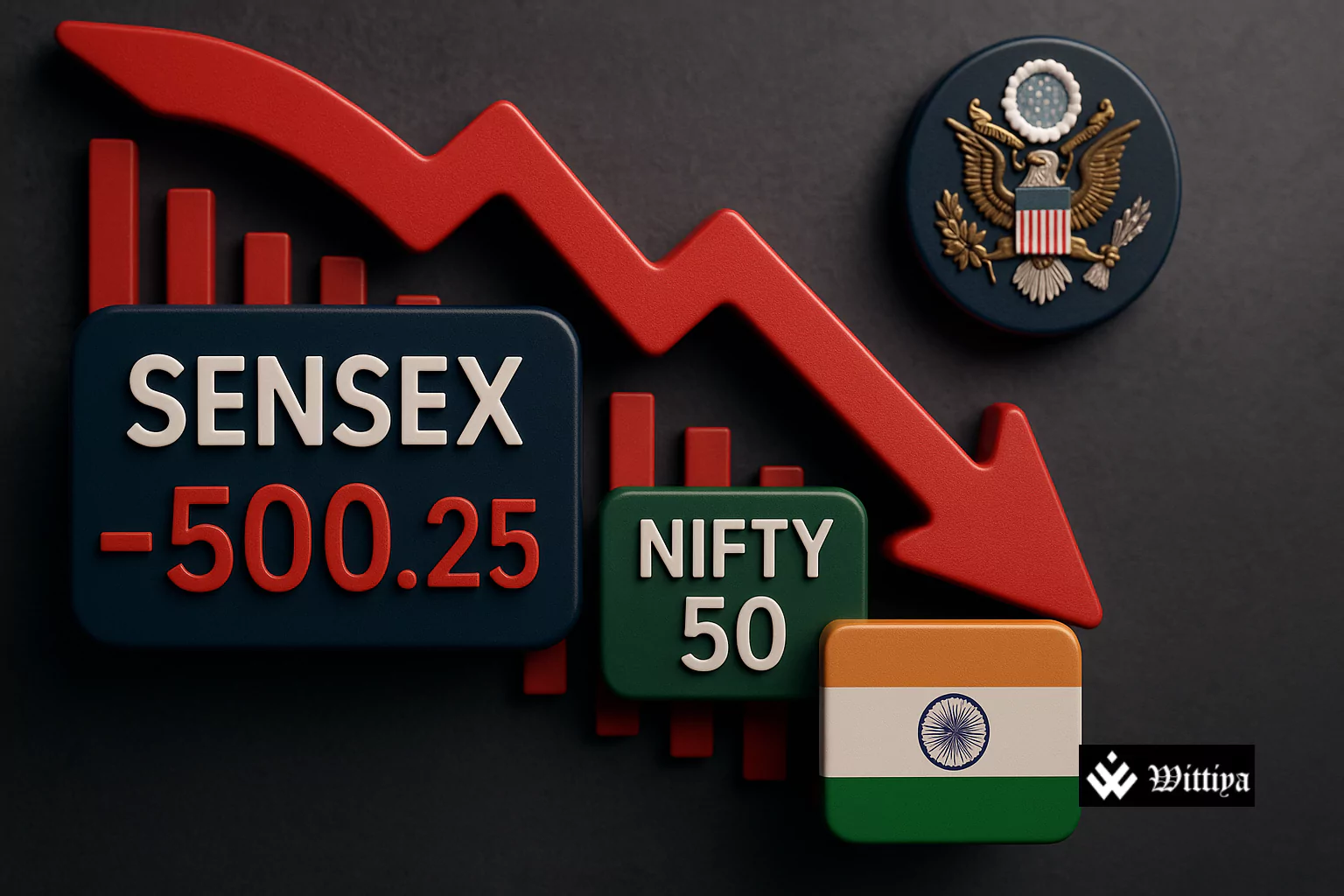
India’s stock markets saw a sharp decline as new US tariffs roiled investor sentiment. The Sensex dropped 500 points and the Nifty 50 fell nearly 0.7% following the announcement of a 25% import tariff on Indian goods. This move is expected to disrupt key export sectors and intensify volatility across equity markets.
India’s equity markets opened deep in the red on Thursday as the US announced a sweeping 25% tariff on Indian imports, effective August 1. The benchmark BSE Sensex plunged 500 points to 80,888.01, while the NSE Nifty 50 slipped 0.66% to 24,699.1 by 9:17 a.m. IST. The impact was immediate and broad-based, with all 16 major sectoral indices logging losses at the open.
The tariff escalation directly targets Indian goods, more severely than measures taken against other trading partners, raising the risk of a prolonged trade standoff. Investors interpreted the move as a potential breakdown in bilateral negotiations, with ripple effects anticipated across export-heavy industries.
Also Read: US-China Trade Tensions Escalate Over Russian Oil Imports
Sectors including textiles, pharmaceuticals, and automotive components—cornerstones of India’s export economy—are likely to face higher input costs and reduced global competitiveness. Market participants expect export volumes to contract in the near term, especially if retaliatory measures or counter-policy delays emerge.
Small-cap and mid-cap indices also felt the heat, declining around 1.25% each, as market breadth turned decisively negative. Analysts noted that the market reaction reflects deeper concerns over trade-related earnings compression and deteriorating investor risk appetite.
Increased volatility is expected to persist, especially as foreign institutional flows recalibrate in response to potential macroeconomic headwinds. The rupee’s stability, cost pass-through effects, and sectoral margin pressure will remain key data points to watch as equity strategists revise quarterly outlooks.
With global trade uncertainties intensifying, India’s near-term market sentiment may continue to hinge on tariff developments and subsequent policy responses from New Delhi.
READ MORE ON