






India’s ethanol blending program has rapidly evolved into a cornerstone of the country’s clean energy and fuel security strategy. Achieving the 20% blending target ahead of schedule marks a major step toward reducing crude oil imports, lowering carbon emissions, and boosting rural incomes. Ethanol derived from sugarcane, grains, and crop residues is driving the expansion of India’s biofuel economy. With strong policy backing, industrial investment, and growing infrastructure, the program is reshaping India’s fuel mix, enhancing energy self-reliance, and positioning the country alongside global leaders like Brazil and the U.S. in the biofuel landscape.
Why Ethanol Blending Matters
As India advances toward energy security and environmental sustainability, ethanol blending in petrol has emerged as a transformative initiative. Ethanol, a renewable biofuel derived from sugarcane molasses, maize, surplus food grains, and agricultural waste, serves as a cleaner alternative to fossil fuels. It burns more cleanly than petrol, emitting significantly less carbon monoxide and particulate matter, which helps curb urban air pollution.
The Ethanol Blended Petrol (EBP) programme, launched in 2003, gained significant momentum in recent years after being repositioned as a strategic initiative with energy, economic, and agricultural relevance. Increasing the proportion of domestically produced ethanol in petrol allows India to reduce its Reliance on crude oil imports, boost farmers’ incomes, and create a more sustainable rural economy.
In a major policy achievement, the Indian government has already hit the 20% blending milestone (E20)—years ahead of the original 2030 target. This shift not only lowers fuel costs but also represents a major step toward building a self-reliant, clean energy ecosystem.
Given that transportation is one of the largest sources of carbon emissions, this ethanol blending initiative plays a critical role in helping India meet its Net Zero goals by 2070, while strengthening its position as a leader in the global green energy transition.
Why Ethanol Blending Matters: Economic, Environmental, and Strategic Imperatives
India is the third-largest importer of crude oil in the world, relying on overseas suppliers for over 85% of its oil needs. In FY2023–24 alone, India imported 233 million tonnes of crude oil, making it highly vulnerable to global oil price volatility and geopolitical shocks like the Russia-Ukraine war. Ethanol blending offers a domestic buffer against this external dependency.
Economic Significance:
- Reduces Foreign Exchange Outflow: Every litre of ethanol used in place of petrol saves foreign currency.
- Boosts Rural Economy: Ethanol production creates demand for sugarcane and grain farmers, generating rural employment.
- Industrial Investment: Blending targets have attracted over ₹60,000 crore in ethanol manufacturing infrastructure.
Environmental Benefits:
- Lower Carbon Emissions: Ethanol emits 35–40% less greenhouse gases than petrol.
- Cleaner Combustion: Helps improve urban air quality by reducing tailpipe pollutants.
- Waste to Energy: Surplus or damaged grains and crop residues can be converted to fuel.
Strategic Edge:
- Energy Security: Diversifies India’s energy mix, reducing risks from oil supply disruptions.
- Resilience Against Sanctions: Ethanol gives India more autonomy in its fuel supply, making it less susceptible to sanctions and embargoes.
- Supports Global Commitments: Strengthens India’s position in climate negotiations by showing progress on sustainable fuel targets.
As India scales this blending across all fuel pumps, these benefits are expected to compound—economically, environmentally, and diplomatically.
Year Wise Progress of Ethanol Blending
| Year | Blending Level |
| 2014-15 | 2.3% |
| 2017-18 | 4.2% |
| 2020-21 | 7.9% |
| 2021-22 | 10.0% |
| 2023-24 | 12.5% |
| 2024-25 | 20.0% (select districts) |
This remarkable achievement places India among the global frontrunners in ethanol-based fuel transformation.
Also Read: Mileage vs Environment: Are Indian Drivers Paying the Price?
Benefits of Ethanol Blending
Ethanol blending brings together environmental responsibility, economic strategy, and rural development under one umbrella. This multi-dimensional impact has made it one of India’s most significant clean energy interventions in recent years.
- Reduced Oil Import Bill: India imports nearly 85% of its crude oil requirement, making energy security a key economic vulnerability. Ethanol blending directly offsets fossil fuel consumption. In FY24 alone, the country saved over ₹24,000 crore in foreign exchange due to lower oil imports, thanks to the blending program.
- Cleaner Emissions: Ethanol contains oxygen, which allows it to burn more completely than petrol. This results in lower emissions of harmful pollutants such as carbon monoxide (CO), particulate matter (PM), and unburnt hydrocarbons. The cleaner combustion process contributes significantly to air quality improvement in urban areas.
- Support for Farmers: A large part of India’s ethanol comes from sugarcane and surplus food grains. Ethanol production offers a sustainable revenue channel for farmers, reduces wastage of excess grains, and promotes value addition in agriculture.
- Industrial Growth & Employment: The ethanol economy has catalyzed massive growth in the number of distilleries, blending units, and supply chain networks. This growth translates into job creation, especially in rural and semi-urban regions, while also attracting private investment in biofuel infrastructure.
Raw Materials for Ethanol Production
India’s ethanol production strategy is diversified and adaptive. By tapping into both sugar-based and grain-based feedstocks, the country ensures stability in supply even when one source underperforms due to crop failure or price volatility.
The flexibility in raw material sourcing is crucial for meeting seasonal variations and geographical differences in crop availability.
| Feedstock | Share in Ethanol Supply | Primary Source Regions |
| Sugarcane Juice | ~50% | Maharashtra, Uttar Pradesh, Bihar |
| Molasses (B-Heavy) | ~25% | Sugar mills across India |
| Grain-based Ethanol | ~20% | Surplus rice, maize, damaged food grains |
| 2G Biofuels (Advanced) | ~5% | Crop residue, agricultural biomass |
The introduction of 2G (second-generation) biofuels from waste biomass and crop residues is especially significant, as it aligns with the goal of a circular economy—reducing both emissions and stubble burning.

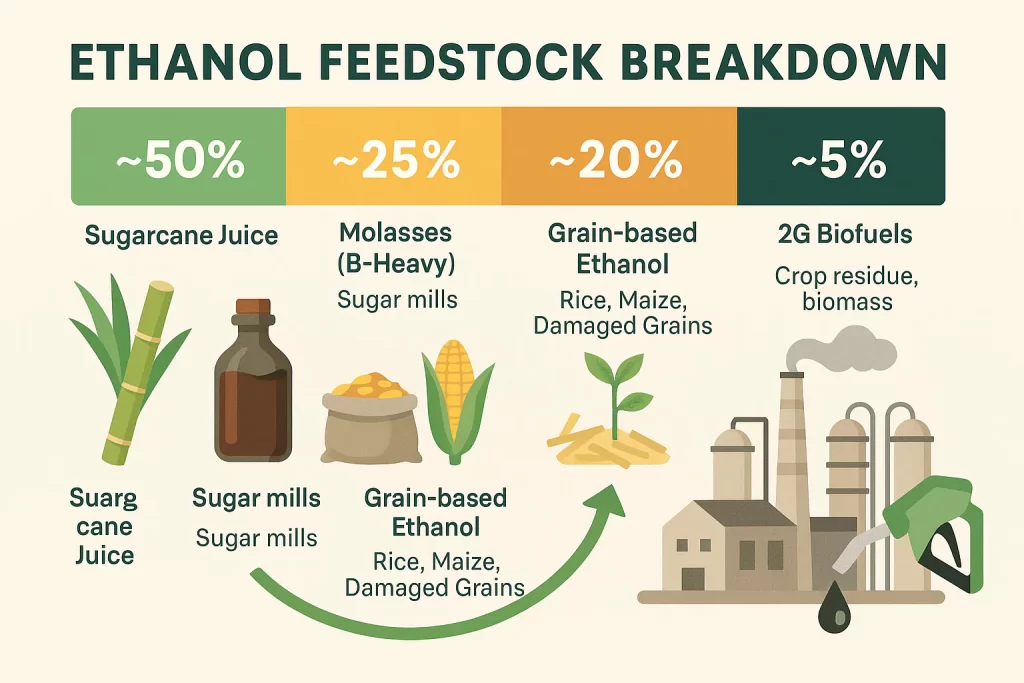
The illustration above represents the feedstock contribution to India’s ethanol ecosystem. Each feedstock type plays a vital role in the scalability and resilience of the Ethanol Blending Programme.
Beyond feedstocks, India’s ethanol infrastructure includes:
- Over 300 ethanol production units across the country.
- Integrated bio-refineries that can handle multiple feedstock types.
- Dedicated ethanol pipelines in the works to improve logistics.
- Strategic storage units and blending facilities near key distribution depots.
This growing ecosystem is essential for meeting the government’s target of pan-India availability of E20 petrol and moving toward even higher blends in the future.
Also Read: India’s Green Fuel Shift Sparks Questions on Insurance Premiums
Challenges in Implementation
India’s ethanol blending programme is ambitious, but not without hurdles that threaten its scalability and sustainability.
- Feedstock Competition: As ethanol production grows, concerns have been raised about the diversion of food grains like rice and maize from the Public Distribution System toward fuel. This could potentially impact food security, especially during periods of inflation or poor harvest.
- Water Usage: Sugarcane, one of the primary sources of ethanol, is extremely water-intensive—requiring about 2,500 litres of water to produce one litre of ethanol. This has raised alarm bells in states with depleting groundwater tables such as Maharashtra and Punjab.
- Logistics & Distribution: Ethanol is highly flammable and corrosive, requiring dedicated tankers and infrastructure. Many oil depots across India still lack automated blending units, and transportation delays increase spoilage risks.
- Price Volatility: Ethanol prices fluctuate based on global sugar and grain prices. For oil marketing companies (OMCs), this creates margin uncertainty in comparison to relatively stable petrol prices.
To address these challenges, the Indian government is:
- Encouraging production of 2G ethanol from crop residue and biomass.
- Expanding ethanol blending depots and investing in dedicated rail infrastructure.
- Promoting research into less water-intensive feedstocks like sweet sorghum.
Policy Push by the Indian Government
Government policy has been the biggest catalyst in transforming ethanol blending from a niche initiative to a national mission.
Key Government Measures:
- Interest Subvention Scheme: The Centre offers interest subsidies on loans taken for setting up ethanol distillation units, especially in underdeveloped states.
- Differential Pricing: To encourage flexibility in sourcing, ethanol procurement prices vary based on the feedstock used. This ensures that manufacturers can earn fair margins regardless of whether they use sugarcane juice or damaged grains.
- Mandatory Procurement by OMCs: Oil companies like IOCL, BPCL, and HPCL are obligated to meet blending targets, thereby guaranteeing consistent demand.
- Flex-Fuel Vehicle Promotion: The government has asked automakers to manufacture vehicles compatible with E85 and E100 blends, with pilot cities already identified for rollout.
This comprehensive policy support has attracted investments from both public and private sectors, making India one of the most promising ethanol markets globally.
Impact on Indian Oil Companies
Oil Marketing Companies (OMCs) and private refiners are central players in India’s ethanol blending transition. They have been proactive in aligning their operations with national targets.
| Company | Ethanol Strategy |
| IOCL | Set up dedicated ethanol plants using corn, damaged rice, and sugarcane waste |
| BPCL | Partnered with startups to develop ethanol production technologies |
| HPCL | Deployed flex-fuel dispensing pumps at select outlets |
| Reliance | Investing in 2G and 3G biofuel technologies and scaling blending logistics |
Additionally, all three public-sector OMCs are investing in ethanol tankers, blending terminals, and real-time monitoring tools. The goal is to make ethanol a seamless part of the fuel supply chain, just like petrol or diesel.
How India Compares Globally
India’s ethanol blending programme, once a laggard, is now emerging as a credible global contender.
| Country | Blending Ratio | Primary Feedstock |
| Brazil | 27% | Sugarcane |
| U.S. | 10–15% | Corn |
| India | 20% (2024) | Sugarcane + Grains |
While Brazil relies solely on sugarcane and the U.S. on corn, India’s multi-feedstock strategy is a distinct advantage. It reduces dependency on a single crop and allows for regional customization.

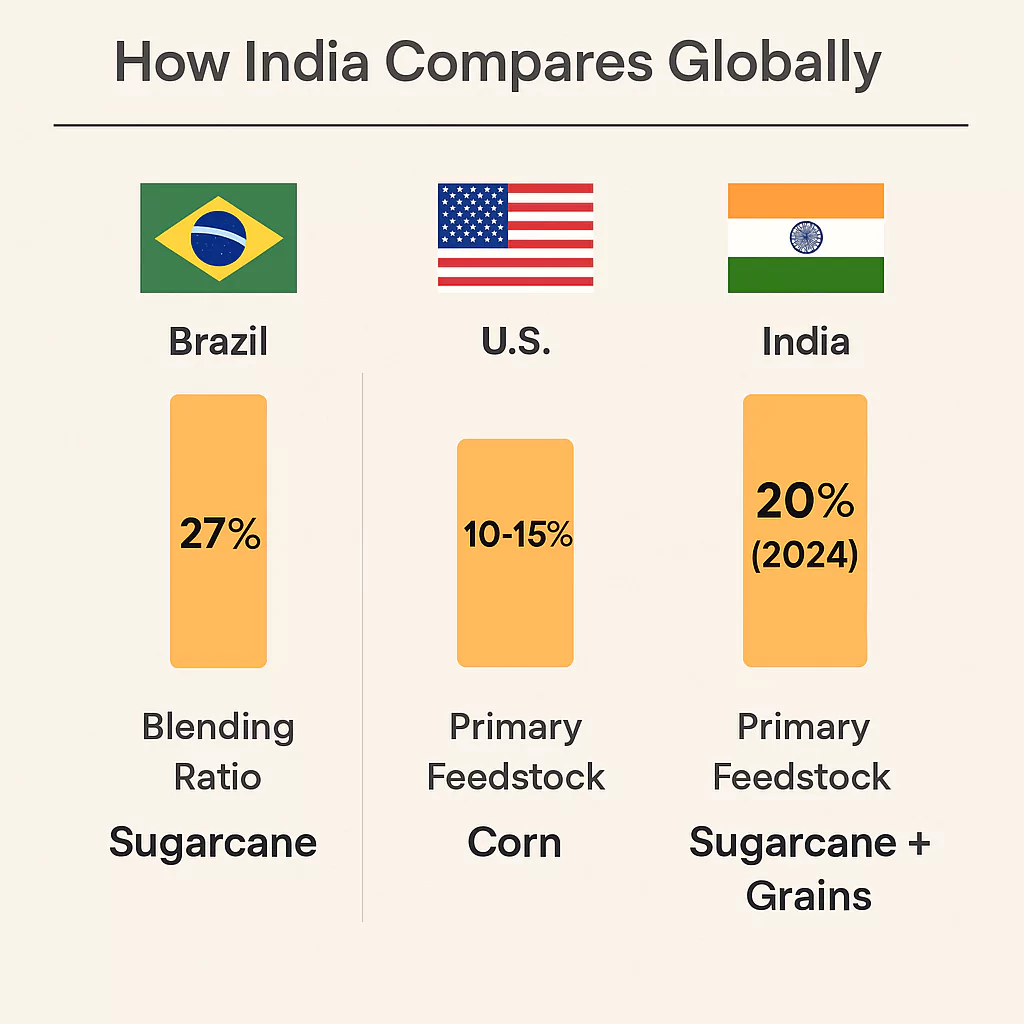
India is also catching up in terms of blending infrastructure, vehicle compatibility, and biofuel R&D investments. The ability to balance food security, energy needs, and environmental priorities makes India’s model potentially replicable across other developing economies.
Beyond E20
India’s ethanol blending programme doesn’t stop at E20. The government’s roadmap includes:
- Nationwide rollout of E20 by 2025–26, especially in urban centers and high-consumption corridors.
- E85 and E100 fuel variants to be promoted for flex-fuel vehicles.
- Massive scale-up of 2G and 3G ethanol plants, especially using bamboo, agricultural residue, and algae.
- Digital ethanol tracking systems to monitor blending volumes, feedstock usage, and environmental impact in real-time.
The government also aims to create a comprehensive bioeconomy where ethanol isn’t just a transport fuel, but also a key ingredient in green chemicals, plastics, paints, and industrial solvents.

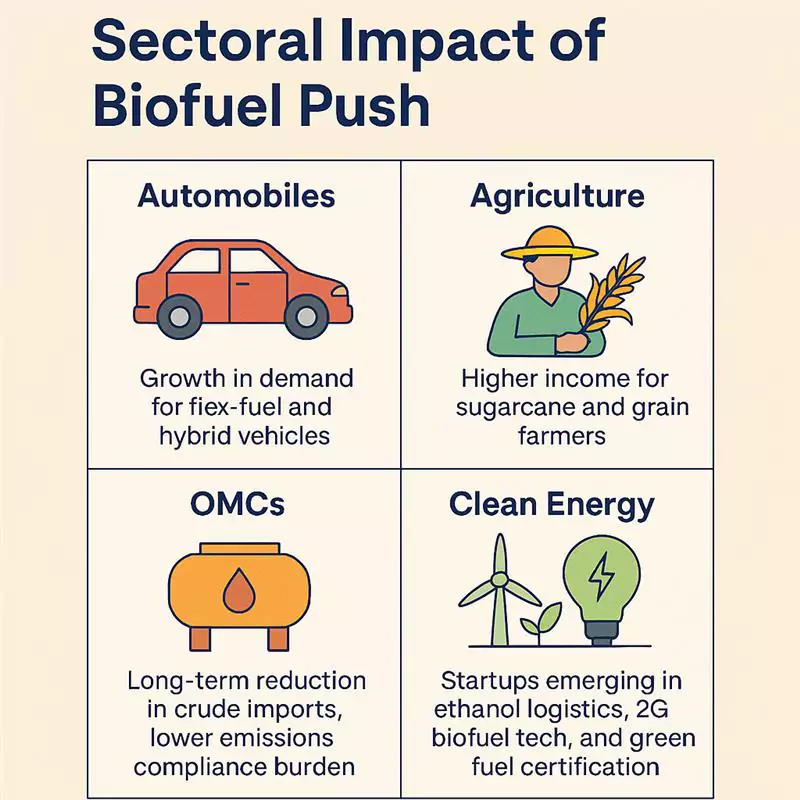
A Model for Green Growth
India’s ethanol blending initiative stands as a textbook example of policy-driven green industrialization. From reducing oil imports to strengthening rural incomes and cutting emissions, it checks several boxes at once.
However, the long-term success of this programme hinges on:
- Sustainable sourcing of feedstocks
- Public-private collaboration
- Technological innovation in biofuels
- Infrastructure development
If managed well, India could not only meet its Net Zero target by 2070, but also emerge as a biofuel innovation hub for the Global South. Ethanol, once an overlooked agro-product, may well fuel the next phase of India’s energy independence story.
READ MORE ON