


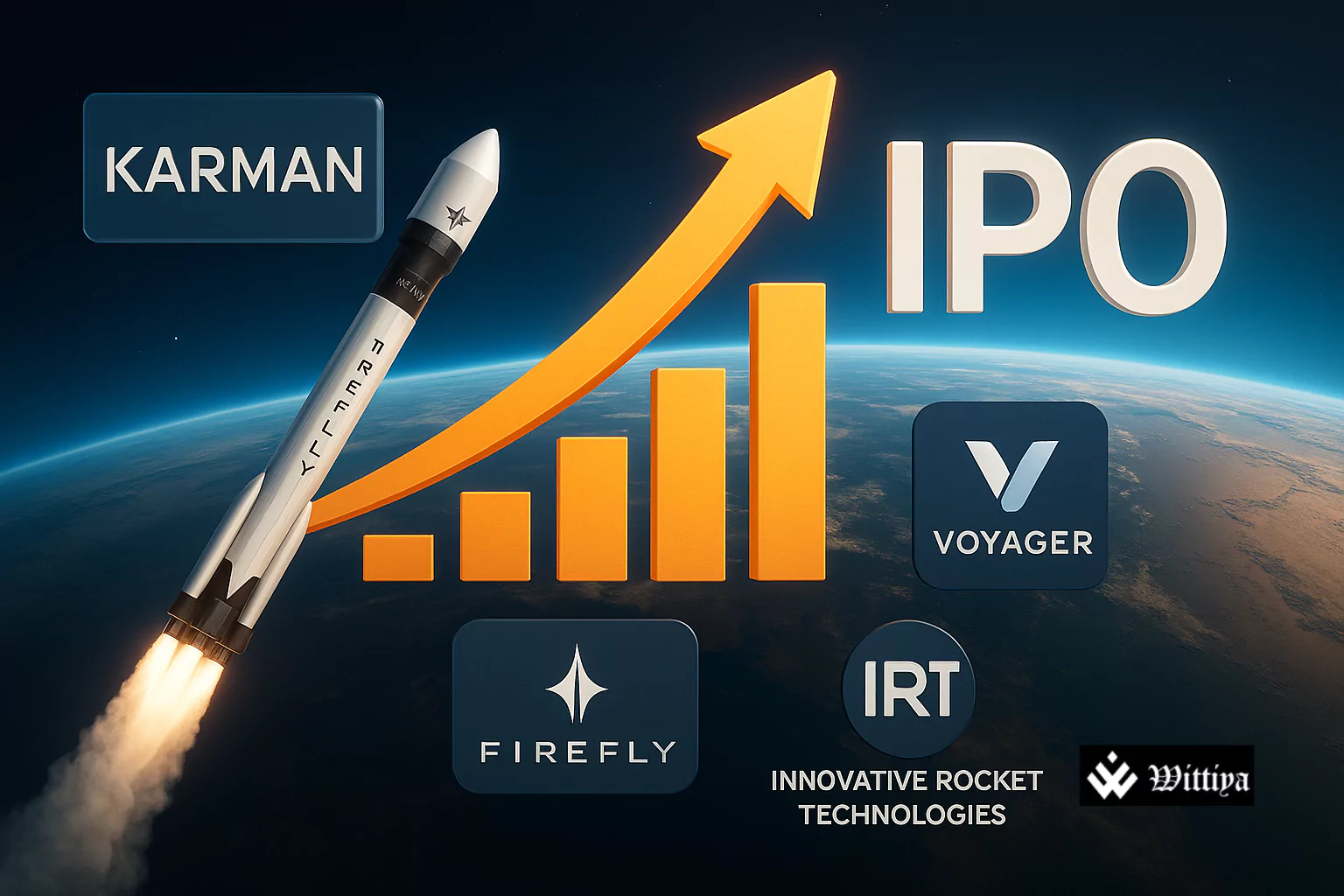
A resurgence in U.S. space IPOs is signaling renewed investor confidence in the commercial space sector, with key players going public and reshaping market dynamics.
The United States is witnessing a resurgence in space-related initial public offerings (IPOs), signaling a shift in capital markets as investors regain confidence in the long-term strategic and commercial value of space technologies.
In February, Karman Holdings, backed by Trive Capital, debuted on the public market with a valuation nearing USD 4 billion, its shares experiencing robust demand. Similarly, Voyager Technologies achieved a USD 3.8 billion valuation as its stock surged over 125% on debut, a strong indicator of investor enthusiasm.
More recently, Firefly Aerospace, supported by Northrop Grumman, made headlines with its Nasdaq listing under the ticker FLY, following the successful lunar landing of its Blue Ghost lander.
This uptick marks a turning point for U.S. space equity markets, which had slowed post the 2020–2021 boom in special-purpose acquisition company (SPAC) listings. However, the SPAC model is making a cautious comeback. Innovative Rocket Technologies announced a USD 400 million SPAC merger, signaling optimism in reusable rocket and propulsion systems, further highlighting investor focus on cost-efficiency and sustainability.
From a financial strategy perspective, the U.S. space sector benefits from key government contracts that offer predictable revenue streams—particularly vital amid rising protectionism and trade uncertainties. Although reliant on foreign satellite components, many U.S. firms are well-positioned to absorb tariff shocks due to long-term procurement cycles and vertically integrated supply strategies.
Industry analysts note that growing interest is supported by substantial second-quarter merger and acquisition activity, totaling USD 280 million in U.S.-based space research and tech deals. Equity market data also reflects strength, with 109 IPOs registered in the U.S. between January and June 2025—the most robust first half since 2021.
Beyond financials, macroeconomic forces are at play. U.S. trade policies, Middle East tensions, and inflationary pressures have injected volatility into global equity sentiment. Yet, space firms, closely aligned with national defense and innovation agendas, appear resilient. Their equity narrative centers around long-term infrastructure building—appealing to public market investors willing to trade near-term earnings for future strategic relevance.
Aerospace equity experts suggest that increasing competition in the commercial launch segment—driven by reusable technologies—is likely to compress pricing over time, reducing traditional entry barriers. This dynamic paves the way for a new breed of scalable, space-based business models with solid commercial potential.
As U.S. space IPOs gain traction, their role in influencing capital flows, public investor sentiment, and downstream tech innovation is increasingly clear. With valuations rising, M&A volumes up, and geopolitical risk priced in, the next wave of space investing appears to be not just speculative, but strategically grounded.
READ MORE ON