


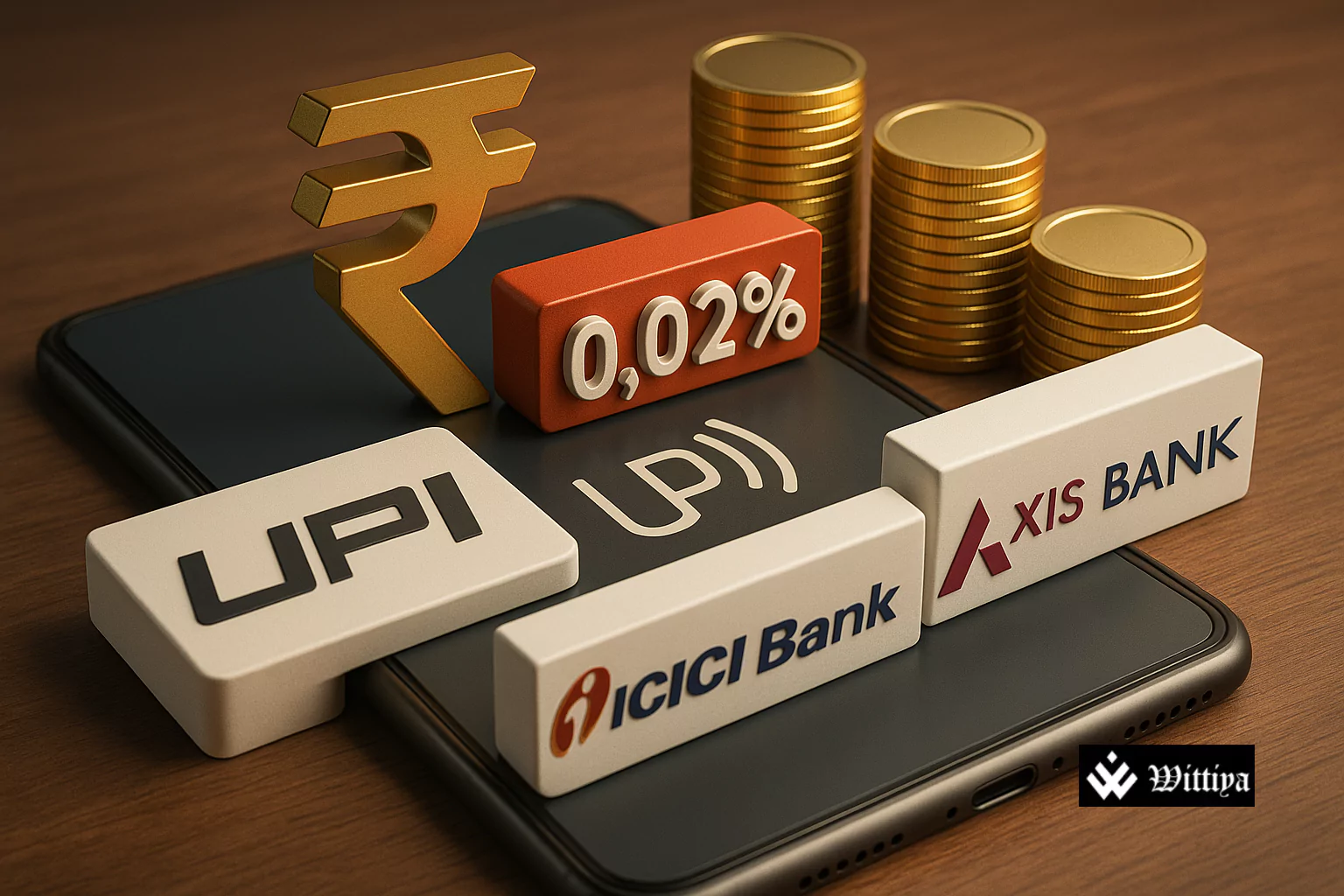
In India, payment aggregators face shrinking margins as major banks, including ICICI Bank, introduce transaction handling fees on UPI merchant payments. This signals a shift in the digital payment ecosystem, raising concerns over sustainability and the burden on smaller merchants.
India’s fast-growing digital payments landscape is facing an inflection point as top banks begin to impose transaction handling fees on Unified Payments Interface (UPI) merchant transactions. On July 28, ICICI Bank notified payment aggregators (PAs) that from August 1, a handling fee would apply to such transactions. This shift, although minimal at 0.02% or capped at ₹6-₹10 per transaction depending on account type, has broader implications for the financial dynamics of India’s UPI ecosystem.
Payment aggregators, who play a key role in enabling digital merchant payments, are expected to absorb these charges for now. However, experts caution that the real pressure lies in the domino effect—other large banks, such as Axis Bank and Yes Bank, may soon follow suit, gradually inflating the cost of processing UPI payments. If so, the highly cost-sensitive digital payments space in India may see mounting operational strain, especially among mid-sized and small players.
Also Read: Digital Payments Are Soaring—Is India’s Infrastructure Ready?
While the government mandates zero Merchant Discount Rate (MDR) on UPI payments to ensure cost-free transactions for merchants, banks have long applied indirect charges to PAs through account maintenance, platform fees, or reconciliation costs. Now, these explicit transaction-based charges could erode already thin profit margins for aggregators.
A senior executive at a leading payment firm noted that while charges like convenience or platform fees are within regulatory bounds if made “payment mode agnostic,” the growing lack of clarity creates a gray zone. This ambiguity is driving varied practices across the industry.
The nuanced structure of these new fees further complicates the impact. PAs with an escrow account at ICICI Bank are charged 2 basis points (bps) per transaction, while those without are charged 4 bps. Given that 100 bps equals 1%, the absolute financial burden appears marginal. However, when scaled across millions of transactions, the cumulative pressure becomes significant.
Large merchants often bypass these costs entirely by maintaining substantial account balances or negotiating rebates. As a result, small and mid-tier businesses—already restricted by regulations from charging customers—are left bearing the brunt. Although some payment firms argue that the actual charge is too insignificant to dent small merchants’ profitability, the trend underscores a growing divide between high-volume clients and grassroots retailers.
Also Read: India’s Digital Tax Crackdown Widens: UPI Merchants Under Scanner
Notably, some PA firms view the fees as a mechanism for accountability. A founder remarked that unless banks charge them, there is little leverage during dispute resolution or system failures. Nonetheless, this cost of accountability still places additional financial weight on a sector already functioning on razor-thin spreads.
The strategic decision of whether to maintain nodal accounts with banks also plays a critical role. While it can lead to waived fees, doing so often results in lower interest earnings on parked funds—creating a financial trade-off that’s hard to ignore.
As India continues to champion UPI as the backbone of its digital financial infrastructure, the evolving fee structures and inter-bank dynamics are setting the stage for a recalibration of business models in the fintech ecosystem. For payment aggregators, the challenge lies in maintaining viability without compromising the affordability and accessibility that have defined the UPI success story.
READ MORE ON