






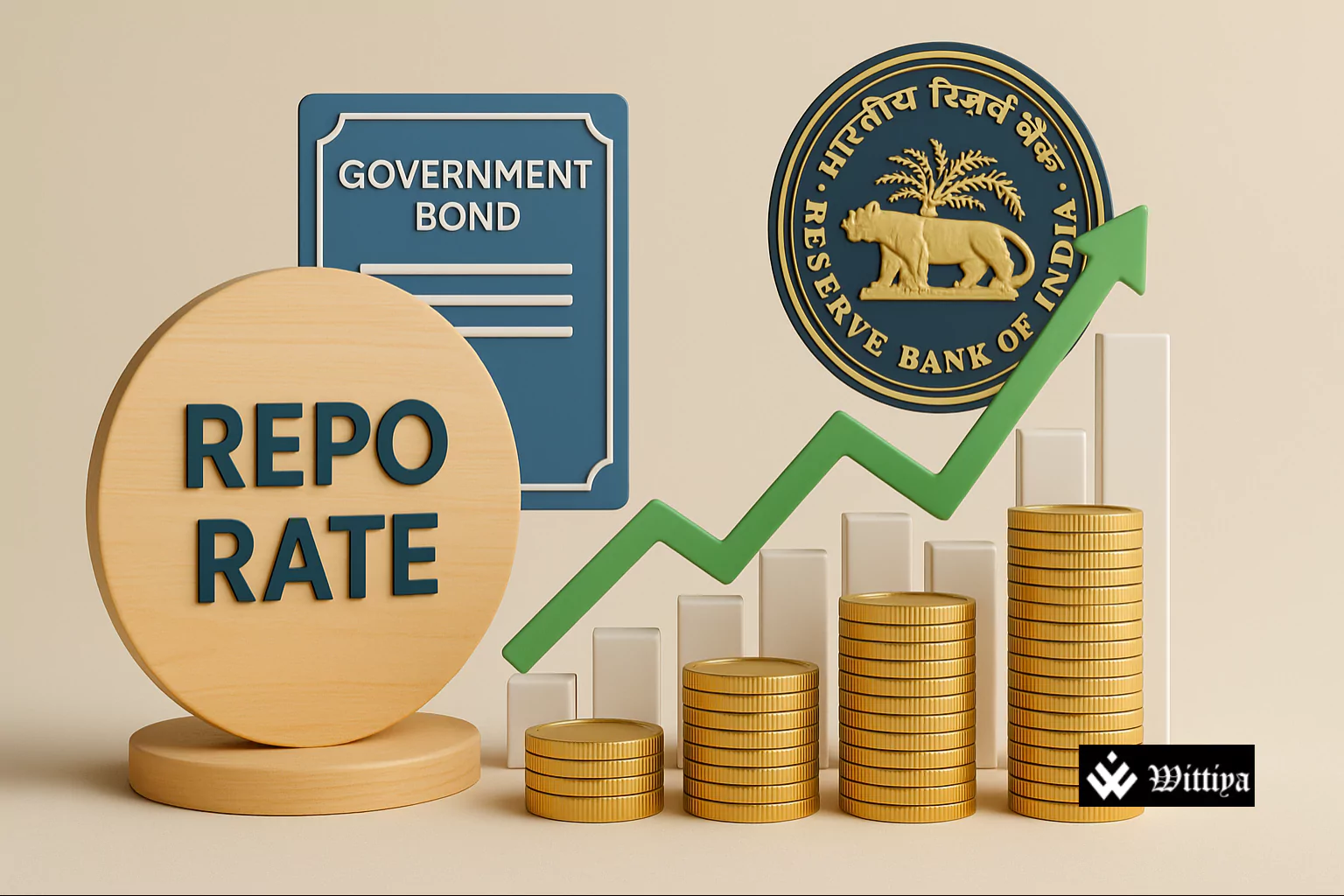
India’s central bank, the Reserve Bank of India (RBI), recently cut the repo rate to 5.50%, signaling a shift towards monetary easing. The move is aimed at stimulating economic growth amid declining inflationary pressure. This change directly affects loan interest rates, corporate borrowing costs, and overall liquidity in the financial system.
Introduction
The repo rate plays a pivotal role in shaping a country’s monetary policy. It directly affects the cost of borrowing for banks, which in turn influences loan rates, inflation levels, and economic momentum. In India, the Reserve Bank of India (RBI) uses the repo rate as a powerful lever to regulate liquidity and ensure macroeconomic stability.
To fully understand how India’s economy functions—and how policy decisions impact personal and business finance—it’s essential to grasp what the repo rate is and why it matters.
What is the Repo Rate?
The repo rate, short for repurchase rate, refers to the interest rate at which the RBI lends short-term funds to commercial banks against government securities. This transaction takes place when banks face liquidity shortages and need quick access to funds.
Here’s how it works:
- Lending Mechanism: Commercial banks, during times of short-term cash shortages, borrow from the RBI.
- Collateralized Lending: These banks pledge government securities as collateral in exchange for funds.
- Repurchase Agreement: The banks agree to repurchase these securities from the RBI after a fixed period at a higher price, which includes interest—this interest rate is the repo rate.
By setting this rate, the RBI effectively controls the money supply and interest rate structure across the economy.
Also Read: RBI Maintains Repo Rate at 5.5%: Full Breakdown and Implications
How Does the Repo Rate Work?
The repo rate process unfolds in a structured manner that influences the broader financial ecosystem:
- Bank’s Funding Need: A commercial bank, short on liquidity, approaches the RBI.
- Collateral Exchange: The bank offers government bonds or treasury bills as security.
- Fund Disbursal: RBI extends the funds based on the prevailing repo rate.
- Repurchase Transaction: At the end of the agreement period, the bank buys back its securities, paying back the borrowed sum plus the interest calculated at the repo rate.
This back-and-forth process ensures liquidity in the system while maintaining discipline in short-term borrowing.
Significance of the Repo Rate
The repo rate is not just a banking tool—it shapes broader economic outcomes. RBI tweaks the repo rate to serve multiple policy objectives:
- Inflation Control: To curb inflation, the RBI increases the repo rate, discouraging borrowing and reducing money in circulation.
- Stimulating Growth: When growth slows down, the repo rate is lowered to make loans cheaper and encourage spending and investment.
- Liquidity Management: The repo rate helps control how much money flows within the banking system, ensuring it’s neither too tight nor too loose.
Changes in the repo rate can influence everything from GDP growth to price stability.
Impact on Consumers
For the average Indian, the repo rate can influence day-to-day financial decisions in several ways:
- Loan Rates: When RBI raises the repo rate, banks often raise interest rates on home loans, car loans, and personal loans. Conversely, a rate cut can reduce EMIs and make borrowing more attractive.
- Deposit Interest: Higher repo rates often result in banks offering better interest on savings accounts and fixed deposits.
- Mortgage Burden: Individuals with floating-rate home loans may see their monthly payments fluctuate based on changes in the repo rate.
A shift of even 0.25% can result in significant cost changes for large loans over time.
Practical Implications for Businesses
Repo rate movements impact not just households, but also corporate strategies and financial health:
- Borrowing Costs: When the repo rate rises, business loans become more expensive, potentially affecting expansion or operational decisions.
- Cash Flow Planning: Many businesses rely on short-term borrowing for liquidity. A higher repo rate means higher interest outflows.
- Investment Appetite: In a low repo rate environment, companies are more likely to borrow for new projects. High rates tend to make firms more conservative.
For sectors like infrastructure, real estate, and manufacturing, repo-linked borrowing is a key element in planning capital expenditure.
Historical Trends and What They Tell Us
Examining how the RBI has adjusted the repo rate over the years reveals how it responds to changing economic conditions—from inflation control to economic revival:
| Year | Repo Rate (%) | Context |
|---|---|---|
| 2018 | 6.50% | Tightening to manage inflation |
| 2020 | 4.00% | Pandemic response and stimulus |
| 2022 | 6.25% | Post-COVID inflation spike |
| 2024 | 6.50% | Global uncertainty and inflation concerns |
| 2025 | 5.50% | Moderate easing to support growth amid subdued inflation |
After holding rates high through much of 2024, the RBI reduced the repo rate to 5.50% in 2025 as inflation showed signs of stabilizing and growth concerns took priority. This move signaled a policy shift towards calibrated easing to support credit flow and revive private investment.
Final Thoughts
The repo rate is far more than a technical term in monetary policy reviews. It is a core instrument used by the RBI to guide the Indian economy through growth cycles, inflationary challenges, and global disruptions. Its impact touches every sector—from households managing EMIs to industries planning billion-rupee investments.
For individuals, being aware of repo rate movements enables smarter personal finance management. For businesses, it’s essential for cash flow planning and investment decisions. And for policymakers, it remains a vital lever in balancing economic stability and growth.
As India’s economy continues to evolve in a dynamic global environment, the repo rate will remain a critical indicator of the country’s financial health and policy direction.
READ MORE ON