






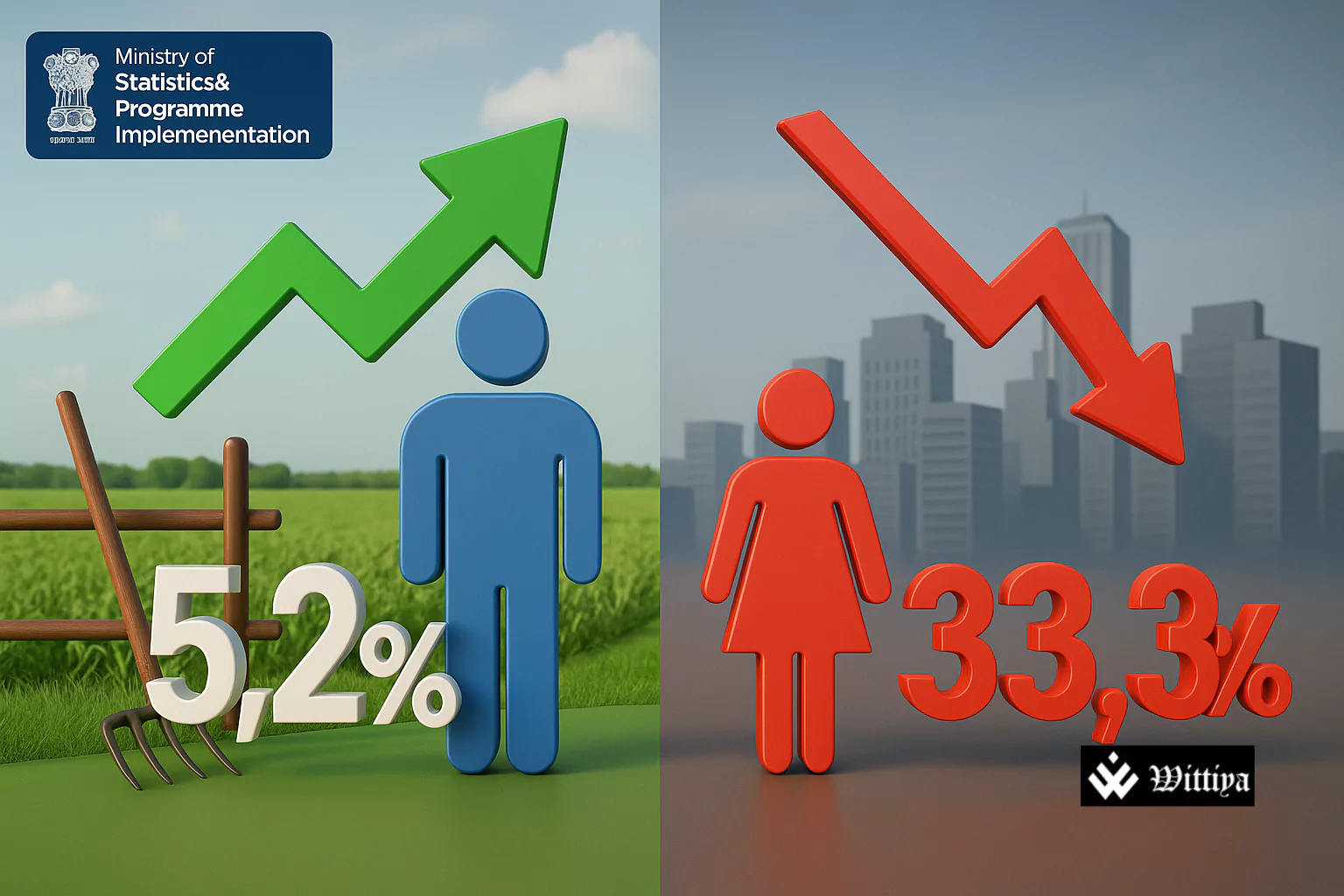
India’s unemployment fell to 5.2% in July, led by rural gains. However, urban markets showed strain, and women’s participation stayed low at 33.3%, reflecting deep structural gaps.
India’s unemployment rate for those aged 15 years and above eased to 5.2% in July from 5.6% in June, according to the latest Periodic Labour Force Survey (PLFS) released by the Ministry of Statistics and Programme Implementation. The improvement was primarily driven by rural areas, while urban labor markets continued to reflect strain.
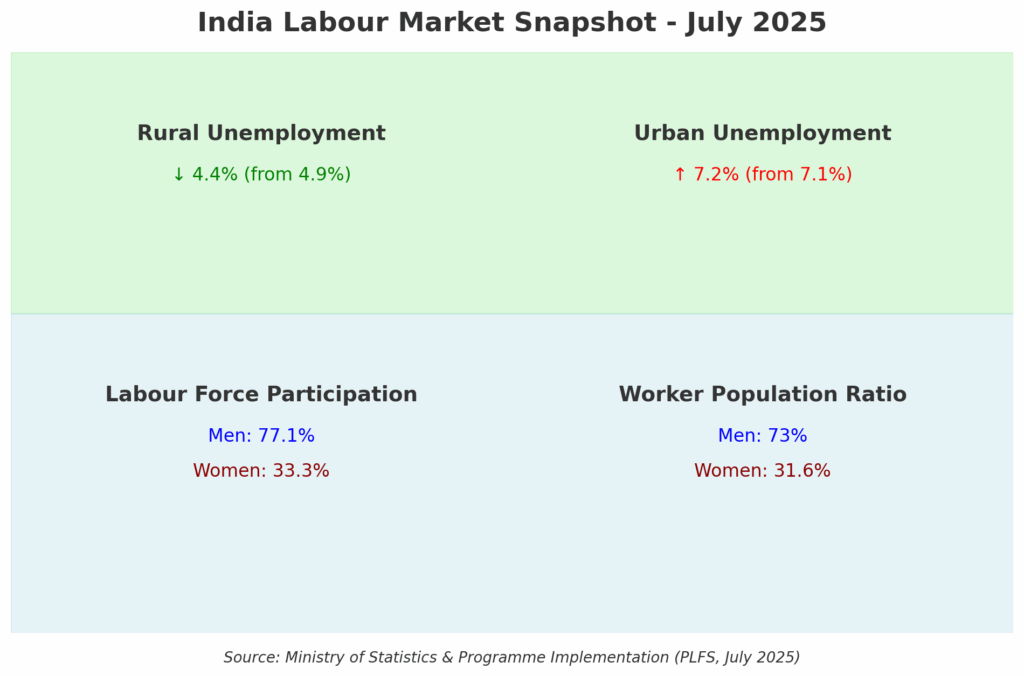
In rural India, unemployment declined to 4.4% in July from 4.9% in June, supported by higher seasonal employment in agriculture and allied activities. In contrast, urban unemployment edged up slightly to 7.2% from 7.1%, underscoring slower job creation in cities.
Gender disparities remained significant. The female labor force participation rate (LFPR) improved modestly to 33.3% in July from 32% in June, but women still remain underrepresented compared to men at 77.1%. While unemployment among urban women fell to 8.7% from 9.1%, male unemployment in cities rose to 6.7% from 6.4%, highlighting uneven recovery trends.

Experts point out that the structural divide between rural and urban job markets remains a critical challenge. Rural employment is dominated by self-employment and agricultural activities, while urban centers rely heavily on regular wage and salaried positions. This imbalance, combined with limited participation of young women—only 17.6% of women aged 15–29 are employed nationwide—continues to weigh on India’s workforce potential.
The worker population ratio (WPR), which reflects the share of the working-age population that is employed, stood at 52% in July. For men, the WPR was 73%, while for women, it was only 31.6%. Rural areas fared better at 54.4% compared to 47% in urban areas.
On average, 564 million people were employed in July, of which 397 million were men and 167 million were women. The services sector accounted for the largest share of urban employment, while agriculture continued to dominate rural job opportunities.
The Ministry highlighted that the revised PLFS framework, with expanded household coverage, now enables monthly reporting of labor market indicators, providing policymakers with more timely data.
Financial analysts suggest that while the easing of the national unemployment rate provides near-term relief, India’s labor market faces structural constraints, particularly in bridging gender gaps and ensuring consistent job creation in urban centers. They emphasize that addressing these disparities is critical for sustaining India’s long-term growth trajectory.
READ MORE ON