






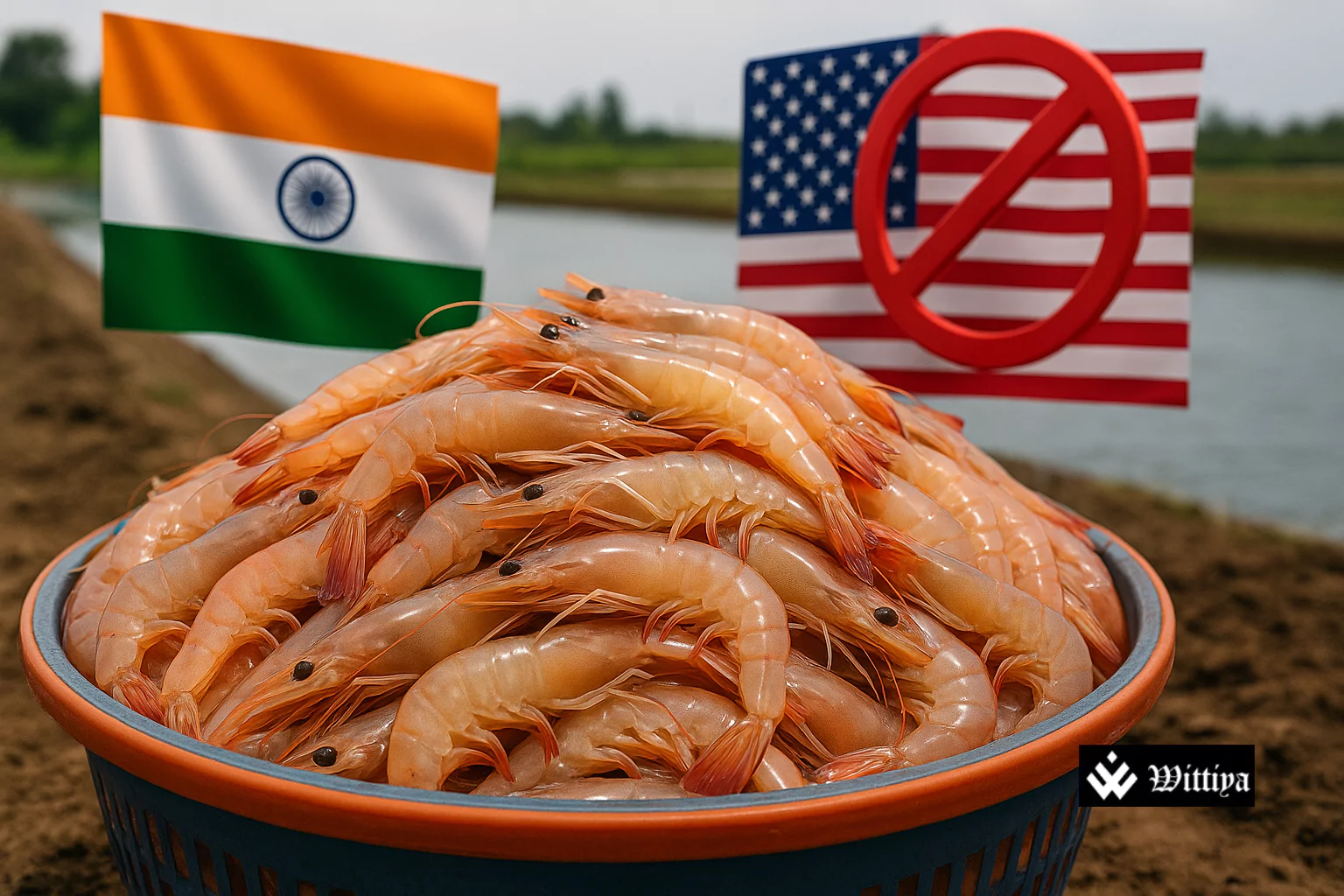
India’s shrimp export sector, especially in Andhra Pradesh, faces renewed strain as U.S. President Donald Trump reimposes a 25% tariff on Indian seafood imports starting August 1. With over 75% of shrimp exports originating from the state, the move threatens the livelihood of over 10 lakh people and puts the $2.55 billion marine export trade under pressure.
India’s aquaculture sector is once again under pressure today as the United States announced a 25% tariff on Indian shrimp exports, effective August 1. The decision is particularly devastating for Andhra Pradesh, the country’s largest shrimp-producing state, where aquaculture spans over 200,000 hectares and sustains more than 1 million families.
The relief shrimp farmers experienced in April, when reciprocal tariffs were briefly paused, has been short-lived. With over $2.55 billion worth of marine products exported to the U.S. in FY2023–24, shrimp alone accounted for 92%, according to trade data. Approximately three-quarters of these exports originated from Andhra Pradesh’s coastal belt, highlighting the region’s outsized exposure to American trade policy shifts.
Also Read: 5 Lakh Crore Gone: Indian Stock Market’s Steepest Fall in Months
Trade Headwinds Return Amid Fragile Sector Recovery
The reimposition of duties threatens to derail recovery efforts in a sector already battling high input costs, logistics bottlenecks, and fluctuating global demand. The Indian aquaculture industry has invested heavily in export infrastructure and compliance, especially in Andhra’s East Godavari, West Godavari, Nellore, and Krishna districts.
Exporters, who had previously priced their products factoring in duty waivers, now face contract renegotiations and reduced margins. Moreover, the additional unspecified penalties related to oil trade deepen the uncertainty in the export ecosystem.
Also Read: Indian benchmark indices, Sensex and Nifty, rebounding sharply from early losses
A Blow to Rural Livelihoods and Macro Stability
Experts suggest that the timing of the tariff could affect not only farm-level incomes but also India’s current account balance, given the scale of U.S.-bound shrimp exports. The reintroduction of duties may trigger price pressures domestically, with smaller producers likely to feel the brunt due to limited bargaining power and rising operational costs.
“India’s seafood sector must now pivot toward diversification, both in market destinations and value-added products. Relying on one dominant market poses structural risk,” stated a trade strategist analyzing the situation.
Today’s tariff announcement marks a significant setback for India’s shrimp export ambitions. As Andhra Pradesh’s aquaculture sector braces for impact, stakeholders across the value chain—from hatcheries to exporters—will require rapid strategic pivots to withstand the pressure. All eyes now turn to trade negotiators and domestic policymakers to shield this critical rural industry from further disruption.
READ MORE ON