


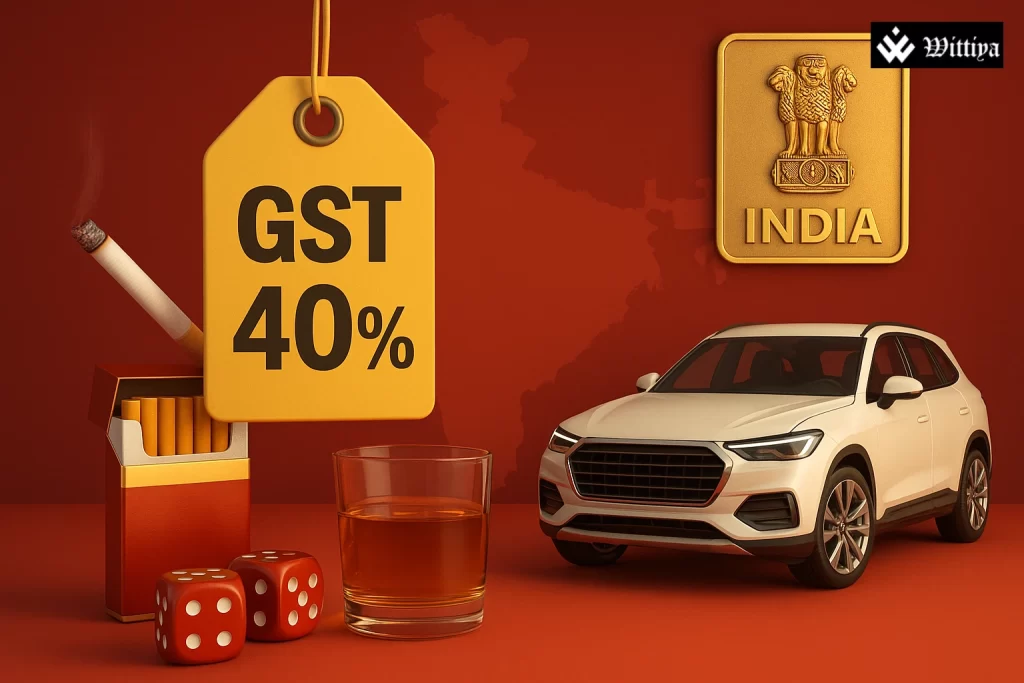
India’s revamped GST structure merges all the taxes that existed prior into one single high tax of 40% on sin and luxury goods effective 22nd of September, 2025.
Sin Goods Now Taxed 40% In India
India’s revised Goods and Services Tax (GST) system sets a 40% rate on sin goods, signifying a substantial change in the country’s tax policy. This new rate, which merges the earlier 28% GST and Compensation Cess into a single charge from September 22, 2025, was unveiled at the 56th GST Council meeting held on September 3, 2025.
Sin goods are things that are usually harmful to people’s health, morality, or society and include tobacco, sugary drinks, and some luxury goods. The government by imposing the highest tax on such products is trying to both lower the use of these articles and raise money from the products that are in high demand.
Categories of Sin Goods Under 40% GST
The goods and services that have been levied with the highest GST in India are such as:
- Tobacco Products: Pan masala, gutka, chewing tobacco, cigars, cheroots, cigarettes, and substitutes.
- Beverages: Aerated drinks, carbonated fruit drinks, caffeinated beverages.
- Automobiles: Motorcycles exceeding 350 cc, petrol cars over 1,200 cc, diesel cars over 1,500 cc, SUVs, MPVs, and other luxury vehicles.
- Luxury Items: Yachts, personal aircraft, racing cars.
- Gambling & Gaming: Online gaming, lotteries, betting, casinos, and admission to certain sporting events like IPL.
Now the above changes bring about an end to previously existing multiple levies by merging them into one simplified 40 percent GST, beginning September 22. This will make company compliance much easier.
Also Read: GST Reform: India Simplifies Tax Structure to 5% and 18%
Rationale Behind High GST on Sin Goods
Sin goods are charged high taxes for a variety of reasons:
- Public Health & Morality: Along with the harmful effects of products such as tobacco and sugar-saturated drinks on health, gambling and betting are considered socially unacceptable activities.
- Revenue Generation: The government can rake in substantial amounts of money from the luxury and harmful commodities that are in high demand without necessarily restricting the consumption of the essential commodities.
- Behavioral Influence: The raised tax rate is expected to lower the use of the products that are deemed harmful or non-essential.
Union Finance Minister Nirmala Sitharaman pointed out that the 40% GST will be levied only on certain sin goods and luxury items while the quotidian essentials will be charged at either 5% or 18%.
Cost Implications for Consumers
Consumers in India will witness both positive and negative sides of the new GST system:
- Increased Costs: Sin goods and luxury products will become more expensive as a result of the 40% tax. Tobacco, sugary drinks, large vehicles, and gambling services are among the things that will get costlier.
- Lower Costs on Essentials: Those products such as toothpaste, soaps, small cars, televisions, air conditioners, and insurance policies that were reclassified to 5% or 18% slabs might become cheaper at retail level.
- Zero-GST Items: Some staple food items such as UHT milk, paneer, and Indian breads are now part of the zero-GST category, thus making the cost of living more affordable.
Nevertheless, alcohol is still not included in the scope of the GST as states impose their own excise taxes, which usually account for 67–80% of the retail price of spirits.
Impact on Industry
The implementation of 40% GST on sin goods will have wide-ranging impacts on the whole sin industry in India which includes the manufacturers, retailers, and service providers as well:
- Tobacco Industry: In the case of producers, due to a decrease in consumption, sales volumes may shrink while the government would get tax revenue that is higher in value.
- Beverage Manufacturers: The price for aerated drinks and for the consumption of caffeine will be increased, this will then lead to a shift in consumer preference to those alternatives that are less taxed.
- Luxury Automobiles & Yachts: The manufacturers of luxury automobiles can flux their price strategies or use PR to keep the revenue flow intact with rising costs due to the product.
- Gaming & Casinos: Those service providers who are to be affected by higher operational costs will still have to comply with the consolidated tax framework.
Industry experts are expecting changing demand behaviors, whereby consumers will tend to buy less from sin goods that are highly taxed and more from the essentials that they can still afford.
Simplified Tax Compliance
The GST Council’s decision to merge the 28% GST (plus Cess) rate into a single 40% slab is aimed at simplifying the tax return filing process for businesses. Previously, there were multiple levies that created complexity and additional administrative burdens.
For example, cigarettes and certain motor vehicles were taxed at 28% GST plus Compensation, effectively totaling nearly 40%. The new system eliminates this duplication, streamlining tax payments and reducing accounting overhead.
FAQ’s
What are sin goods under GST 2.0 in India?
Sin goods include products considered harmful or luxury, such as tobacco, pan masala, sugary drinks, luxury cars, yachts, and gambling services.
What is the GST rate on sin goods in India now?
The major reason for such a high GST rate is to discourage the consumption of harmful or non-essential products, to create government revenue, and to make the tax system less complicated than before.
Why has India imposed 40% GST on sin goods?
The higher tax is meant to discourage harmful consumption, generate more government revenue, and simplify compliance by merging multiple levies.
Are alcohol and liquor covered under GST Sin goods?
No. Alcohol remains outside GST. States impose their own excise duty, which makes up 67–80% of the retail price of liquor.
How will the 40% GST affect consumers under GST 2.0?
Products like tobacco, large SUVs, sugary beverages, and online gaming will become costlier, while essentials such as paneer, UHT milk, and insurance are cheaper under lower or zero GST slabs.
READ MORE ON