


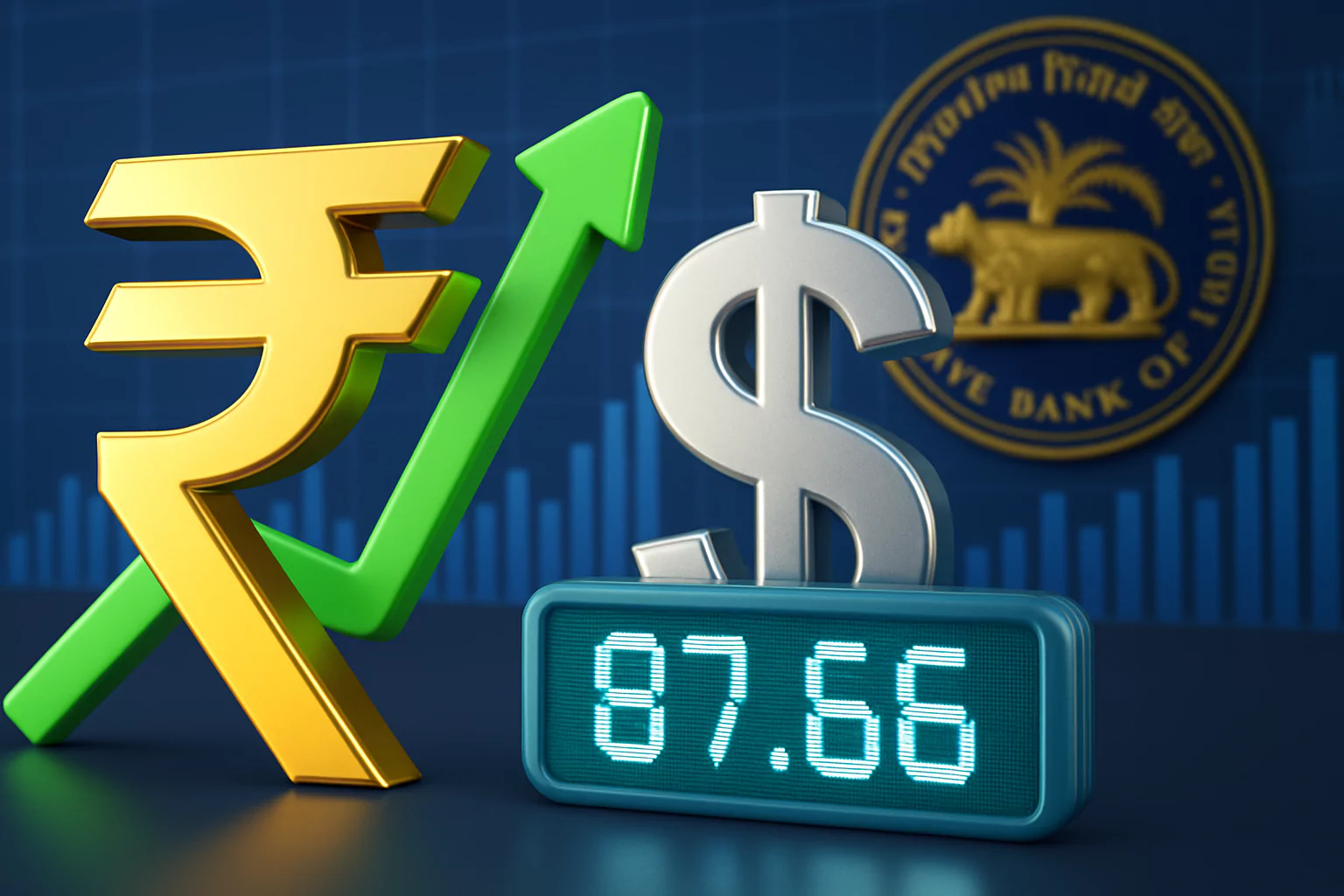
India’s rupee staged a modest recovery on July 31, 2025, after recording its steepest single-day fall in over three years. The rebound came amid suspected RBI intervention following the U.S. government’s sweeping tariff move and penalties related to Russian crude imports. Despite recovering 14 paise to open at 87.66 per U.S. dollar, the currency continues to trade under pressure.
The Indian rupee rallied early today, recovering 14 paise from its all‑time low to open at ₹87.66 against the U.S. dollar. This rebound comes after an 89‑paise drop yesterday—the steepest single‑day fall in more than three years—triggered by U.S. tariff measures and concerns over Russia‑linked trade penalties.
Suspected intervention by the Reserve Bank of India (RBI) helped stabilize the currency. Traders attributed today’s rebound to RBI activity as markets responded to President Trump’s announcement of a 25% tariff on Indian imports, along with sanctions on Indian trade with Russia’s crude and defense sectors.
In interbank trade, the rupee initially weakened to ₹87.74 before recouping ground. Experts note the currency continues to trade with a negative bias amid heightened risk sentiment and capital outflows.
The rupee has now depreciated over 3% since early 2025, after peaking near ₹83.75 in April. This depreciating trend reflects elevated U.S. dollar demand from oil importers and risk-averse investors, along with policy-induced uncertainties.
Also Read: Trump Labels India, Russia as ‘Dead Economies’—Is He Right?
The RBI appears to be managing rupee volatility through measured intervention in the forex markets, while avoiding excessive interference in price discovery.
Meanwhile, the U.S. Federal Reserve maintained interest rates steady today and signaled that rate cuts remain premature, reinforcing dollar strength and capital shifts away from emerging markets. The dollar index stands firm at 99.78, intensifying pressure on the rupee.
Brent crude prices edged lower to $73.10 per barrel, down 0.19%, providing mild relief on the import bill but not enough to substantially support the rupee.
With upcoming U.S. tariffs and sustained dollar demand, Asia’s premiere trade financings and export corporates may continue to face currency headwinds. Nevertheless, astute market interventions by the RBI and prudent hedging practices could help temper sharp rupee fluctuations in the near term.
READ MORE ON