






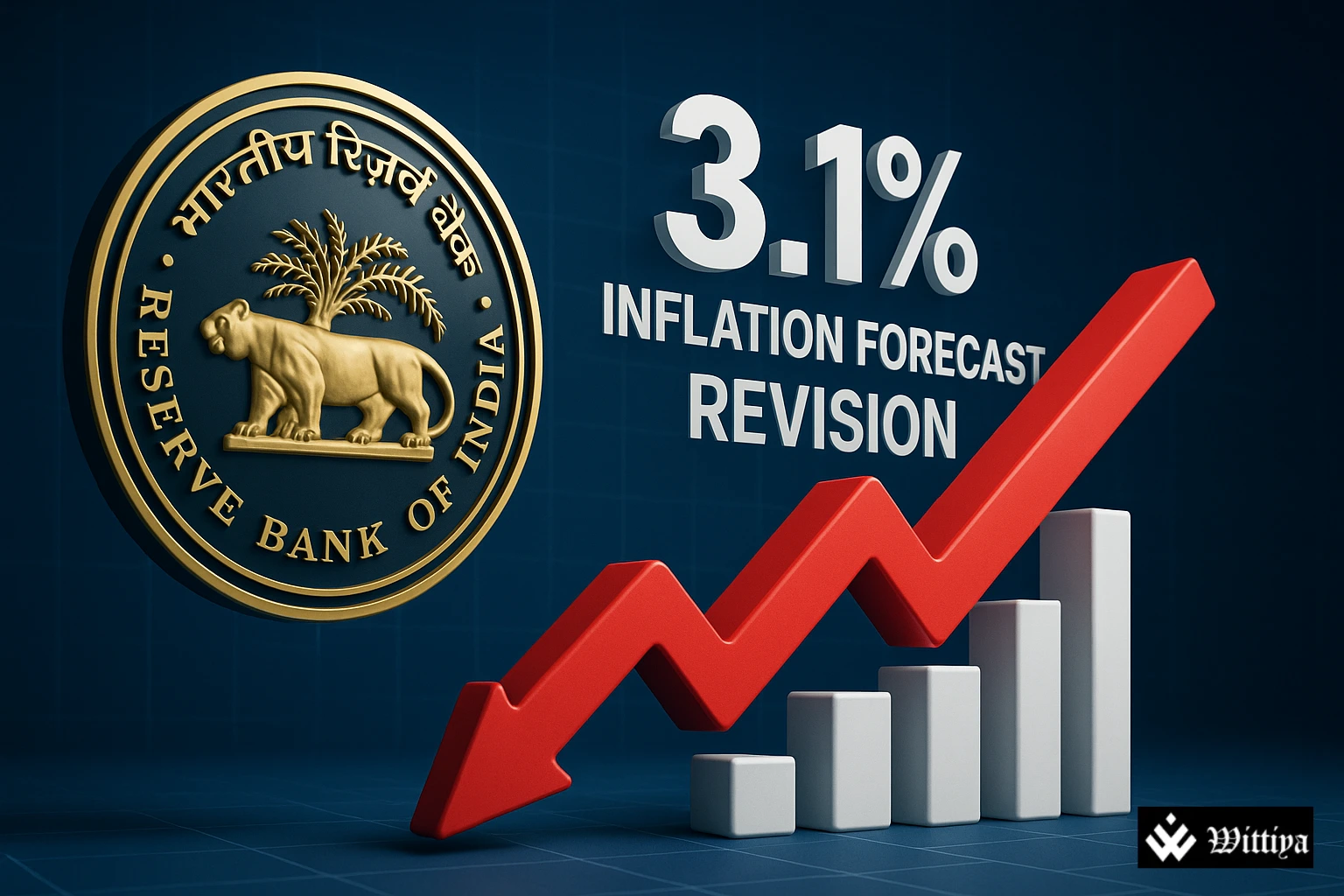
The Reserve Bank of India (RBI) has revised its FY26 headline inflation forecast downward to 3.1%, signaling a more stable price environment. However, a rise in inflation is expected toward the final quarter due to base effects and evolving demand conditions.
The Reserve Bank of India (RBI), headquartered in Mumbai, is the nation’s central bank responsible for monetary policy, financial regulation, currency issuance, and ensuring overall economic stability. At its recent Monetary Policy Committee (MPC) meeting, the RBI presented a mixed outlook on inflation and growth for the ongoing fiscal year.
According to the MPC, overall inflation in FY26 is projected to remain moderate at 3.1%, revised downward from 3.7% estimated in June. The easing is attributed to favorable base effects, stable food supply conditions, robust kharif sowing, and sufficient food grain buffer stocks.
Quarter-wise projections for FY26 are as follows:
| Quarter | Projected CPI Inflation |
| Q2 FY26 | 2.1% |
| Q3 FY26 | 3.1% |
| Q4 FY26 | 4.4% |
While this downward revision reflects improving price stability, the RBI cautioned that inflation may exceed the 4% medium-term target in Q4 FY26 and into Q1 FY27, where the Consumer Price Index (CPI) is expected to reach 4.9%.
Also Read: RBI Maintains Repo Rate at 5.5%: Full Breakdown and Implications
The central bank emphasized that inflation risks are “evenly balanced,” with core inflation (excluding food and fuel) holding steady at 4% in recent months. In June, core inflation edged slightly higher to 4.4%, partly driven by increased gold prices.
Despite the easing of geopolitical uncertainties, the MPC noted that global trade frictions, including rising tariffs, continue to exert pressure. Nevertheless, retail inflation in India dropped to 2.1% in June—its lowest in over six years—driven by a notable decline in food prices.
Given the ongoing uncertainties in global trade and commodity pricing, the RBI has decided to keep the policy repo rate unchanged at 5.50%, maintaining a neutral stance to balance inflation control and support for economic growth.
RBI Governor Sanjay Malhotra highlighted that while inflation remains subdued at present, it is largely due to the high volatility in food prices. He reaffirmed the RBI’s commitment to manage liquidity and ensure adequate credit flow, especially to productive sectors.
The RBI also reiterated the inflationary sensitivity to crude oil prices. A 10% increase in global crude prices could elevate India’s headline inflation by 20 basis points, as per the central bank’s analysis. Given India’s significant dependence on oil imports, the RBI stressed the need to transition to alternative fuel sources for long-term macroeconomic stability.
Also Read: What’s Behind the Sudden Fall of Sensex Before RBI’s Big Day?
Below is a quick view of RBI’s current inflation outlook:
| Parameter | Estimate |
| FY26 Headline Inflation Forecast | 3.1% |
| Q1 FY27 CPI Projection | 4.9% |
| Core Inflation (June 2025) | 4.4% |
| Repo Rate | 5.50% (unchanged) |
| Retail Inflation (June 2025) | 2.1% |
| Crude Oil Sensitivity Impact | +20 bps (per +10% increase) |
In its annual report for FY25, the RBI had already indicated that FY26 inflation would be moderated by base effects and supply-side improvements, but cautioned about potential volatility stemming from monsoon variability and global commodity shocks.
With a strong monsoon performance and consistent macroeconomic management, the RBI expects that its current stance will foster both price stability and sustainable economic growth going forward.
READ MORE ON