






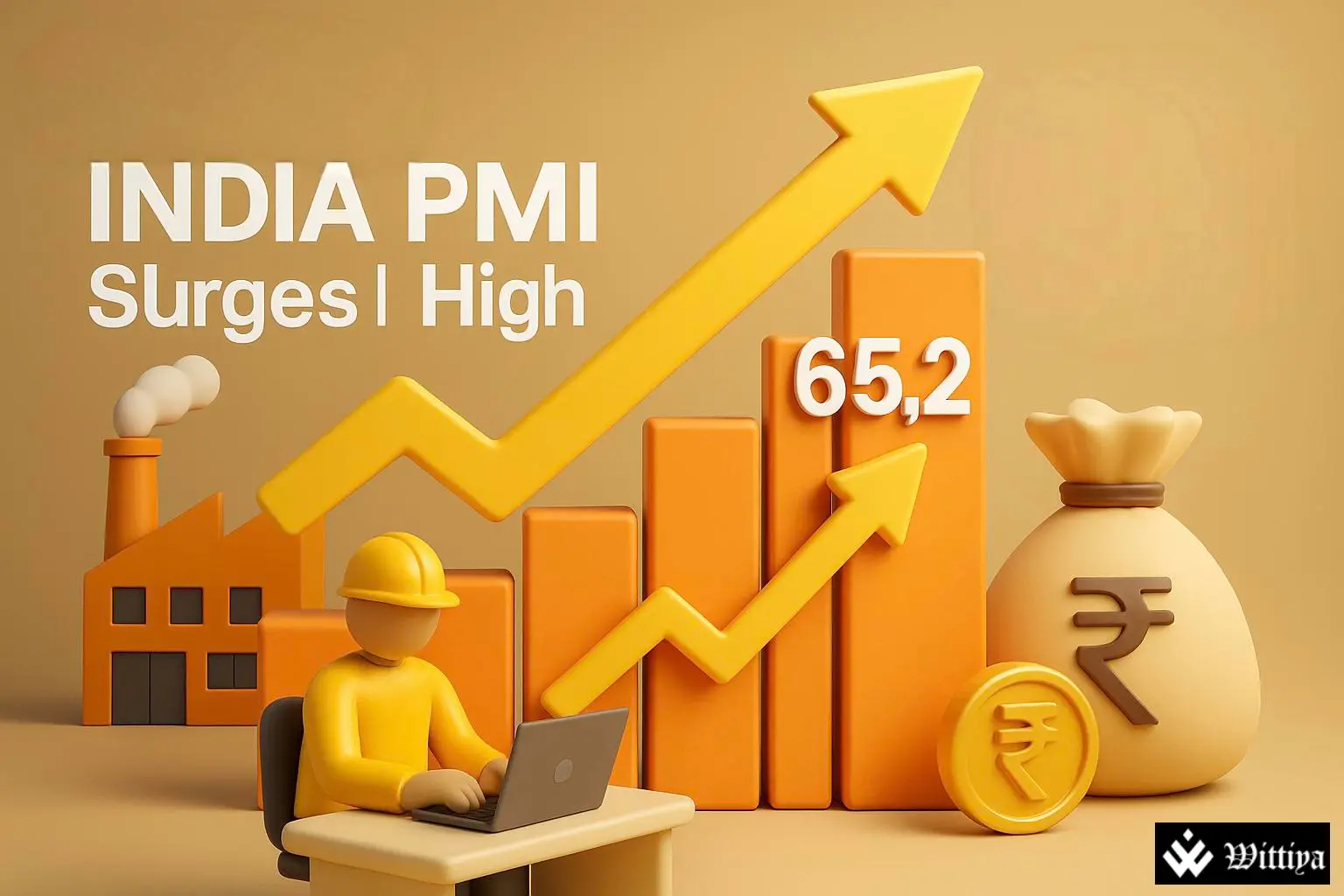
India’s private sector activity surged to record highs in August, with the HSBC India Composite PMI touching 65.2. Fueled by exceptional domestic and international demand, businesses hiked prices at the fastest pace in over a decade, strengthening expectations that the Reserve Bank of India (RBI) may hold its monetary stance for longer.
India’s PMI Records Historic High
The HSBC India Composite Purchasing Managers’ Index (PMI), compiled by S&P Global, surged to 65.2 in August 2025, up sharply from 61.1 in July. This marks the strongest expansion since the survey began in December 2005 and reflects robust activity across both the services and manufacturing sectors. The reading, well above the neutral 50-mark, underscores the resilience of India’s economy.
Demand-Driven Expansion
The record PMI expansion was powered by a sharp rise in new orders, signaling the strongest demand momentum in nearly 18 years. International trade also played a vital role, with export business growing at the fastest pace since composite data collection began in 2014. This dual push from domestic and global demand provided firms with greater confidence and pricing power.
Services Sector Leads the Charge
The services sector, India’s largest economic contributor, drove much of this momentum. Its activity index rose to an unprecedented 65.6, indicating accelerated growth in finance, IT, logistics, and other service-based industries. Meanwhile, the manufacturing PMI climbed to 59.8—its highest since January 2008—highlighting the strength of industrial output and production efficiency.
Price Hikes and Inflationary Pressure
The growth, however, came with a significant uptick in pricing pressures. Firms passed on higher costs from raw materials and wage bills to customers, resulting in the steepest increase in selling prices since February 2013. Strong demand enabled companies to sustain these hikes without denting order books, but the trend poses risks of broader inflationary pressure across the economy.
Also Read: RBI Poised to Hold Rates in October as Inflation Trends Reverse in August
Implications for RBI Policy
The surge in activity and prices may influence the Reserve Bank of India (RBI) to maintain its restrictive monetary policy stance for a longer period. While the economy is booming, the central bank is likely to remain cautious about inflationary risks, potentially delaying an anticipated interest rate cut in the upcoming quarters.
Employment and Business Sentiment
The private sector’s hiring momentum also gained speed, with job creation at its fastest pace since June. Businesses expressed optimism about the future, with overall sentiment reaching its strongest level since March. This reflects confidence in sustained demand and economic stability over the next year.
READ MORE ON