


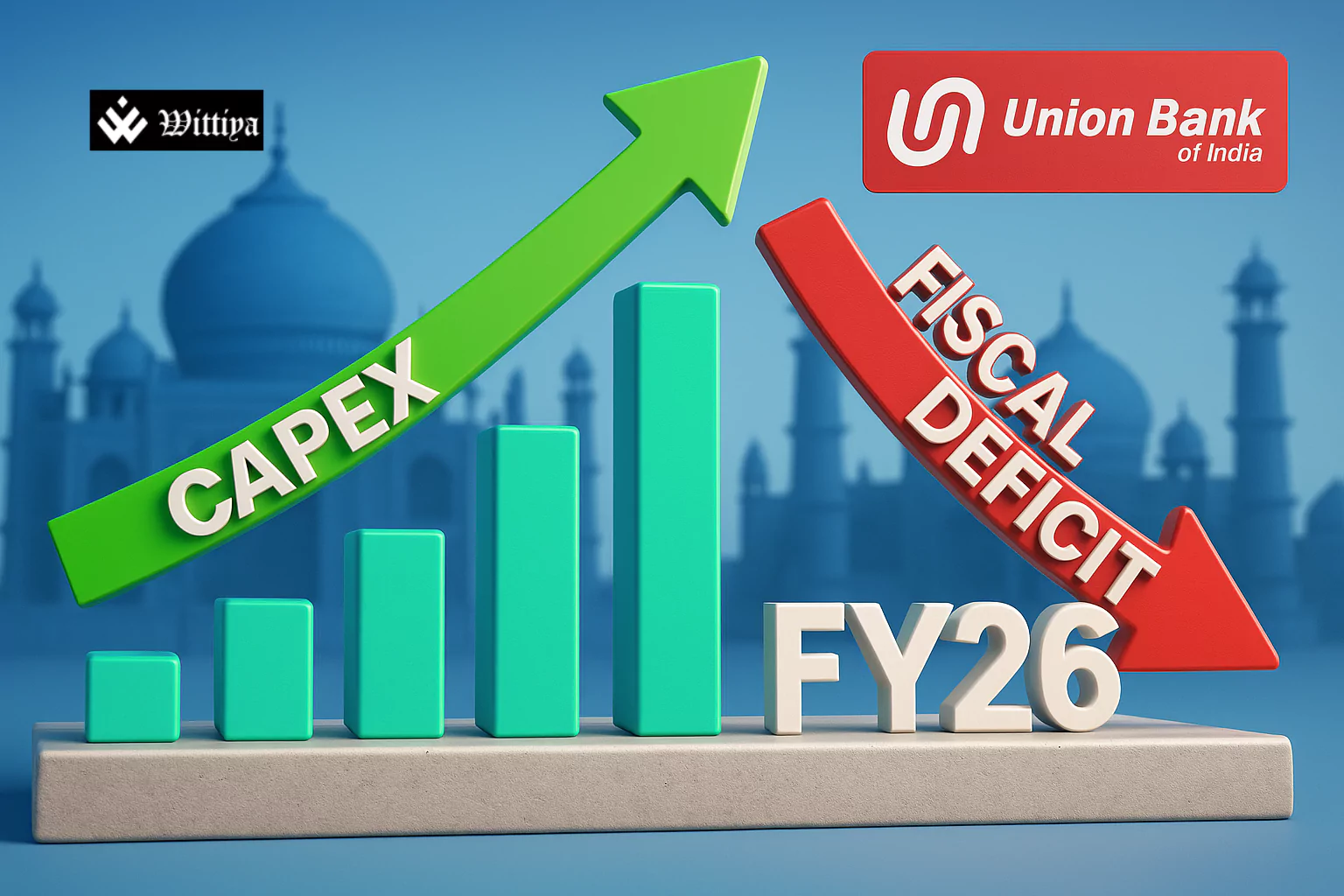
India has kicked off fiscal year 2025–26 with a healthy balance of fiscal discipline and capital spending, according to a report by Union Bank of India. The country reported a significantly lower fiscal deficit for April and May compared to last year, boosted by strong revenue receipts and a historic dividend from the Reserve Bank of India. This dual approach underscores the government’s efforts to control the deficit while driving infrastructure-led growth.
India has begun its financial year 2025–26 with encouraging signs of both fiscal consolidation and economic stimulus, according to a report released by Union Bank of India (UBI). The public sector lender noted that the country’s fiscal deficit for April and May is significantly lower than the same period last year, while capital expenditure has increased notably.
UBI, one of India’s largest public sector banks, said in its latest economic review that strong revenue receipts, including a record surplus transfer from the Reserve Bank of India, have played a key role in narrowing the fiscal deficit. This surplus transfer, the highest ever, has supported the government’s ability to spend on infrastructure and development without compromising fiscal prudence.
“India has made a promising start to FY26 as fiscal consolidation and capital expenditure have gone hand-in-hand,” the bank’s report stated, highlighting the government’s twin focus on maintaining budgetary discipline while continuing to stimulate the economy through infrastructure investment.
The central government’s capital spending in the first two months of FY26 is in line with its long-term vision to build roads, railways, and other public assets that can support long-term growth and employment. Analysts note that this strategy is crucial for boosting domestic demand and creating multiplier effects across various sectors.
Experts also believe that the government’s adherence to its fiscal roadmap, even while investing in growth, is a positive signal for credit rating agencies and foreign investors. The government has reaffirmed its commitment to reducing the fiscal deficit to below 4.5% of GDP by FY26.
As India’s economic indicators continue to show resilience amid global uncertainty, the early numbers from FY26 offer a strong foundation for sustained recovery and fiscal sustainability.