


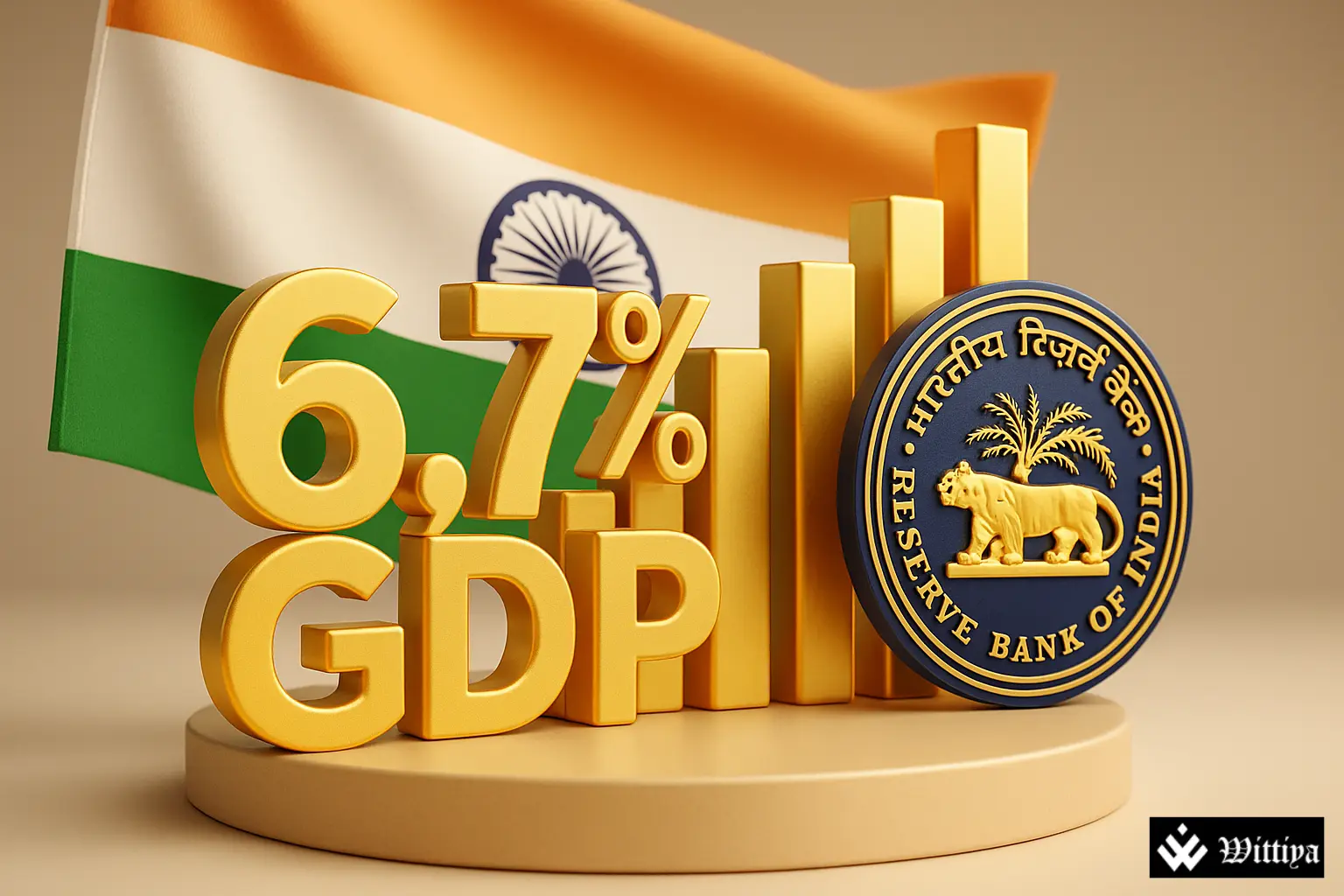
India’s Gross Domestic Product (GDP) is projected to grow 6.7% in the first quarter of FY26, in line with the Reserve Bank of India (RBI) forecast. The estimate reflects strong domestic demand, infrastructure-led government expenditure, and resilience across manufacturing and services sectors.
The Reserve Bank of India (RBI), headquartered in Mumbai, Maharashtra, is India’s central banking authority responsible for monetary policy, financial stability, and regulation of the banking system. Its quarterly projections set the tone for fiscal planning, corporate investment, and global investor sentiment towards India.
For the April–June quarter of FY26, India’s economy is expected to expand at 6.7%, matching the RBI’s forecast. This projection reinforces the nation’s role as one of the fastest-growing large economies in the world.
Growth in the first quarter has been supported by several factors:
- Domestic Consumption: A steady rise in consumer demand, particularly in urban markets, has contributed to retail and services expansion.
- Government Expenditure: Increased capital outlay on infrastructure, roads, and energy projects has created a multiplier effect across industries.
- Manufacturing Revival: Core industries and export-oriented manufacturing hubs have shown positive momentum, strengthening India’s industrial base.
- Services Sector Resilience: Sectors like IT services, financial services, and logistics have maintained steady growth, contributing significantly to GDP.
In addition, India’s digital transformation and adoption of emerging technologies such as artificial intelligence (AI) and fintech solutions are fueling new revenue streams and enhancing efficiency in both public and private sectors.
Despite the encouraging outlook, inflationary pressures remain a concern. Rising food prices and volatile global crude oil markets continue to challenge policymakers. The Ministry of Finance and the RBI have focused on balancing inflation management with measures that support growth, ensuring stability in credit flows and capital markets.
India’s position as a preferred investment destination remains strong. The country continues to attract global capital inflows into equities, government bonds, and digital infrastructure projects, further strengthening its balance sheet.
The forecasted 6.7% GDP growth not only highlights India’s economic resilience but also sets the stage for robust performance in the coming quarters. Sustained reforms, stable policy frameworks, and global investor confidence are likely to keep India at the forefront of emerging market growth.
READ MORE ON