






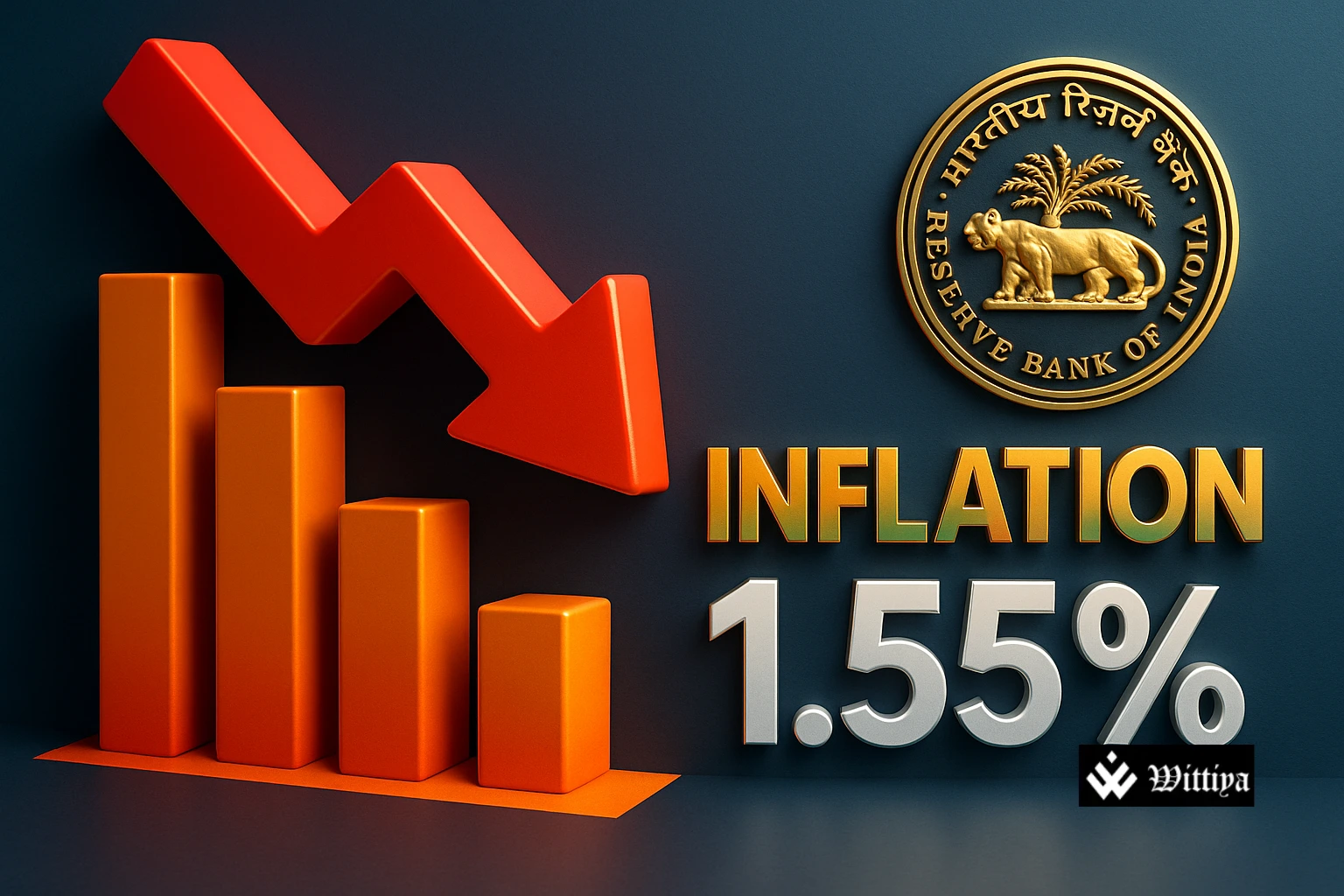
India’s July retail inflation dropped to an eight-year low of 1.55% on falling food prices. While this offers near-term relief, the RBI is expected to maintain its policy stance amid medium-term inflation concerns and global trade challenges.
India’s retail inflation eased to 1.55% in July, marking its lowest level since June 2017, as prices of key food items, including vegetables and pulses, declined. The drop follows June’s 2.10% reading and places inflation below the Reserve Bank of India’s (RBI) mandated tolerance band of 2–6% for the first time in eight years.
The moderation, while positive for consumers, comes with mixed implications. Falling prices in the agricultural sector may pressure farm incomes, and the central bank is expected to maintain its current monetary stance due to medium-term inflation risks.
Inflation Dynamics and Underlying Drivers
The latest decline was driven primarily by a fall in food prices, with notable softening in vegetables and pulses. While the near-term inflation trajectory appears benign, analysts caution that supply chain disruptions, seasonal effects, or global commodity price volatility could quickly reverse the trend.
Monetary Policy Outlook
Earlier this month, the RBI revised its inflation projection for FY26 to 3.1% from 3.7%, signalling greater confidence in price stability. However, the central bank maintained its benchmark interest rates, prioritising economic growth stability over additional easing.
Market consensus suggests that the current inflation reading is unlikely to trigger an immediate rate cut, given the bank’s medium-term target range and a structural bias towards maintaining inflation near 4%.
Also Read: Markets Today: Asia Slips on Tariff, Inflation, and Rate Path Jitters
External Sector Risks
While domestic price pressures have eased, global trade developments present potential headwinds. Higher tariffs on exports could dampen external demand and trim GDP growth by 30–40 basis points. Analysts note that prolonged trade pressures could influence monetary policy if domestic growth momentum weakens.
Fiscal Performance and Revenue Trends
According to the Central Board of Direct Taxes, net direct tax collections fell 3.95% year-on-year to ₹6.64 lakh crore between April 1 and August 11, driven by a 10% rise in refunds to ₹1.35 lakh crore. Corporate tax receipts rose 3% to ₹2.29 lakh crore, while non-corporate tax collections—which include individuals, HUFs, and firms—declined 7.45% to ₹4.12 lakh crore.
Strategic Policy Considerations
The combination of low inflation, softening food prices, and mixed fiscal performance underscores the RBI’s delicate balancing act. Policymakers must weigh the benefits of maintaining an accommodative stance against the risk of re-accelerating inflation, especially given medium-term upward pressures in the 4% range.
READ MORE ON