






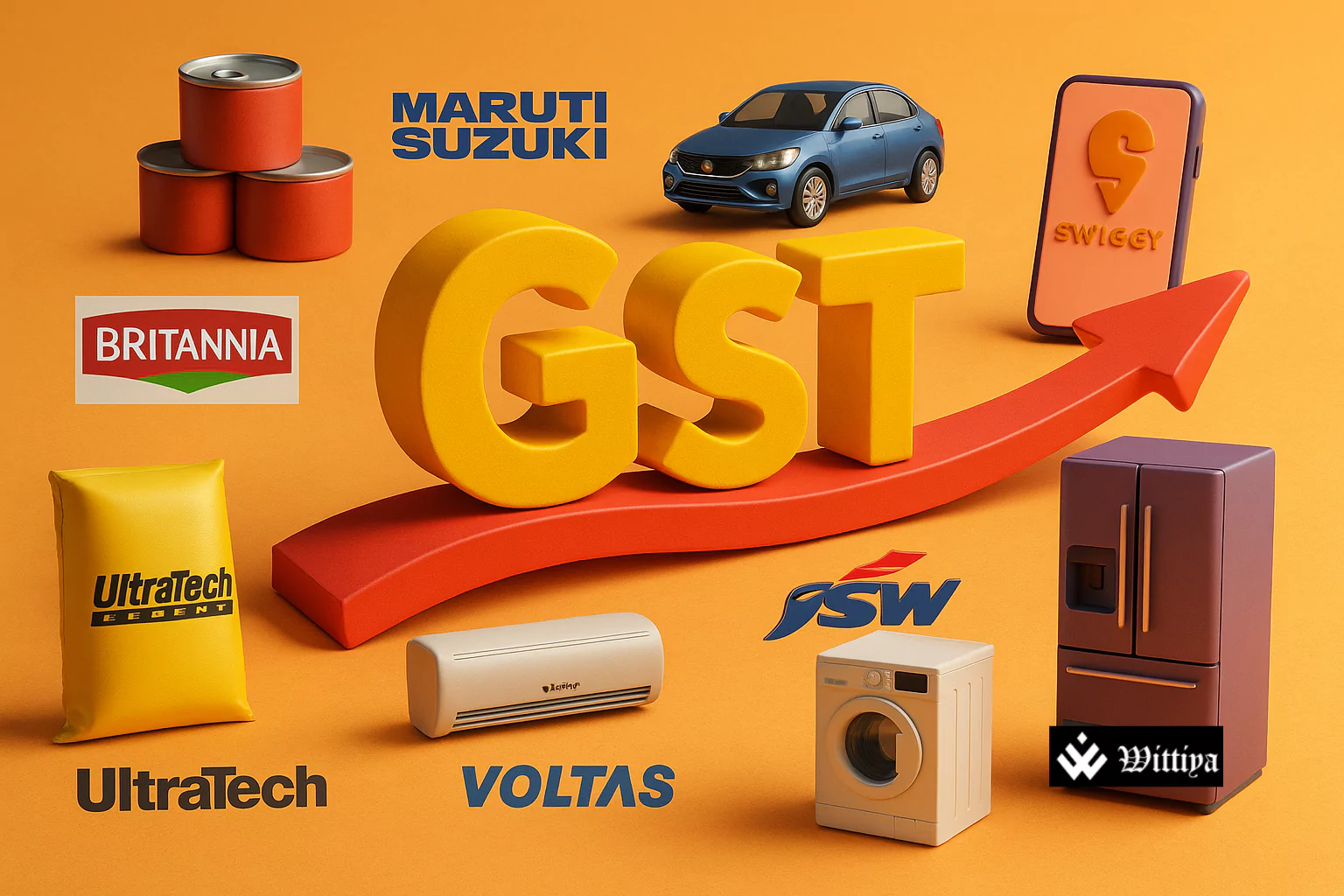
India’s GST reforms, coupled with fiscal measures, are set to boost consumption-driven stocks in FY26. Analysts highlight opportunities across FMCG, automobiles, durables, retail, and QSRs as market momentum shifts from capex to consumer demand.
India’s recent announcement of a Goods and Services Tax (GST) rejig, combined with the expected fiscal push from the upcoming eighth pay commission, is set to shape equity market trends in fiscal 2025-26 (FY26). Analysts believe the reforms will create stronger momentum for consumption-driven sectors while forcing a reallocation of capital away from capex-heavy plays in the near term.
The Nifty India Consumption Index has already outpaced broader benchmarks, rising nearly 11% this fiscal compared with a 5% gain in the Nifty 50 Index, underscoring investor preference for consumer-focused themes. Experts anticipate that the proposed GST changes will further amplify this divergence.
Sectors likely to benefit include FMCG leaders such as Hindustan Unilever, Britannia, and Tata Consumer, where stronger demand coupled with easing input costs could drive margin expansion. In autos, companies such as Maruti Suzuki, Ashok Leyland, and two-wheeler manufacturers are expected to gain from lower GST rates. Consumer durables players including Voltas, Blue Star, and Amber Enterprises are also positioned for growth as GST reductions align with festive season demand.
Construction-linked sectors stand to benefit as well. Lower GST on cement could provide a structural tailwind for companies such as Ultratech Cement, boosting developer margins and infrastructure-linked demand.
Also Read: India’s GST Collection Hits ₹1.96 Trillion: Key Factors Behind the Rise
Logistics and quick commerce operators like Delhivery may see indirect gains from stronger retail volumes, while the hospitality segment—represented by LemonTree Hotels—is expected to capture demand recovery, supported by reduced tax on mid-market hotel tariffs.
Financial institutions are also positioned to benefit from higher consumer spending. HDFC Bank and Bajaj Finance could see higher loan disbursements in auto, durables, and personal finance categories, with lending margins supported by broader consumption growth.
| Sector | Key Stocks | Rationale |
|---|---|---|
| Autos | Maruti, Tata Motors, Ashok Leyland | 4Ws and CVs to benefit as GST reduces from 28% → 18% (and 28% → 18% vs. 28% currently for CVs). |
| Banks | ICICI Bank, HDFC Bank, IDFC First Bank | Sector-wide benefit; debt demand to rise; household confidence + credit growth into double digits; direct benefit for consumer-heavy lenders and card players. |
| NBFCs | Bajaj Finance | EMI obligation for consumer durables should reduce, boosting NBFC lending in this segment. |
| Cement | Ultratech, JK Cement | Sector sentiment positive; lower GST from 28% → 18% = 7.5%/8% price cut; demand impact low as prices are relatively inelastic. |
| Consumer Staples | HUL, Britannia | Most items at 18%, though staples benefit as some raw materials at 12% → lower input GST; key revival area for govt. |
| Consumer Durable | Voltas, Havells | ACs benefit from GST 28% → 18%; Havells ~24% topline via Lloyd’s. |
| EMS | Amber | Key AC supplier; benefits from GST 28% → 18% on RACs. |
| Hotels | Lemon Tree, Indian Hotels | GST on sub ₹7,500 ARR inventory from 12% → 5%; Indian Hotels (with sub-₹7,500 ARR inventory) to gain. |
| Insurance | Niva Bupa, Max Life, HDFC Life, Star Health | Senior citizen policies currently 18% → may reduce to 5%/0%; if cut, term-life and health insurers benefit. |
| Logistics | Delhivery | Volume rise in consumer durables & electronics; key part of Delhivery’s volumes. |
| Quick Commerce | Eternal, Swiggy | Higher consumption demand; large portion fulfilled via Q-commerce. |
| Retail | Relaxo, Bata, Campus | Mass market footwear (<₹1,000) GST 5% → 18%; organized players benefit as shift from unorganized. |
While the reforms are expected to inject an estimated $13 billion boost to annual consumption if 65% of payouts flow back into spending, analysts caution on the fiscal side. Any revenue shortfall may require expenditure rationalization, potentially curbing capex and social sector allocations. This trade-off highlights the balancing act policymakers face between stimulating demand and sustaining fiscal discipline.
From a market perspective, equity strategists expect a high single-digit return from the Nifty for the remainder of FY26, with consumer-oriented stocks likely to outperform. The structural tilt in favor of consumption underscores a broader shift in investment strategy—favoring consumer staples, autos, durables, and cement over capital goods and infrastructure.
As India enters the festive season with a restructured GST regime, investors are advised to remain overweight on consumer sectors. This tilt represents not just a short-term demand story but a structural trend that may define equity allocation patterns through FY26.
READ MORE ON