


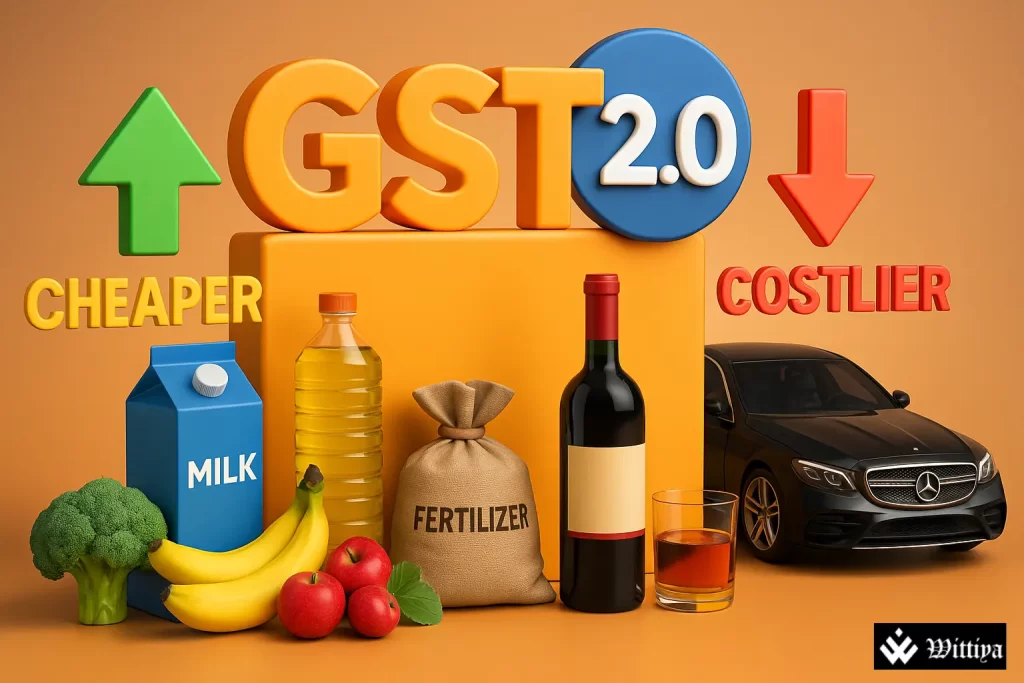
India’s GST Council has approved a comprehensive GST 2.0 reform with effect from 22 September, which will result in a reduction in the prices of food, daily necessities, fertilisers, consumer goods, and small vehicles, while coal, luxury cars, and sin products will be subject to higher taxes.
The Goods and Services Tax (GST) Council, based in New Delhi, is the apex decision-making authority of India in the field of indirect taxes. Led by the Union Finance Minister, the Council proposes tax policies, rationalises rates, and ensures the compatibility of the taxation system across the states. Since its creation in July 2017, the GST Council has been the mainstay for the implementation of radical tax reforms which have aimed to both ease up the compliance process and to add to the economic growth.
GST 2.0 Tax Changes: A Game-Changing Overhaul
The 56th GST Council meeting, which took place in New Delhi on September 3, 2025, has been the defining moment of India’s tax system. Named GST 2.0, the reform is from September 22, 2025, and it introduces the rationalisation of a wide range of taxes in diverse sectors.
This significant alteration is no different from the extent to which it influences household budgets, small businesses, or large industries, as it provides them with relief in the areas of necessities while the taxation on luxury and sin goods is getting tighter.
What Gets Cheaper Under GST 2.0 Tax Changes
1. Food & Daily Essentials
- One of the most significant features of GST 2.0 tax changes is that the tax on daily consumables has been reduced drastically:
- Milk Products: UHT milk is totally free of tax. Condensed milk, butter, ghee, paneer and cheese have come down from 12% to either 5% or zero.
- Staples & Packaged Foods: Corn starch, malt, pasta, biscuits, cornflakes, chocolates, and cocoa products have been lowered from the range of 12–18% to 5%.
- Dry Fruits & Nuts: Almonds, cashews, pistachios, hazelnuts, and dates have been reduced to 5% from 12%.
- Sugar & Confectionery: The transition of refined sugar, syrups, toffees, and candies to 5% has been made.
- Namkeens & Savouries: The rate has been brought down from 18% to 5% for packaged snacks like bhujia, mixtures, and namkeen.
- Water: Mineral and aerated waters that do not contain sugar or flavour have been reduced from 18% to 5%.
Also Read: GST Council Meeting: Big Tax Reshuffle, EVs & Festive Push
2. Agriculture & Fertilisers
- Fertilisers have been decreased to 5% (from 12–18%).
- Crop inputs and seeds have been rationalised to 5%.
- 3. Healthcare & Education
- Life-saving drugs and medical devices: Went to 5% or zero.
- Books & Educational materials: Either completely tax-free or limited to 5% of the tax.
4. Consumer Goods & Lifestyle Products
- Electronics: The entry-level appliances that have been lowered from 28% to 18%.
- Textiles & Footwear: The reduction is from 12% to 5%.
- Personal Care: The rate of hair oil, shampoo, toothpaste, and dental floss has come down from 18% to 5%.
- Paper products: Certain grades of paper products are now tax-free.
5. Auto & Mobility
- Small cars and motorcycles (≤350cc): The rate was lowered from 28% to 18%.
- EVs: A rate of 5% remains unchanged.
- Car parts: The rate was standardised at 18%.
6. Other Sectors
- Renewable energy devices: The rate was brought down to 5%.
- Construction inputs: The rate went down from 12% to 5%.
- Sports goods, toys, handicrafts, leather, and woodwork: These products had been untaxed, but now they have been grouped under 5%.
What Gets Costlier Under GST 2.0 Tax Changes
1. Sin & Luxury Goods
- The GST Council has continued the imposition of elevated taxes on sin products.
- Alongside an additive cess, tobacco products, pan masala, gutkha, bidi, and zarda will stay at high tax slabs.
- All sugar-based aerated waters and sweetened beverages will move from 28% to 40%.
- Luxury cars and premium liquors will continue to be under the new 40% slab.
Also Read: GST Reforms in India Under Review
2. Energy & Fuels
- Coal: The coal rate was increased drastically from 5% to 18%, which is going to have a domino effect on power producers, and the steel industries will also be affected.
3. Services & Restaurants
- Restaurants in premium premises that are allowed 18% with input tax credit will lose eligibility; thereby, tax compliance will become stricter.
- Lotteries and intermediaries will be put under tighter valuation norms.
Impact of GST 2.0 Tax Changes on Households and Businesses
The rollout of GST 2.0 tax changes is an immediate win for householders, farmers, students, and small-scale businesses as it cuts the prices of essential goods and services. Families are going to have cheaper monthly grocery bills, students will be able to study for less, and farmers will get relief on fertilisers and seeds.
On the other hand, industries such as renewable energy, construction, textiles, and auto are going to get a competitive boost due to the fall in the input costs. Whereas coal-based sectors, buyers of luxury automobiles, and tobacco-related businesses will be the ones to suffer under the weight of these changes.
On September 22, the enactment of GST 2.0 tax changes is a major reform in the Indian tax system. The reform, with its extensive cuts across essential categories, not only decreases the burden on households but also releases the manufacturing and agriculture sectors. Nonetheless, the more stringent policy on sin goods, coal, and luxury items acts as a counterweight to the government’s fiscal requirements and economic welfare.
For citizens and businesses, this reform signals a more rational, broad-based, and future-ready tax regime in India.
FAQ’s
Q1. When will Indian GST 2.0 tax changes come into effect?
The revised GST 2.0 tax rates will take effect from September 22, 2025, replacing the existing slabs and impacting both consumers and businesses across India.
Q2. Which goods will become cheaper under GST 2.0 in India?
Under GST 2.0, several essentials and consumer products will see reduced tax rates, including food essentials, fertilizers, medicines, electric vehicles (EVs), footwear, textiles, and other key consumer items.
Q3. What items will get costlier under GST 2.0?
The Indian government will raise levies on coal and impose higher taxes on sin goods such as tobacco, pan masala, sweetened beverages, and luxury cars, to discourage harmful consumption and boost revenue.
READ MORE ON