






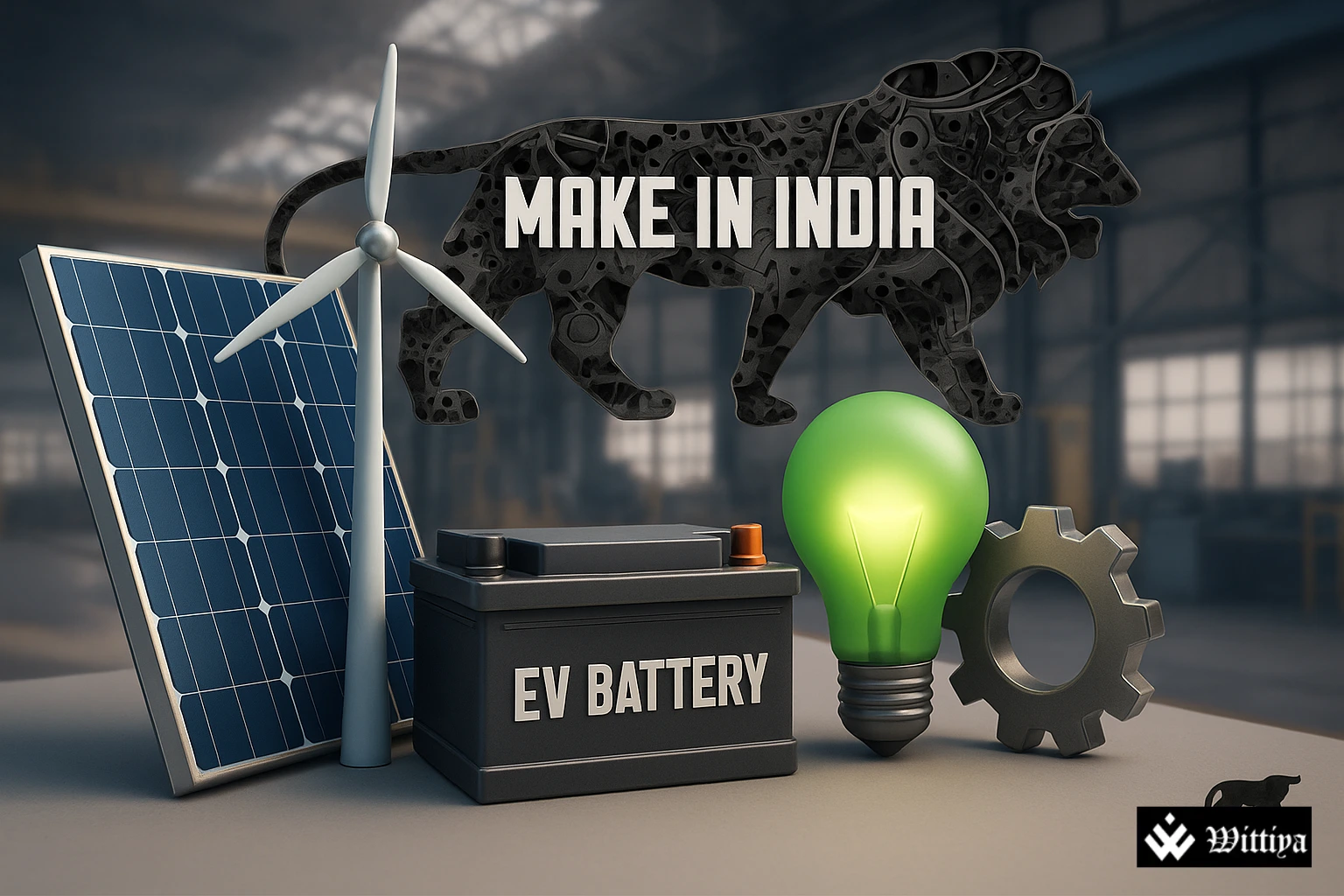
The National Institution for Transforming India (NITI Aayog) has finalized the draft of the much-anticipated National Manufacturing Mission, aimed at boosting growth in 15 labour-intensive sectors and accelerating India’s clean technology manufacturing. The scheme is expected to roll out soon, supporting the Make in India initiative while driving job creation and industrial competitiveness.
The National Institution for Transforming India (NITI Aayog), headquartered in New Delhi, is the Indian government’s premier policy think tank, tasked with shaping national development strategies and monitoring their implementation. In a major policy milestone, NITI Aayog has completed the draft for the National Manufacturing Mission, a central initiative designed to enhance India’s manufacturing capabilities, boost exports, and generate large-scale employment.
The draft, prepared in consultation with related ministries, targets 15 labour-intensive sectors, including auto components, footwear, and leather industries. The mission is envisioned as an empowered decision-making body that will provide strategic direction, streamline policy implementation, and ensure faster approvals for manufacturing projects.
During the Union Budget 2025–26, Finance Minister Nirmala Sitharaman announced that the mission would focus on five priority areas: ease and cost of doing business, a future-ready workforce, a vibrant MSME sector, technological advancement, and strict quality control.
Aligned with India’s clean energy ambitions, the scheme will support the domestic manufacturing of solar PV cells, electric vehicle batteries, motors, controllers, electrolyzers, wind turbines, very high-voltage transmission equipment, and grid-scale battery systems. These measures aim to strengthen domestic value addition and reduce import dependence in strategic sectors.
The mission will also extend policy facilitation to promote employment and entrepreneurship in sectors with high labour absorption potential. For the footwear and leather industry, the plan includes dedicated schemes for design innovation, component manufacturing, and machinery upgrades for both leather and non-leather categories — a move expected to enhance productivity and export competitiveness.
By integrating small, medium, and large-scale enterprises into a unified growth framework, the mission will serve as a key pillar of the Make in India programme. The approach combines sector-specific incentives with a robust monitoring framework to ensure accountability and timely execution.
With its imminent launch, the National Manufacturing Mission could reshape India’s industrial landscape, paving the way for higher output, stronger global market positioning, and sustainable employment generation in the coming decade.
READ MORE ON