






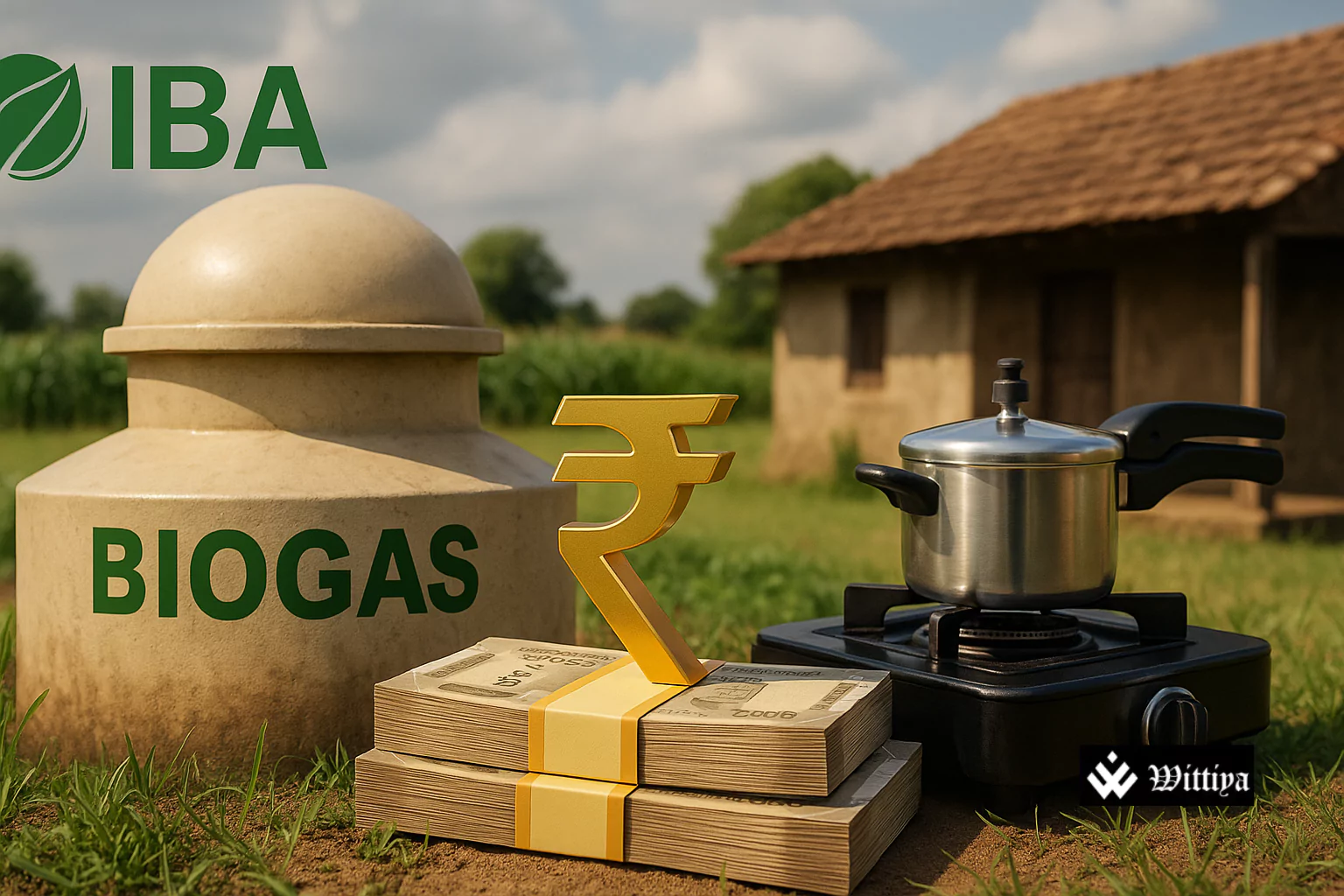
The Indian Biogas Association (IBA) has urged the Indian government to roll out a ₹5,000 crore scheme that provides a ₹10,000 subsidy per unit to revive around 50 lakh underutilized household biogas plants across rural India. The proposal, submitted on July 14, 2025, aims to accelerate clean energy adoption, cut LPG imports, and build a circular economy.
The Indian Biogas Association (IBA) has urged the Indian government to roll out a ₹5,000 crore scheme that provides a ₹10,000 subsidy per unit to revive around 50 lakh underutilized household biogas plants across rural India. The proposal, submitted on July 14, 2025, aims to accelerate clean energy adoption, cut LPG imports, and build a circular economy.
In a renewed push for clean energy in India, the Indian Biogas Association (IBA) has proposed a ₹5,000 crore revival scheme for underutilized household biogas plants across rural India. The association has requested a direct subsidy of ₹10,000 per unit for 50 lakh biogas units that are currently non-functional or partially utilized, but equipped with basic infrastructure.
The IBA, a non-profit organization that promotes biogas as a sustainable alternative energy source, said the proposed initiative could drastically reduce India’s dependence on imported liquefied petroleum gas (LPG), promote rural energy security, and bolster the country’s vision of a circular economy.
“Most of these biogas units already exist with partial setups. All they need is a modest financial push to bring them back to life,” the association stated in its formal recommendation to the Ministry of New and Renewable Energy (MNRE).
According to IBA, reviving the existing biogas units rather than building new ones can provide a faster and more cost-effective path to boosting clean energy output in rural regions. The ₹10,000 subsidy per unit would help rural households repair and reconnect these biogas plants, enabling them to switch from LPG to renewable gas for cooking and other domestic needs.
The plan aligns with India’s broader clean energy targets and rural development strategies. Biogas, derived from organic waste such as cow dung and kitchen waste, is considered one of the most environment-friendly energy sources. The revived units could not only improve household energy access but also contribute to reducing greenhouse gas emissions.
In addition to the subsidy, IBA also urged for capacity-building programs and technical support in rural areas to ensure long-term plant maintenance and efficient usage.
The Ministry of New and Renewable Energy is expected to review the proposal in the upcoming policy meetings. If approved, the initiative could mark a major step t