






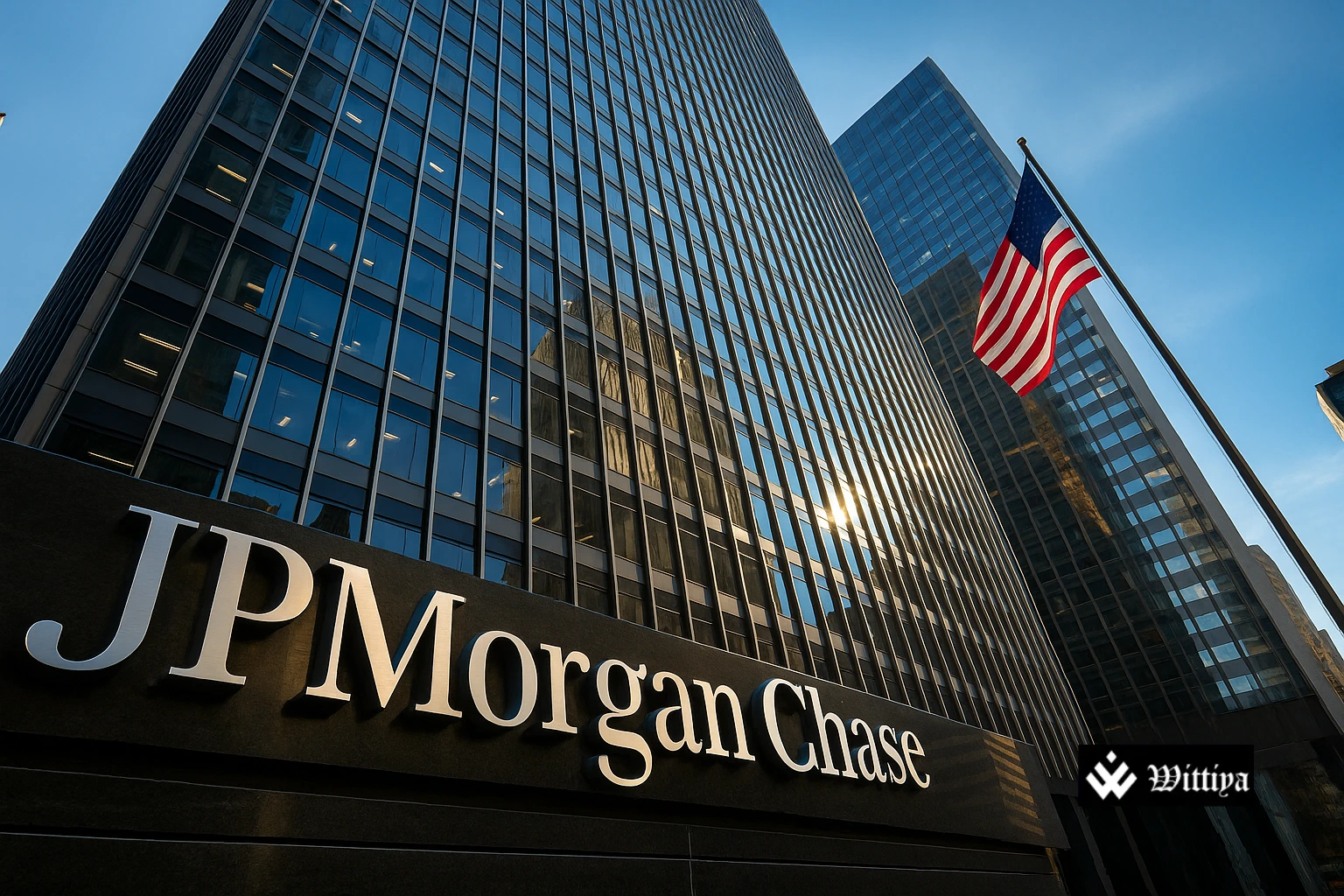
JPMorgan Chase & Co., based in New York, USA, has surpassed the combined market value of its top three rivals, marking a major shift in the competitive dynamics of the U.S. banking industry. The bank posted $30 billion in profit in H1 2025 and continues to expand its lead in investment banking.
JPMorgan Chase & Co., the largest bank in the United States by assets, has outpaced the combined market value of its top three domestic competitors as of July 16, 2025, according to the firm’s H1 financial disclosures. With a remarkable $30 billion in profit during the first half of 2025, JPMorgan has widened the profitability gap while maintaining its dominance in investment banking and asset growth.
Founded in 2000, JPMorgan Chase & Co. is a global financial powerhouse headquartered in New York. It offers services in investment banking, commercial banking, financial transaction processing, and asset management. Its latest financial performance reflects not just strong earnings but strategic advantages built over years of prudent acquisitions and risk management.
JPMorgan has consistently extended its lead in investment banking, outpacing all major players, while the acquisition of First Republic Bank in 2023 added a significant $200 billion in assets at minimal cost. As a result, the firm is now the largest U.S. bank by over $1 trillion in total assets, reshaping what was once a fragmented competitive field into one where JPMorgan leads with commanding authority.
While its rivals address internal structural challenges, JPMorgan has sustained operational agility and robust profitability, generating more than double the profit of its next closest competitor in H1. Its focus on strategic growth, especially in wealth management, corporate banking, and digital payments infrastructure, has allowed it to capitalize on changing macroeconomic conditions and industry realignments.
CEO Jamie Dimon, however, remains cautious. On the earnings call, he warned that fintech entrants and traditional competitors were rapidly adapting, emphasizing the importance of staying ahead through innovation and strong execution. “We are not entitled to these returns forever,” Dimon said, stressing the need for continued vigilance in the face of growing digital banking disruption.
At the same time, emerging trends such as the resurgence of stablecoins, decentralized finance, and smart-payment innovations are gaining regulatory favor, prompting JPMorgan to reinforce its digital strategy and cybersecurity focus. Dimon acknowledged the intellectual strength of fintech companies attempting to redesign bank accounts, reward systems, and payment mechanisms—an area JPMorgan is investing heavily in to retain its edge.
JPMorgan’s meteoric rise in 2025 underscores a transformational shift in U.S. banking, where scale, adaptability, and innovation now decisively influence leadership. While current performance paints a picture of dominance, the evolving financial ecosystem ensures that the next frontier will test even the most resilient incumbents.