






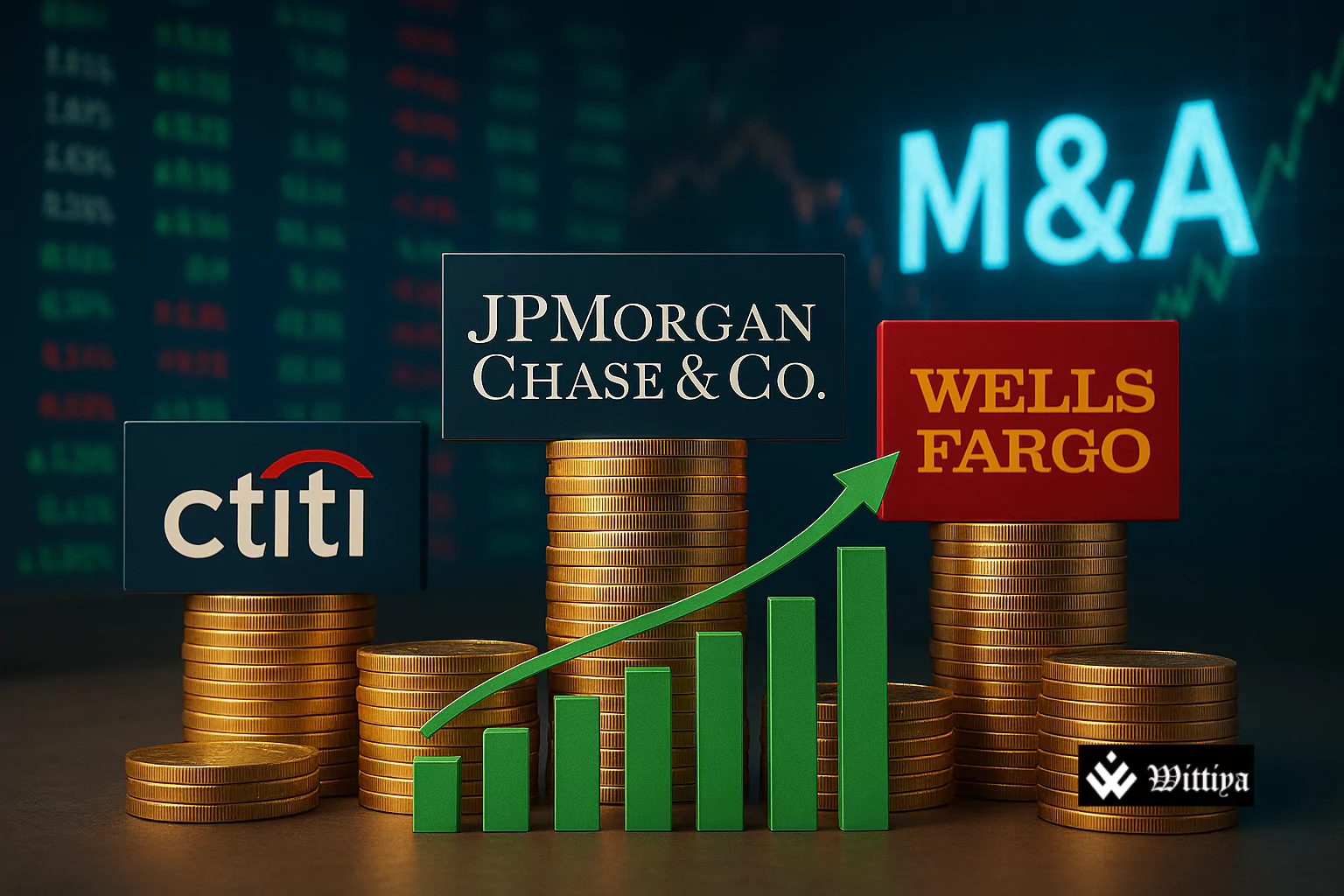
Major U.S. banking institutions, including JPMorgan Chase, Citigroup, and Wells Fargo, reported stronger-than-expected earnings on July 15, 2025, fueled by a rebound in investment banking and increased market trading activity. Despite a cautious stance on broader economic uncertainties and tariff risks, banks signal renewed momentum in mergers and acquisitions (M&A), particularly in the healthcare and tech sectors.
Major U.S. financial institutions, including JPMorgan Chase, Citigroup, and Wells Fargo, headquartered in New York and California, reported stronger-than-anticipated second-quarter earnings on July 15, driven by a notable recovery in investment banking activity and favorable trading conditions.
JPMorgan Chase, the largest U.S. bank by assets, reported a 7% increase in investment banking fees, reaching USD 2.5 billion. The bank benefited primarily from a surge in debt underwriting and advisory mandates, despite a dip in equity underwriting revenue. Citigroup followed with a 15% rise in investment banking revenue, totaling USD 981 million, fueled by momentum in mergers and acquisitions (M&A), especially in healthcare and technology.
Wells Fargo also posted an 8% increase in investment banking revenue to USD 463 million, indicating that deal volume is picking up after a muted first quarter. The overall uptick in banking revenues across these institutions reflects improving confidence in capital markets and signals the return of corporate dealmaking amid a still-volatile economic backdrop.
Citigroup further reported a 16% increase in markets revenue to USD 5.9 billion, its best trading performance since Q2 2020. The volatility in the market, largely driven by new tariff policies and geopolitical tensions, created favorable conditions for bank trading desks, allowing them to generate substantial fee income.
Despite these gains, banks continue to express measured caution regarding the broader U.S. economy. While capital markets have shown resilience, concerns remain around rising tariffs, potential inflation, elevated fiscal deficits, and high asset valuations. JPMorgan CEO Jamie Dimon underscored the complexity of the macroeconomic environment, citing significant downside risks despite current earnings strength.
In equity markets, Citigroup’s shares surged 5% following the announcement of a USD 4 billion stock repurchase program, reaching their highest level since the 2008 financial crisis. Conversely, Wells Fargo’s stock fell 6.3% after revising its net interest income forecast downward.
As the regulatory environment softens under the current U.S. administration, and with major banks passing the Federal Reserve’s recent stress tests, industry players anticipate greater flexibility and capital deployment ahead. The resurgence in investment banking and trading is expected to be a key revenue engine through the remainder of 2025, barring unexpected macroeconomic shocks.