






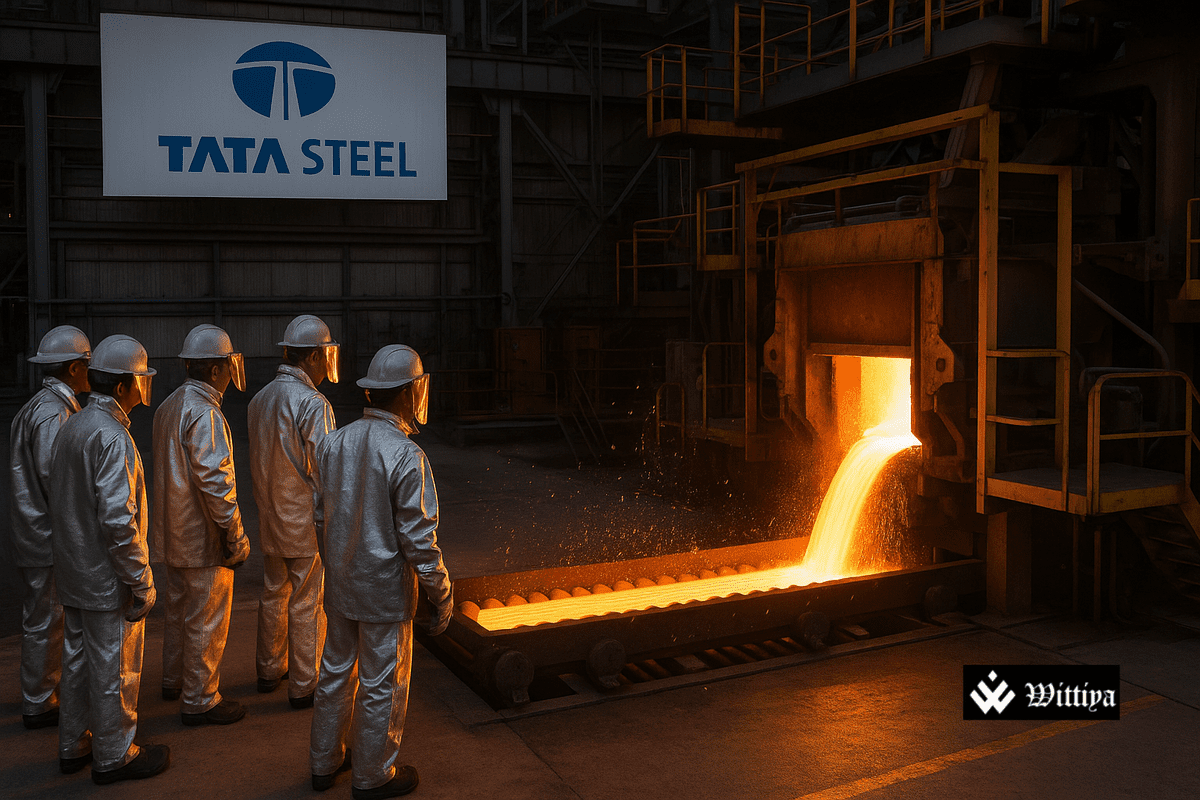
Tata Steel plans to cut costs by ₹11,500 crore globally over 12-18 months, focusing on operational efficiency, workforce productivity, and greener steelmaking. The company aims for major savings in India, the UK, and the Netherlands while managing capital expenditure and reducing net debt.
Tata Steel has unveiled a significant cost-cutting initiative aimed at saving ₹11,500 crore (approximately $1.3 billion) over the next 12 to 18 months across its global operations. This ambitious plan, announced by Executive Director and CFO Koushik Chatterjee during a recent earnings call, builds on the company’s earlier success in reducing costs by ₹6,600 crore in the financial year 2025.
The cost reduction strategy focuses on optimizing controllable expenses such as fixed costs and improving manufacturing efficiency. Alongside these efforts, Tata Steel is also expanding its Kalinganagar plant in India while driving greener steelmaking practices in its UK and Netherlands facilities.
Operational Efficiency and Financial Performance
In the March quarter of FY25, Tata Steel’s consolidated expenses fell to ₹54,167.61 crore from ₹56,496.88 crore in the same period last year, while net profits stood at ₹1,200.88 crore. The company aims to build on this momentum with further savings expected through enhanced workforce productivity and supply chain optimization. Specifically, Tata Steel targets ₹4,000 crore in cost savings within its Indian operations by focusing on operational improvements and reducing conversion costs by ₹1,000 to ₹1,200 per tonne.
UK Operations Focus on Fixed Cost Reduction
In the UK, Tata Steel plans to cut fixed costs by 29% year-on-year, targeting a reduction of around £220 million. Fixed costs have already been lowered from £995 million in FY24 to £762 million in FY25, with a goal to reduce further to £540 million in FY26. The UK government is supporting this green transition with a £500 million pledge to aid the shift to electric arc furnace technology, part of Tata Steel’s broader efforts to reduce carbon emissions and promote sustainability. The Port Talbot facility, which produces around 3 million tonnes of steel annually, currently employs approximately 8,000 people.
Netherlands Plant Seeks Efficiency Gains and Support
At Tata Steel’s IJmuiden facility in the Netherlands, management is targeting £500 million in cost savings through improved production efficiency and tighter cost controls. The plant produced 6.75 million tonnes of liquid steel in FY25. Ongoing talks with trade unions and the Dutch government focus on managing the decarbonization transition while securing financial support to enable the plant’s transformation to greener technology.
Capital Expenditure and Debt Reduction
Tata Steel has allocated ₹15,000 crore in capital expenditure for FY26, with 80% dedicated to Indian operations. As of March 2025, the company’s net debt was ₹82,579 crore, down ₹6,200 crore from ₹88,870 crore in September 2024. This focus on capital spending and debt reduction highlights Tata Steel’s commitment to maintaining financial health while driving operational growth.
Tata Steel’s comprehensive cost reduction and green transition plans are designed to strengthen its competitive edge globally while supporting sustainability and operational excellence in one of the world’s most demanding industries.