


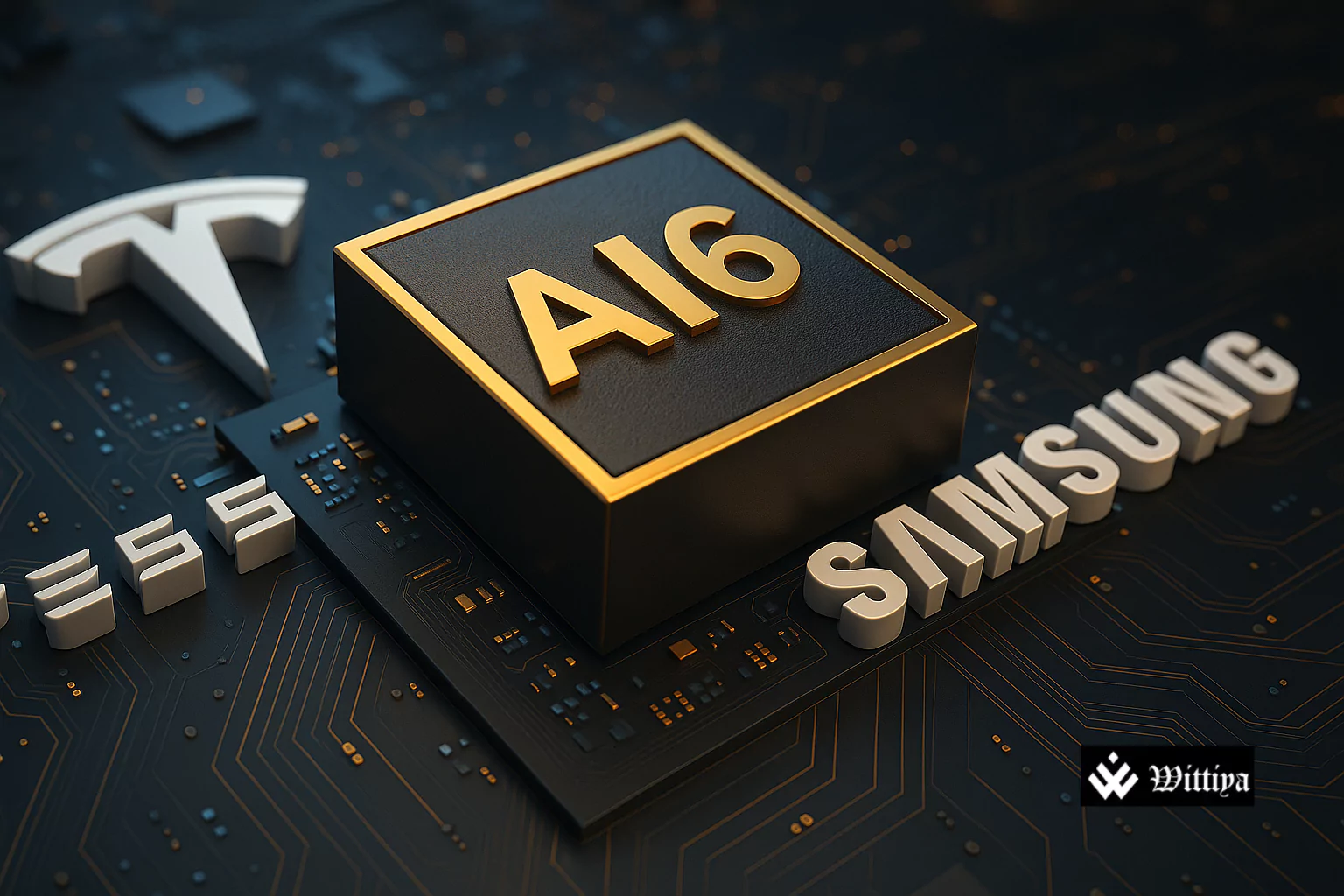
In a strategic move that underscores the rising significance of advanced semiconductor technology in the electric vehicle and AI sectors, Tesla Inc. USA has signed a massive $16.5 billion chip contract with Samsung Electronics South Korea. This agreement marks a major shift in Tesla’s chip development roadmap and positions Samsung’s upcoming Texas foundry as a pivotal site for next-generation AI chip production through 2033.
In a high-value semiconductor collaboration, Tesla Inc. has officially entered into a $16.5 billion contract with Samsung Electronics of South Korea to produce next-generation AI chips. The deal was initially disclosed in a regulatory filing by Samsung, and later confirmed directly by Tesla CEO Elon Musk via social media.
The contract, which takes effect from July 26, 2025, and runs until December 31, 2033, highlights Tesla’s commitment to developing its AI6 chips using Samsung’s foundry services. These chips will be manufactured at Samsung’s new Texas semiconductor fab, a critical site for AI advancements in autonomous vehicles and robotics.
Samsung’s giant new Texas fab will be dedicated to making Tesla’s next-generation AI6 chip. The strategic importance of this is hard to overstate.”
Elon Musk, CEO of Tesla
According to Musk, Tesla will play an active role in the chip production process to enhance manufacturing efficiency, with plans for hands-on involvement to accelerate output. This collaborative arrangement is notable, given that Tesla previously relied on a dual-sourcing model for chip fabrication.
Samsung’s regulatory filing refrained from naming Tesla directly, citing the need to protect trade secrets. However, the confirmation from Musk not only validates the deal but also sheds light on Samsung’s strategic pivot towards custom AI chip contracts amid stiff competition in the foundry and memory sectors.
Also Read: VinFast Joins Tesla in India’s EV Market with Surat Launch
A Strategic Move in the AI Chip Race
Tesla’s AI6 chip is part of its internal roadmap to power Full Self-Driving (FSD) technologies and other AI-centric vehicle systems. With Samsung currently manufacturing the AI4 chips, and AI5 being produced by another foundry in Taiwan and the USA, the new partnership signals a diversified and robust chip supply chain strategy by Tesla.
This deal also repositions Samsung Electronics, the world’s second-largest foundry service provider, as a major force in AI semiconductor manufacturing. The company is currently aiming to begin 2-nanometer process node production, which offers higher performance and energy efficiency.
Also Read: Samsung Pulls Out of PLI, Raising Alarms for India’s USD 24 Billion Tech Export Drive
Market Reaction and Outlook
Following the announcement, Samsung’s shares surged over 6%, reaching their highest level since September 2024. This positive market reaction comes amid a challenging phase for Samsung’s foundry business, which has been grappling with subdued demand and increasing competition.
The collaboration with Tesla, a leader in AI and EV innovation, could serve as a turning point for Samsung’s chip ambitions. Industry analysts suggest that the deal may eventually exceed the disclosed $16.5 billion, depending on volume and technological scaling requirements through 2033.
The deal also reflects broader geopolitical and industrial shifts as companies look to localize chip production in the U.S., reduce dependencies, and secure resilient semiconductor supply chains.
Implications for the EV and AI Markets
This contract underlines the growing intersection of automotive innovation and semiconductor advancement. Tesla’s push for custom-built chips is aligned with its long-term vision for vertical integration and performance optimization. Samsung, in turn, leverages this contract to reinforce its position in cutting-edge chip design and fabrication, especially in the AI domain.
As the race for AI dominance and autonomous mobility intensifies, this partnership stands as a milestone in aligning technological capabilities with industrial execution on a global scale.
READ MORE ON