


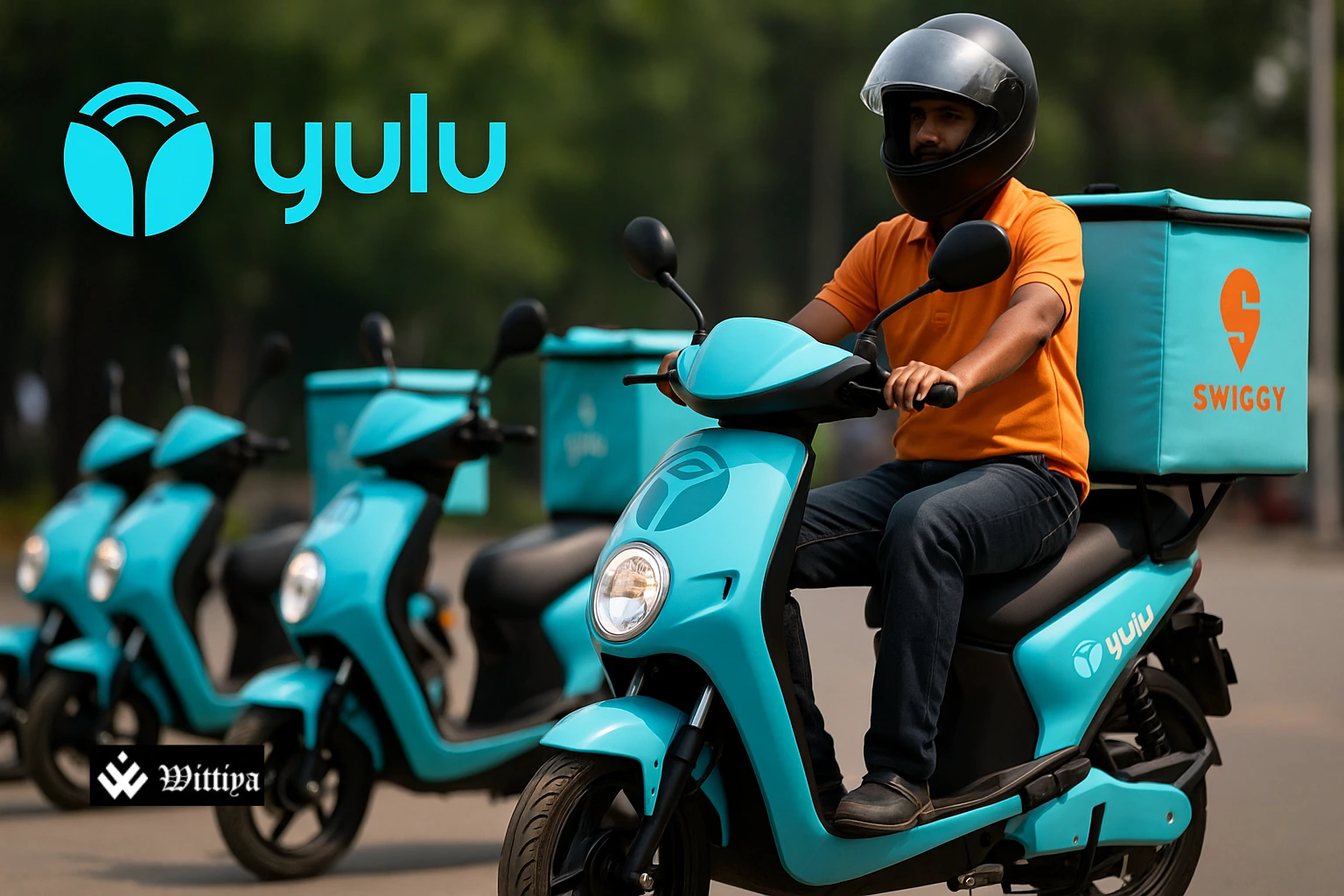
Yulu, a Bengaluru-based electric mobility startup backed by Bajaj Auto and Magna, is scaling its services across India amid a surge in quick commerce demand. The company now targets 10,000 electric two-wheelers in Bengaluru, with most of its fleet supporting gig workers lacking access to traditional vehicles due to credit or licensing limitations.
Yulu, a leading electric mobility startup headquartered in Bengaluru, Karnataka, is expanding its services to support the rising demand for delivery vehicles in India’s quick commerce sector. Backed by Bajaj Auto and global mobility supplier Magna, Yulu aims to increase its fleet to 10,000 electric bikes in Bengaluru alone, as part of its mission to address the mobility gap faced by India’s gig workers.
Out of Yulu’s current fleet of 45,000 electric vehicles, only 4,000 are used by general consumers. The majority now serve gig workers employed by delivery platforms such as Swiggy, Zomato, Zepto, and Blinkit. Most of these workers come from humble backgrounds and often lack credit history or a valid driving licence, making it difficult to secure bikes through traditional channels.
Access is the main barrier, Our infrastructure allows people without a licence, EMI history, or vehicle ownership to start earning.”
Amit Gupta, co-founder and CEO of Yulu.
Yulu’s tailored vehicle, Yulu Dex, was designed specifically for last-mile delivery needs and has played a key role in the company’s pivot to the gig economy. With the rise of 10-minute delivery expectations, the company built a vertically integrated mobility stack that includes vehicle design, over 60 rental hubs, and a real-time battery-swapping network.
In key zones such as Outer Ring Road in Bengaluru and parts of Gurgaon, Yulu now controls up to 40% of the delivery fleet. In some micro-markets, platforms like Zepto rely exclusively on Yulu for gig worker transportation.
Embedded partnerships have been instrumental to Yulu’s success. Delivery apps like Zomato now route gig workers without vehicles directly to Yulu during onboarding. This “plug-and-play” model is supported by a mobile app, which requires only an Aadhaar card for vehicle rental — no credit checks or fuel costs involved.
Yulu’s daily rental model is cheaper than using a petrol scooter and includes real-time support. Workers can swap batteries in under a minute, and vehicle replacement is instant in case of breakdown.
The company’s revenue run-rate has surpassed USD 30 million, and since the start of FY25, it has remained EBITDA positive. Yulu’s customer retention is also high, with over 80% of gig workers renewing their weekly rental plans.
Gupta sees Yulu as an infrastructure enabler rather than just a vehicle provider. “We’re not aggregators,” he said. “We do the hard work of building and maintaining infrastructure. That’s our moat.”
While global expansion is on the horizon, India remains Yulu’s primary focus. “The depth and scale of the Indian market today is enough to build a massive company,” Gupta said.
Founded in 2017, Yulu began as a clean shared mobility solution for urban commuters. Its rapid transformation post-pandemic has positioned it at the forefront of India’s electric vehicle ecosystem, empowering the gig economy through sustainable, accessible transport