






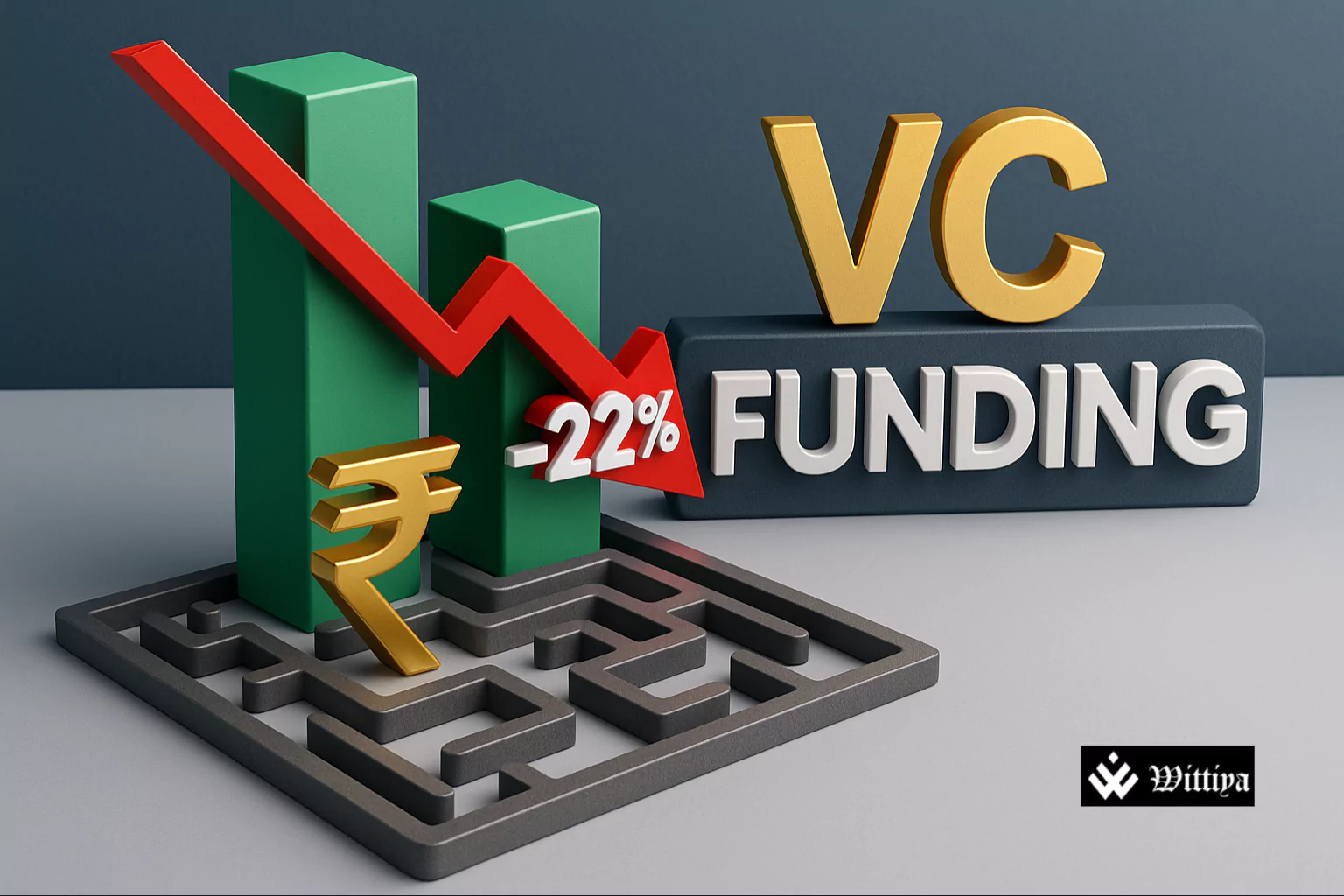
India’s venture capital funding fell 22% to USD 3.8B in 2025 as investors prioritized sustainability over rapid growth amid tariffs, inflation, and global uncertainty.
India’s startup ecosystem has witnessed a slowdown in venture capital (VC) funding, with total inflows falling 22% to USD 3.8 billion in 2025. Analysts point to geopolitical uncertainties, tariff-related challenges, and inflationary pressures as the key drivers behind investors’ cautious approach.
The current market cycle marks a clear departure from the high-growth, aggressive-scaling strategies of previous years. Instead, venture capitalists are shifting their focus to sustainable business models, preferring startups with strong fundamentals, unit economics, and profitability potential over those chasing scale at any cost.
Despite the funding contraction, consumer-focused startups continue to dominate the fundraising landscape. Between 2020 and August 2025, they collectively raised USD 42.5 billion, reflecting the resilience of sectors like fintech, e-commerce, and consumer services, which remain attractive due to their large addressable markets and increasing digital adoption.
Also Read: How Lahori Zeera Grew into One of India’s Fastest-Growing Beverage Brands
Market experts note that the correction in funding patterns may benefit the ecosystem in the long term. By prioritizing capital efficiency and disciplined growth, Indian startups are expected to become more resilient to external shocks. This recalibration also aligns with global trends, where venture investors are emphasizing sustainable returns in an environment of tightening liquidity and heightened macroeconomic risks.
In a positive signal for early-stage ventures, smaller investment funds continue to raise fresh capital, highlighting investor appetite for innovation-led businesses. Such activity suggests that while late-stage mega deals may be slowing, early growth opportunities remain firmly on investors’ radar.
Overall, India’s startup funding landscape in 2025 reflects a maturing market that is transitioning from rapid expansion to sustainable consolidation. While the near-term dip in funding presents challenges, it could ultimately strengthen the foundation for more stable long-term growth.
READ MORE ON