






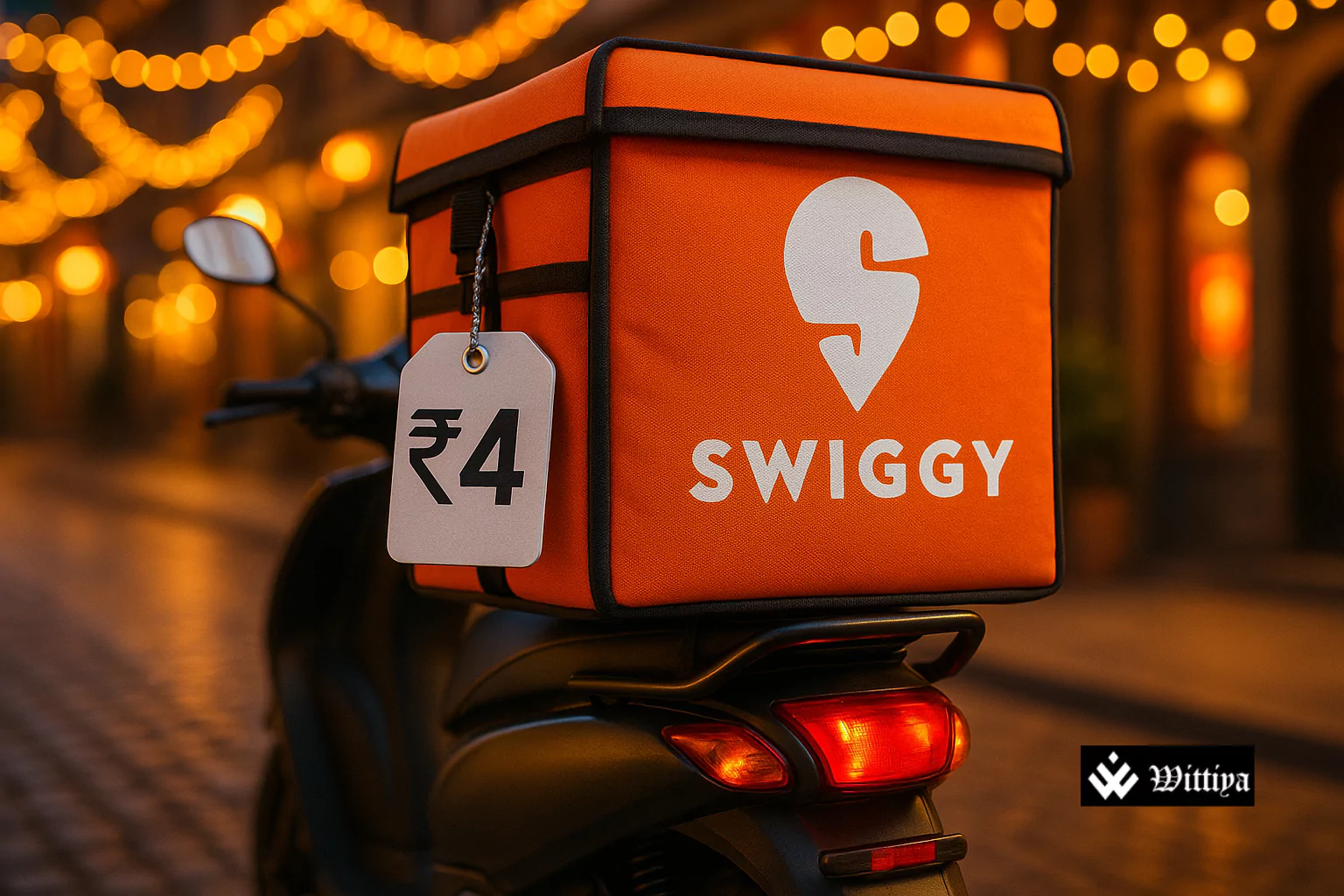
India-based food delivery giant Swiggy has raised its platform fee to Rs 14 per order during the festive season, aiming to improve profitability amid rising operational costs and growing competition.
Food delivery major Swiggy in India has increased its platform fee from Rs 12 to Rs 14 per order as demand spikes during the festive season. The move reflects the company’s strategy to enhance profitability while addressing higher operating costs, including payments to its delivery fleet.
Swiggy, which processes over 2 million orders daily, could generate an additional Rs 2.8 crore per day from the revised fee, translating into Rs 8.4 crore quarterly and Rs 33.6 crore annually if maintained. Analysts suggest that while a Rs 2 increase per order appears minimal for customers, it provides meaningful leverage for the company’s bottom line given its transaction volumes.
The platform fee, first introduced in April 2023 at Rs 2, has seen gradual hikes. The latest adjustment shows Swiggy’s focus on strengthening unit economics without impacting customer demand. Higher charges are often tested during peak demand events, and the company may reduce the fee back to Rs 12 once the festive season ends.
Also Read: Swiggy’s Q1 FY26: A Defining Moment in India’s Startup Economy
Swiggy’s financial results for Q1 FY26 revealed a widening net loss of Rs 1,197 crore, almost doubling from a year earlier, largely driven by heavy investments in its quick commerce vertical, Instamart. Despite this, revenue from operations grew sharply by 54% year-on-year to Rs 4,961 crore, reflecting robust customer engagement and demand growth.
Meanwhile, rival Zomato has also experimented with platform fee adjustments during high-demand periods. Both players are navigating the challenge of balancing growth with profitability, with analysts noting that platform fees could become a permanent lever in sustaining operational efficiency.
Experts highlight that the timing of Swiggy’s hike underlines the ongoing pressure on food delivery platforms to offset the high costs of expansion into quick commerce and logistics. By capitalizing on seasonal surges, companies can protect margins without eroding customer trust, as order volumes have shown resilience despite incremental charges.
As India’s food delivery market grows more competitive, strategic fee adjustments such as this are expected to remain part of the industry’s profitability playbook.
READ MORE ON