






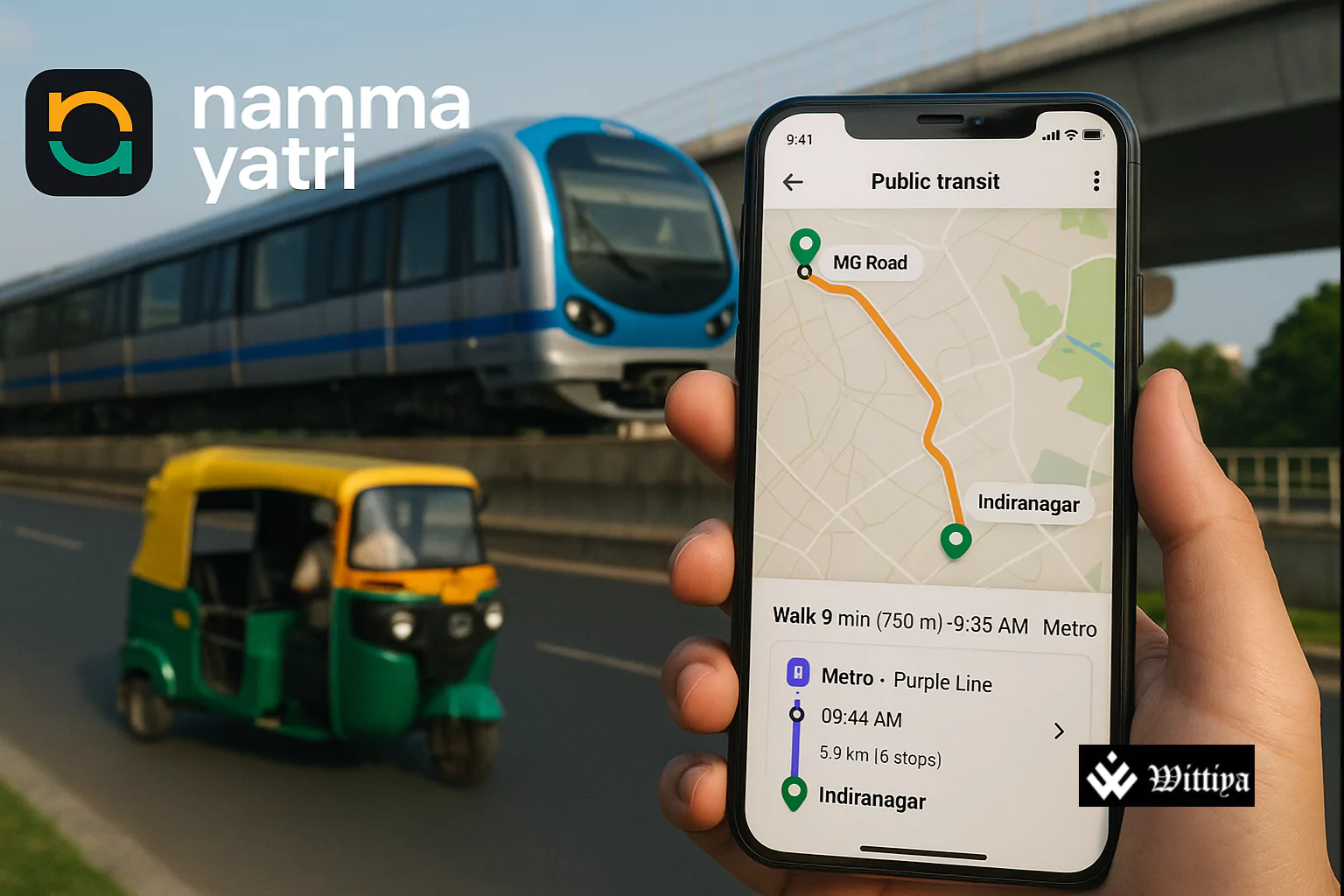
India-based mobility startup Namma Yatri has launched Namma Transit, a new public transport-focused feature aimed at enhancing metro connectivity and urban commute efficiency. The feature integrates route and metro timing data with an India-specific interface, aligning with the company’s vision to increase public transport share to 70% and reduce emissions.
India-based ride-hailing startup Namma Yatri, backed by digital payments company Juspay, has introduced a new feature called Namma Transit—a public transport interface built to support India’s complex road network and metro system. The initiative aims to bring route-planning and timing tools comparable to global mapping platforms, but with hyperlocal precision tailored for Indian commuters.
Unlike traditional map services, Namma Transit integrates metro schedules, localized traffic patterns, and customized first-mile and last-mile options—strengthening the company’s positioning in the multi-modal transport space. While the feature mimics navigation services, it is distinct in its focus on Indian metro infrastructures and how people actually travel within dense urban networks.
This new addition is not expected to conflict with Namma Yatri’s existing business model of auto and cab rides. Instead, the rollout complements it, especially for first- and last-mile connectivity around metro stations. In its early stage, the feature incentivizes auto drivers to prioritize metro station routes by offering more ride opportunities and demand-based loyalty benefits.
Also Read: Code Meets Commute: How Open Data Is Powering Bengaluru Transport
Company officials suggest that Namma Transit will become an integral tool as urban India moves toward a future with higher public transport adoption. The company envisions 70% of city travel being conducted via public transport, with the help of optimized micro-mobility solutions. Its roadmap includes a 50% reduction in both commute time and emissions, aligned with India’s urban development goals.
By operating on a no-commission model for drivers, Namma Yatri has already completed over 100 million rides. With strongholds in cities like Bengaluru, Chennai, Kolkata, and Hyderabad, it has laid a solid foundation. The next phase focuses on scaling into tier-2 cities in southern India such as Mangalore, Kottayam, Madurai, and Salem. This geographical diversification is a natural evolution, as the company adapts to a demand-heavy, digitally empowered population outside metros.
The company is also exploring monetization for Namma Transit based on user adoption and scaling metrics. Initial rollout is expected to generate traction through partnerships with local drivers and route efficiency that improves travel comfort for urban commuters.
With Namma Transit, Namma Yatri is not just expanding services—it’s aligning itself with India’s broader smart mobility and green urban transport narrative. As demand for integrated, climate-conscious, and commuter-friendly systems grows, the company’s proactive expansion strategy may position it as a cornerstone in India’s future urban transport infrastructure.
READ MORE ON