


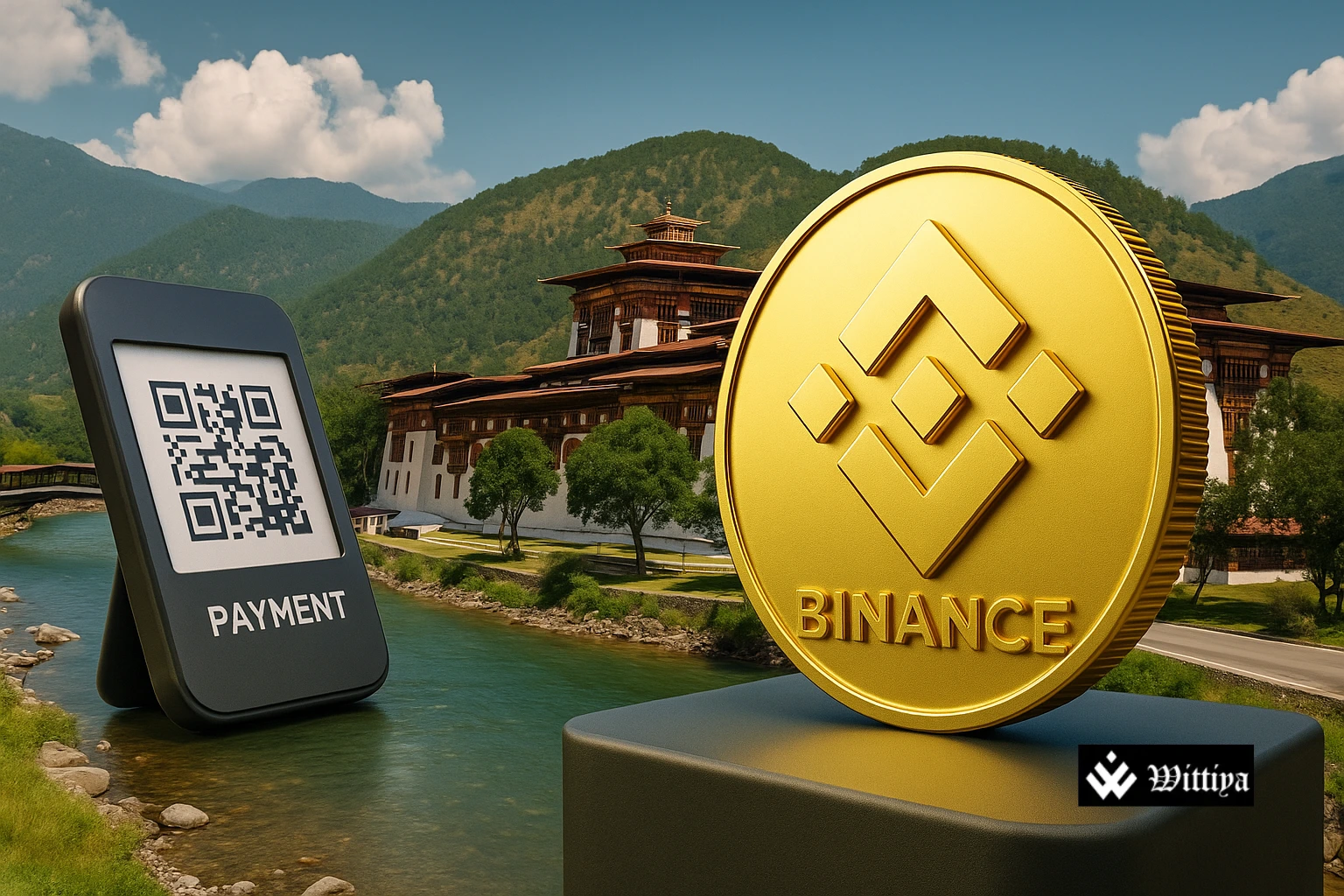
Bhutan is positioning itself as a crypto-forward nation by launching Binance Pay-based crypto tourism payments. While the technology is in early stages, the Himalayan kingdom is aligning this innovation with its broader ambition for green, sustainable economic transformation.
Bhutan, a Himalayan country nestled between India and China, is making a significant leap into the world of blockchain by integrating cryptocurrency payments into its tourism sector. In a first-of-its-kind national initiative, the Bhutan government has enabled crypto transactions through Binance Pay, allowing tourists to pay for services using digital assets.
The project, spearheaded by the Department of Tourism and supported by Binance, the world’s largest cryptocurrency exchange, enables direct conversion of crypto to Bhutanese Ngultrum. From hotels and restaurants to cultural landmarks like Thimphu and Dochula Pass, visitors can now scan merchant QR codes and pay instantly, without the need for cash or card.
This initiative reflects Bhutan’s broader push to modernize its economy, diversify revenue sources, and support local businesses. According to the Department of Tourism, integrating Binance Pay aligns with the country’s “green, regenerative, and sustainable” tourism vision while reducing transaction costs for both tourists and vendors.
Unlike many neighboring countries where crypto faces regulatory scrutiny, Bhutan has embraced digital assets strategically. The government is directly involved in green crypto mining operations powered by hydroelectricity, having mined approximately 13,000 Bitcoin tokens since 2020—equivalent to nearly 40% of its GDP.
This blockchain-forward approach is being executed within a controlled regulatory environment through the Gelephu Mindfulness City (GMC)—a Special Administrative Region designed to pilot and oversee crypto and blockchain use cases. GMC is setting strict evaluation norms for permissible tokens, focusing on traceability, security, and compliance.
While crypto trading remains limited to registered entities under the GMC framework, the Binance Pay tourism rollout is viewed as a critical use case to drive broader adoption. Initial traction has been promising, with around 1,000 users signing up for Binance Pay shortly after launch. With more than 800,000 citizens and over 95% mobile penetration, Bhutan sees a strong digital foundation to scale such technologies.
The country’s tourism sector, which contributes about 5% to GDP, is set for a transformation. With goals to increase this share to 20%, crypto payments are expected to attract a tech-savvy, high-spending segment of international travelers. Binance estimates that crypto travelers spend three times more than traditional fiat users—an insight that underpins Bhutan’s ambitious economic transformation.
The Royal Government of Bhutan also collects a Sustainable Development Fee (SDF) of about $100/day from foreign tourists, reinvesting it into infrastructure and environmental conservation. By introducing digital payments, Bhutan is aiming to enhance convenience, reduce costs, and make the tourism experience seamless.
Infrastructural limitations, including patchy internet in high-altitude regions and limited awareness among locals, present hurdles. However, efforts are underway to train vendors and expand crypto literacy.
Bhutan’s crypto initiative isn’t just about attracting tourists—it’s a strategic economic policy. The integration of Binance Pay is part of a larger framework to test blockchain use cases in finance, trade, and governance under GMC. The government continues to assess long-term risks and viability before scaling nationwide.
As Bhutan quietly builds a model of sustainable, crypto-driven development, it is also positioning itself as a global example of how small nations can leverage technology for economic and social advancement—while staying true to their core values of harmony, sustainability, and innovation.