






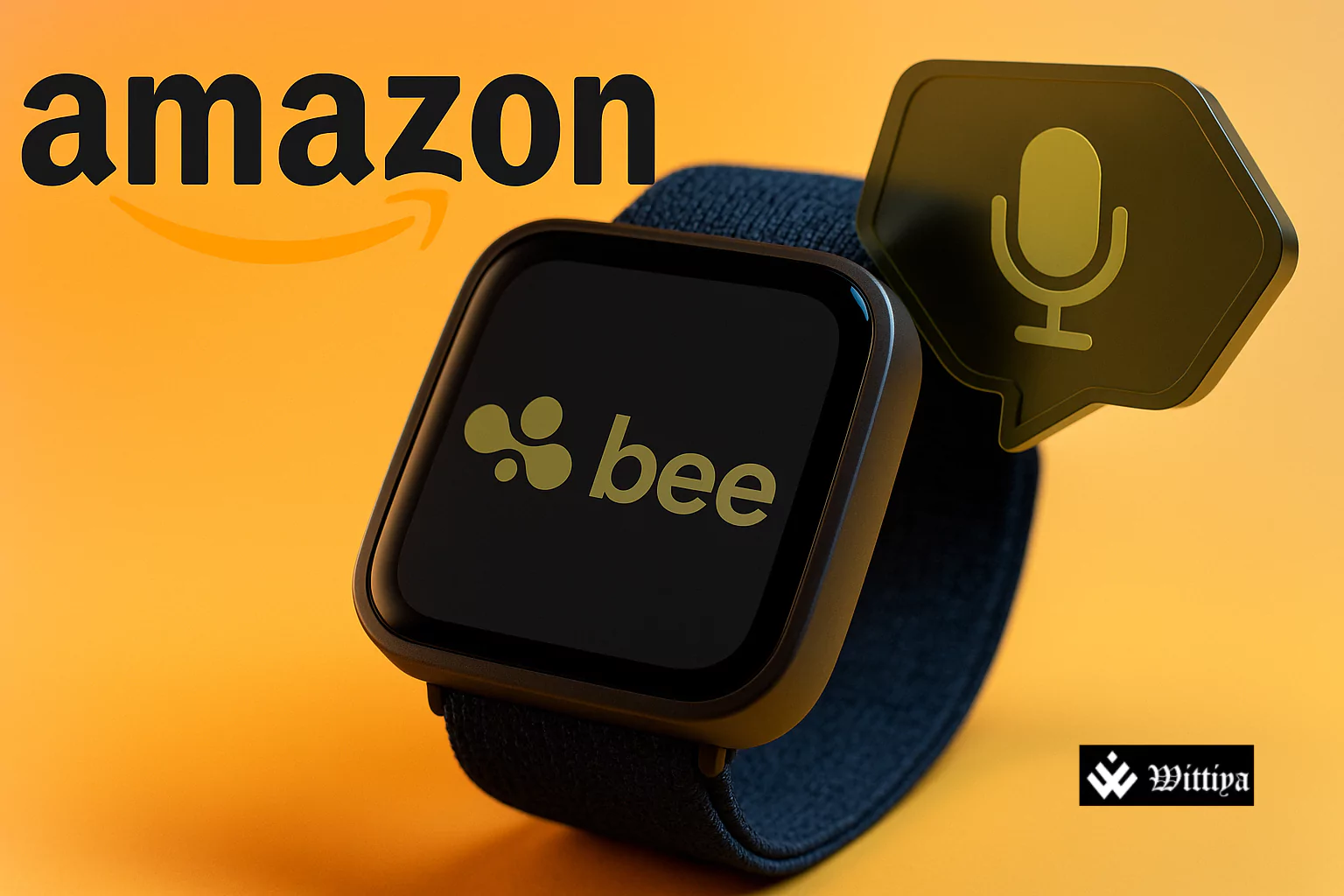
Amazon, United States, has acquired AI wearable startup Bee, signaling its strategic pivot into affordable, ambient intelligence-driven personal tech. This move positions Amazon against rising competition in the AI hardware space while raising key questions on privacy.
In a move that expands its ambitions beyond smart speakers and home assistants, Amazon has acquired AI wearables startup Bee, a company known for developing cost-effective, always-on AI assistant devices. The deal, confirmed by Amazon, is yet to close but already signals a strategic shift toward deeper integration of ambient intelligence in consumer tech.
Bee, which raised $7 million in funding last year, manufactures a standalone wrist-worn AI assistant retailing for $49.99, along with a $19 monthly subscription. It also offers an Apple Watch-compatible version. The product is designed to continuously record ambient conversations (unless muted), helping users track reminders, tasks, and contextual to-dos through AI.
At the core of Bee’s mission is creating what it calls a “cloud phone”—a device that reflects the user’s smartphone ecosystem and functions as a personalized, intelligent companion. According to the company, this approach is meant to minimize user effort and maximize passive support through learning-based prompts, reminders, and actionable suggestions.
“We believe everyone should have access to a personal, ambient intelligence that feels less like a tool and more like a trusted companion,” Bee states on its official website.
This acquisition underscores Amazon’s intent to broaden its AI portfolio beyond the Echo smart speaker line, stepping into the evolving wearable market where affordability and functionality could unlock mass adoption.
Strategic Value and Market Differentiation
Bee’s competitive edge lies in its pricing model. At $50, the entry cost is substantially lower than many AI wearables in the market. This makes the product accessible to a wider user base, especially those curious about the AI wearable experience but unwilling to commit to high-end devices.
Industry observers note that the timing of Amazon’s move coincides with a growing push among major tech firms to integrate generative AI into personal hardware. Amazon’s acquisition provides it with a platform to experiment in this space, possibly creating hybrid products that leverage Alexa’s voice assistant and Bee’s conversational memory model.
Additionally, the deal includes offers for Bee employees to join Amazon, hinting at possible continuity in product development under Amazon’s ecosystem.
Also Read: Amazon Launches 10-Minute Delivery in Delhi—Here’s What It Means
Privacy Concerns Remain a Key Challenge
While the technology offers convenience, the privacy implications are significant. Bee’s current policy allows users to delete their data and claims that it does not store or use voice recordings for AI training. However, it does retain the contextual learnings used to personalize the experience.
The startup also claims to be working on advanced features such as boundary definitions for muting (based on location or topic), and a shift toward on-device AI processing—a practice known to enhance data privacy by minimizing cloud-based transfers.
As the acquisition moves forward, analysts are closely watching whether Amazon will maintain these privacy-forward principles. The tech giant’s historical practices around user data, including high-profile controversies involving its surveillance hardware, have left some consumers wary.
Implications for the AI Wearable Sector
The deal may catalyze competition in the AI wearables space, especially in the low-cost segment. With Amazon now positioned to deliver scalable, intelligent devices that blend affordability with assistant functionality, other players in the sector may need to rethink their pricing strategies or double down on premium features.
In a world rapidly moving toward hands-free computing and contextual awareness, Amazon’s acquisition of Bee could mark the start of a new phase—one where AI becomes seamlessly embedded into our daily environments, worn rather than spoken to across a room.
Whether this turns into a privacy victory or a data challenge, only time—and consumer trust—will tell.
READ MORE ON