


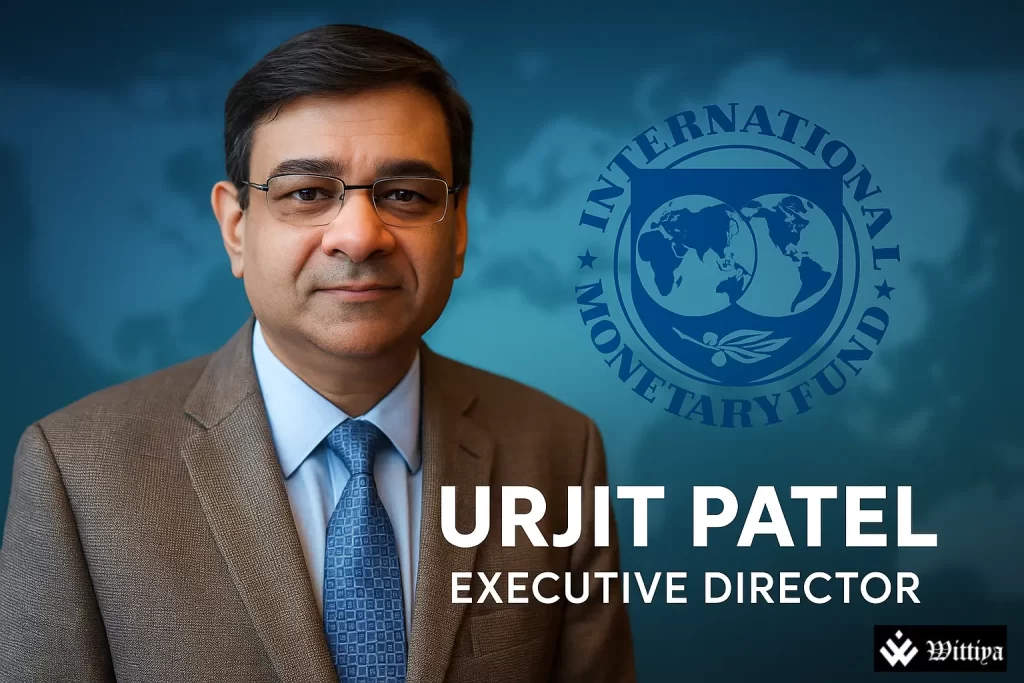
Former Reserve Bank of India Governor Dr. Urjit Patel has been made an Executive Director at the International Monetary Fund (IMF) for a period of 3 years. Wherever Dr. Patel goes, he takes India with him; his selection is a signal that India is becoming a key player in the design of the global economic policies.
International Monetary Fund (IMF): Global Financial Institution
The International Monetary Fund (IMF) is a global financial one headquartered in Washington, D.C., that conducts the world’s top multilateral financial institutions. Its main activities include integrative monetary cooperation, ensuring financial steadiness, providing a more accessible international trade environment, and promoting proper economic growth and poverty reduction. The Executive Board made up of 24 members from needy countries is in charge of daily operations, policy consultations, and financial decisions for 190+ member nations in the Fund.
Urjit Patel Appointed IMF Executive Director
Economist, Dr. Urjit Patel, and Former Reserve Bank of India (RBI) Governor has been officially designated as the Executive Director at the IMF for a span of three years starting from the day of assumption of charge. The appointment was formally communicated by an official notification of the Cabinet Appointments Committee issued on August 28, 2025.
The job turns Dr. Patel into one among the 24 members of the IMF Executive Board, a group that makes decisions on the IMF institutional daily work, monitors global economic developments, and approves financial programs.
Urjit Patel’s RBI Tenure and Resignation
On September 4, 2016, Dr. Patel was made the 24th Governor of the Reserve Bank of India. The Banking reforms of the Indian financial area, implementation of inflation targeting, and policy effectiveness were some of the major highlights of his term. However, after two years, he stepped down from his post, with a resignation letter taking immediate effect December 10, 2018 and citing personal reasons as the cause. By resigning before the expiry of his term, he marked himself as the first RBI Governor since 1990 to do so.
Previous Experience with IMF and Government
Dr. Patel has not been with IMF for the first time only. Support from the IMF was requested for the Reserve Bank of India project he dealt with on short-term loan in 1996-1997, once he was deputed from the IMF to RBI to handle reforms in India’s financial and debt markets, setup of pension fund structures, and upgrading of the exchange framework, in short.
Also Read: India’s UPI Model: A Global Guide for Cashless Economies, Says IMF
Then, during the years 1998-2001, he acted as a consultant for the Indian Ministry of Finance in particular for the Department of Economic Affairs. Apart from government tasks, Dr. Patel is also involved in the private sector, where, through his work with various institutions, he has gained widespread recognition as an outstanding and multi-faceted economist.
Significance of the Appointment
The fact that Dr. Patel has been appointed to the IMF Executive Board is perhaps the best indication of the stronghold that India has gained in the world of international finance decision-making. Along with Dr. Patel’s expertise in central banking, policy reforms, and financial markets, India is also poised to elevate its voice at the IMF, especially in these talks concerning emerging market economies, maintaining monetary policy stability, and managing fiscal policy.
About the IMF Executive Board
The Fund Executive Board, led by the Managing Director, is composed of 24 Executive Directors elected by member countries or groups of nations. Each member country is represented, either individually or through constituencies. The Board is the main organ to determine the economic health of member countries, to approve the financial assistance of the IMF, and to monitor the progress of the global policy initiatives.
The Fund, through its Board, extends financial support to countries with temporary balance of payments difficulties, plans the economic programs to return the country to stability, and also to the reforms that guarantee long-term growth.
Also Read: How Did UPI Make India a Global Leader in Digital Transactions?
Urjit Patel’s Broader Career Contributions
While working at the RBI and the IMF, Dr. Patel did not only confine himself there, he equally accomplished a lot of work in India’s infrastructure financing and energy sectors. He is an expert in macroeconomic reforms, inflation control, and sustainable economic growth strategies. His contributions mirror the combination of academic rigor, policy experience, and executive decision-making.
Moving Forward
India’s widening participation in global economic governance is the backdrop against which the decision to Urjit Patel IMF Appointment as Executive Director is to be understood. It is seen as the country’s strategic move to not only influence but actually shape global policies. Having his vast experience and knowledge, we can expect him to solve economic problems like inflation control, financial stability, and achieving sustainable growth in emerging economies.
FAQ’s
Q1: Who is Urjit Patel?
Urjit Patel is an economist and the ex-Governor of the Reserve Bank of India, currently an Executive Director at the IMF.
Q2: What is the tenure of Urjit Patel’s IMF appointment?
His appointment is for a period of three years starting from when he took over his duties.
Q3: What is the role of an IMF Executive Director?
Executive Directors are responsible for operating the IMF on a daily basis, they analyze the performance of member economies, and they give their consent to the facilitation of financial assistance programs.
READ MORE ON