





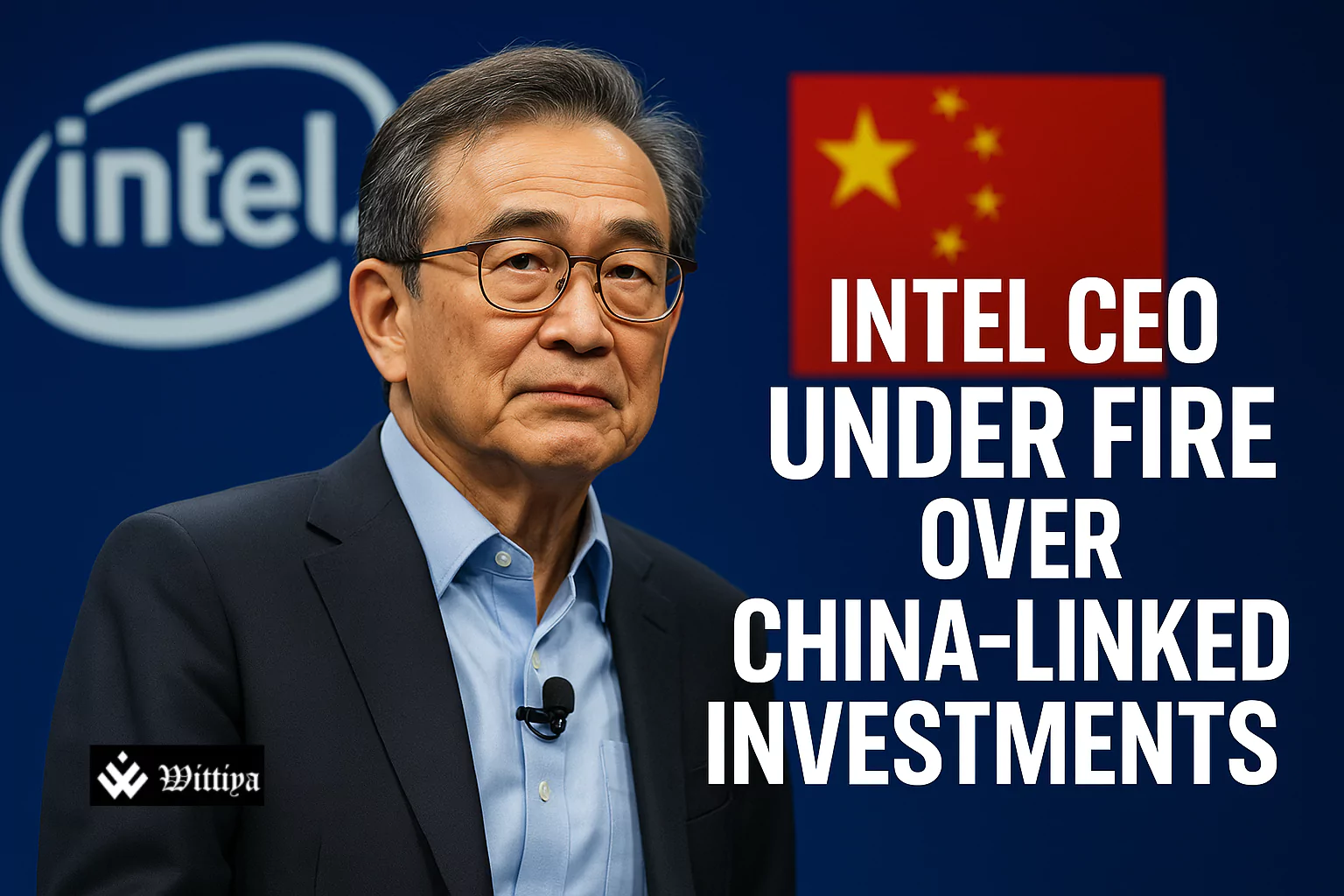
United States: President Donald Trump has publicly demanded the immediate resignation of Intel CEO Lip-Bu Tan, citing national security concerns over his prior business ties to Chinese companies. The controversy arises amid scrutiny over federal funding received by Intel under a sensitive U.S. semiconductor initiative.
In a dramatic escalation of corporate scrutiny, former U.S. President Donald Trump has called for the immediate resignation of Intel CEO Lip-Bu Tan, alleging serious conflicts of interest tied to Tan’s prior business associations with Chinese companies.
The CEO of INTEL is highly CONFLICTED and must resign immediately. There is no other solution to this problem.”
President Donald Trump
The statement came on the heels of growing national security concerns related to the U.S. semiconductor supply chain and rising geopolitical tensions with China.
Scrutiny of Chinese Investments and Federal Funding
Intel, a key beneficiary of U.S. federal funding under the Biden-era Secure Enclave program, is tasked with accelerating domestic semiconductor manufacturing. However, concerns have now emerged about whether the leadership at Intel aligns with the strategic national interests of the United States.
Between 2012 and 2024, Lip-Bu Tan—through personal investments and venture capital funds he founded—reportedly invested over $200 million in hundreds of Chinese companies, including some operating in sensitive sectors like advanced manufacturing and semiconductors.
Industry insiders believe such affiliations could create perceived or actual conflicts of interest, particularly as Washington intensifies its focus on supply chain security and reducing dependency on China for critical technologies.
Governance and Fiduciary Accountability at Intel
Tan served as CEO of Cadence Design from 2008 to 2021 and as its Executive Chairman until May 2023. While the specifics of his exit from Cadence are not being questioned publicly, attention has turned to whether Intel adequately assessed potential risks before his appointment as CEO.
Also Read: 100% Tariff Looms for Chipmakers Unless They Build in the U.S.
Experts note that any undisclosed regulatory or legal issues associated with previous executive roles could impact a publicly traded company’s reputation and compliance posture. A financial policy analyst commenting on the issue said. “When a company like Intel is receiving billions in federal support, oversight of leadership integrity and independence from foreign ties becomes non-negotiable. Any perception of divided loyalty—especially involving strategic competitors like China—can compromise public trust and investor confidence.”
Intel’s Future Amid Leadership Controversy
While reports suggest that Tan has divested from his Chinese holdings, details remain vague. The lack of transparency has amplified calls for governance reform, with stakeholders demanding stronger disclosure norms for executives in federally supported corporations.
Intel has yet to issue a formal response to the controversy. However, market analysts predict that any delay in addressing the matter may create uncertainty among investors and policy stakeholders.
As the global semiconductor race accelerates, the United States continues to push for domestic chip production under initiatives like the CHIPS and Science Act. The leadership of companies like Intel will play a crucial role in realizing those ambitions—making this controversy both politically and economically consequential.
REEAD MORE ON