






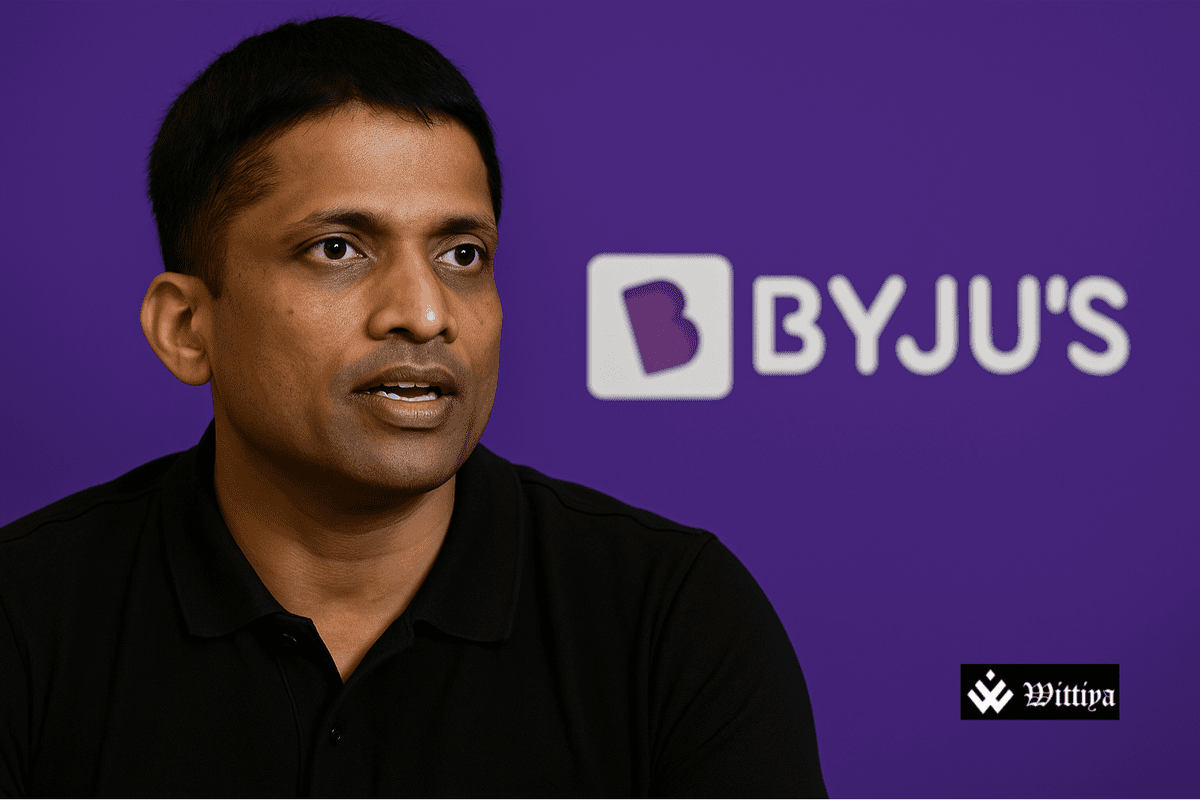
Byju Raveendran, founder of India’s once-iconic edtech company Byju’s, opened up about the company’s dramatic fall from a $22 billion valuation. He blames the failure on strategic missteps and predatory hedge funds, particularly American lenders, labeling the ₹100 crore term loan a major mistake. Despite setbacks, Raveendran is determined to rebuild with “Byju 3.0”, aiming to return to the mission of making learning accessible and enjoyable.
Byju Raveendran, the founder of once-iconic edtech startup Byju’s, has finally spoken out about the dramatic rise and fall of his company. Once valued at $22 billion and hailed as India’s edtech crown jewel, Byju’s has since unraveled due to financial mismanagement, aggressive global expansion, and pressure from what Raveendran calls “vulture lenders.”
In a rare and candid conversation, Raveendran acknowledged that the company, which once sat on “thousands of crores,” has now been reduced to near-zero capital. “Two years ago, we were sitting on thousands of crores of rupees. Today we have nothing,” he said, reflecting on what he described as a “lost opportunity for India.”
At the center of the collapse was a strategic blunder—the decision to raise a ₹100 crore term loan instead of relying solely on strong equity funding. “That was a big mistake,” Raveendran admitted, noting how the loan opened the doors to external pressures and aggressive control tactics from some hedge funds, particularly American ones.
Despite the turmoil, Raveendran remains defiant. “I’m not giving up,” he said. “As soon as we come back in control—and the control is 100 percent with me—we will rebuild.” He called this vision “Byju 3.0,” although details remain under wraps. The focus, however, will remain unchanged: instilling a love of learning in students.
Raveendran also hit out at critics and some investors, stating that while most were supportive, “three or four investors and a few lenders tried to take control of the company.” His wife and co-founder, Divya Gokulnath, echoed this sentiment. “We don’t go out. We don’t party. We don’t network. It’s all a lie. We don’t have a luxury car or house,” she said, emphasizing their grounded lifestyle and commitment to the mission.
The couple claims their downfall wasn’t just financial—it was also personal and emotional. “When things got bad, the people who mattered stayed with us. Our circle didn’t change. Even when we reached such heights, it kept us grounded,” Divya added.
Raveendran also conceded that the company’s rapid international expansion—from India to 21 countries—was overly ambitious. “Maybe we could have slowed down. We were growing too quickly, too fast,” he said. He attributed some external shocks, like the Russia-Ukraine war and broken investor promises, as additional setbacks that derailed the company’s long-term plans.
With a renewed focus and a commitment to transparency, Raveendran believes the next chapter—Byju 3.0—can rewrite the company’s story. Whether India’s most dramatic startup saga ends in redemption or final collapse remains to be seen, but one thing is clear: Byju Raveendran is not walking away just yet.