






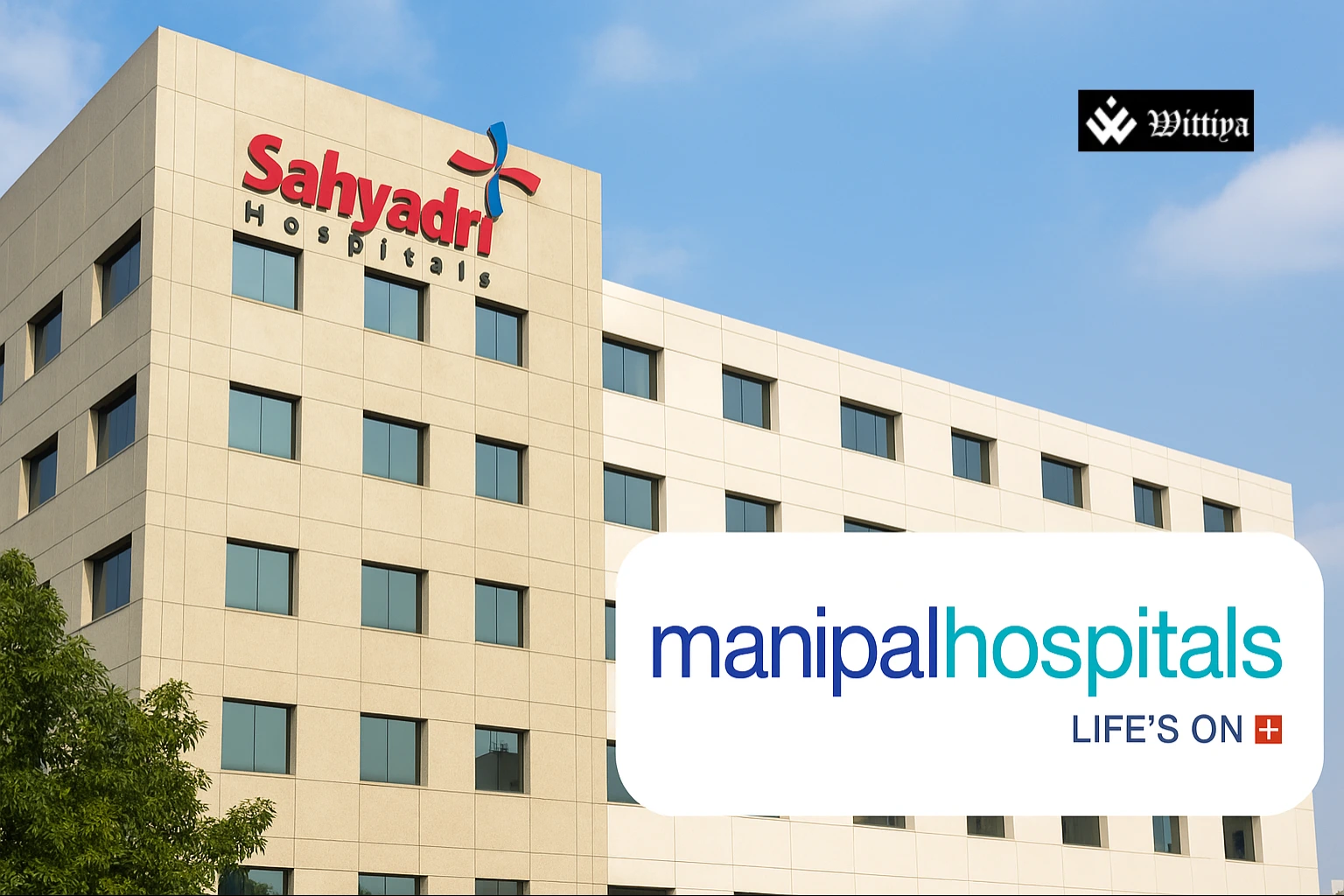
India’s Manipal Hospitals has acquired Sahyadri Hospitals for ₹6,400 crore, expanding its footprint in Maharashtra. However, the deal is under scrutiny due to allegations of land lease violations tied to Sahyadri’s Pune properties.
In a move that further consolidates its footprint in India’s healthcare sector, Manipal Hospitals has announced the acquisition of Pune-based Sahyadri Hospitals. This acquisition not only makes Manipal one of the largest private hospital chains in India by bed strength and geographical reach, but also places it squarely in Maharashtra’s highly competitive healthcare market. However, the deal is now facing scrutiny—not for its valuation or scale, but due to underlying land allocation controversies tied to Sahyadri’s Pune hospital properties.
Who Owns Manipal Hospitals?
Manipal Hospitals is part of the larger Manipal Education and Medical Group (MEMG), a Mangalore-based conglomerate with business interests spanning education, life sciences, and healthcare. Over the years, it has become one of India’s leading hospital networks, bolstered by financial backing from international investment groups like Temasek, TPG, and Mubadala. With this acquisition, Manipal now operates nearly 49 hospitals with over 12,000 beds across India.
Acquisition Details: Pricing and Funding
The acquisition of Sahyadri was completed for approximately ₹6,400 crore. The majority stake was acquired from the Ontario Teachers’ Pension Plan, which had entered Sahyadri Hospitals just a couple of years ago. What makes this deal particularly notable is the method of financing. Manipal secured ₹5,300 crore in funding from a consortium of international banks, marking one of the largest hospital-sector leveraged deals in recent years.
This aggressive, yet calculated, financial strategy underscores Manipal’s long-term view of value creation in India’s healthcare market. The funds were used not just for equity acquisition but also to strengthen Sahyadri’s balance sheet and fuel expansion.
Sahyadri Hospitals: A Maharashtra Giant
Founded with the mission to bring quality care closer to communities, Sahyadri Hospitals has grown into Maharashtra’s largest private hospital chain. Operating 11 hospitals with over 1,400 beds, it has built a reputation for offering tertiary and quaternary care across specialties including cardiology, oncology, neurology, and critical care. The chain claims to serve over 7 million patients annually, and holds a strong brand equity in cities like Pune, Nashik, and Karad.
The PMC Land Controversy: Roots of the Conflict
- Background
A significant part of the controversy arises from the Erandwane property in Pune where Sahyadri’s flagship hospital is located. In 1998, the Pune Municipal Corporation (PMC) leased a 1,976 square meter land parcel to a non-profit trust, Konkan Mitra Mandal Medical Trust, for a 99-year lease at a nominal premium and an annual rent of just ₹1. The lease terms were explicit: the land was to be used only for providing affordable medical services to the public, and the Trust was barred from sub-leasing, mortgaging, or transferring usage rights without PMC’s permission.
- Shift in Ownership and Trusteeship
Over the years, the Trust allegedly altered its composition, with many original trustees being replaced. These changes raised suspicions about the true intent and future of the land use. More recently, with the announcement of the Manipal acquisition, questions emerged about whether the hospital chain was gaining control over land that was never meant for commercial profiteering.
- PMC Demands Answers
In light of the acquisition, the PMC sent an official notice to the Trust demanding a complete disclosure of:
- The agreements made between the Trust and Sahyadri;
- Any agreements with Manipal Hospitals;
- Mortgage deeds, if any;
- Receipts of premiums collected;
- Copies of official permissions, if obtained, from PMC.
The core concern is whether the Trust violated the lease’s social and legal spirit by enabling a for-profit entity to commercially benefit from public land meant for charitable use.
What’s at Stake?
This issue highlights larger tensions between public interest and private sector participation in India’s healthcare delivery:
- Reputational Risk for Manipal: While Manipal might not be directly liable for the original land deal, the acquisition could hurt its reputation if seen as benefiting from a backdoor commercialisation of welfare land.
- Legal Exposure for the Trust: If lease violations are established, the PMC may consider cancellation of the lease or re-possession of the land.
- Regulatory Oversight: The case could prompt wider scrutiny of similar hospital land leases across the country, especially where non-profit entities have converted properties into high-revenue hospitals.
The Bigger Picture
This isn’t an isolated case. Across India, several charitable trusts, originally granted land or subsidies to run affordable healthcare facilities, have been accused of indirectly monetizing public assets. With the booming value of urban land and healthcare infrastructure, these entities often partner with, or lease operations to, private hospital chains without adequate transparency or compliance.
The Sahyadri-Manipal controversy is a classic example of how policy intentions can be derailed, unless carefully monitored. As healthcare continues to attract private capital, regulators and municipalities must tighten compliance norms to ensure public benefit isn’t diluted in pursuit of profits.
The acquisition of Sahyadri by Manipal is a transformative move for India’s private healthcare landscape. However, it also acts as a case study in governance, transparency, and the complex relationship between public welfare and private enterprise. As the deal progresses, all eyes will be on how the PMC handles the controversy—and whether this sets a precedent for land lease accountability in the Indian hospital sector.