






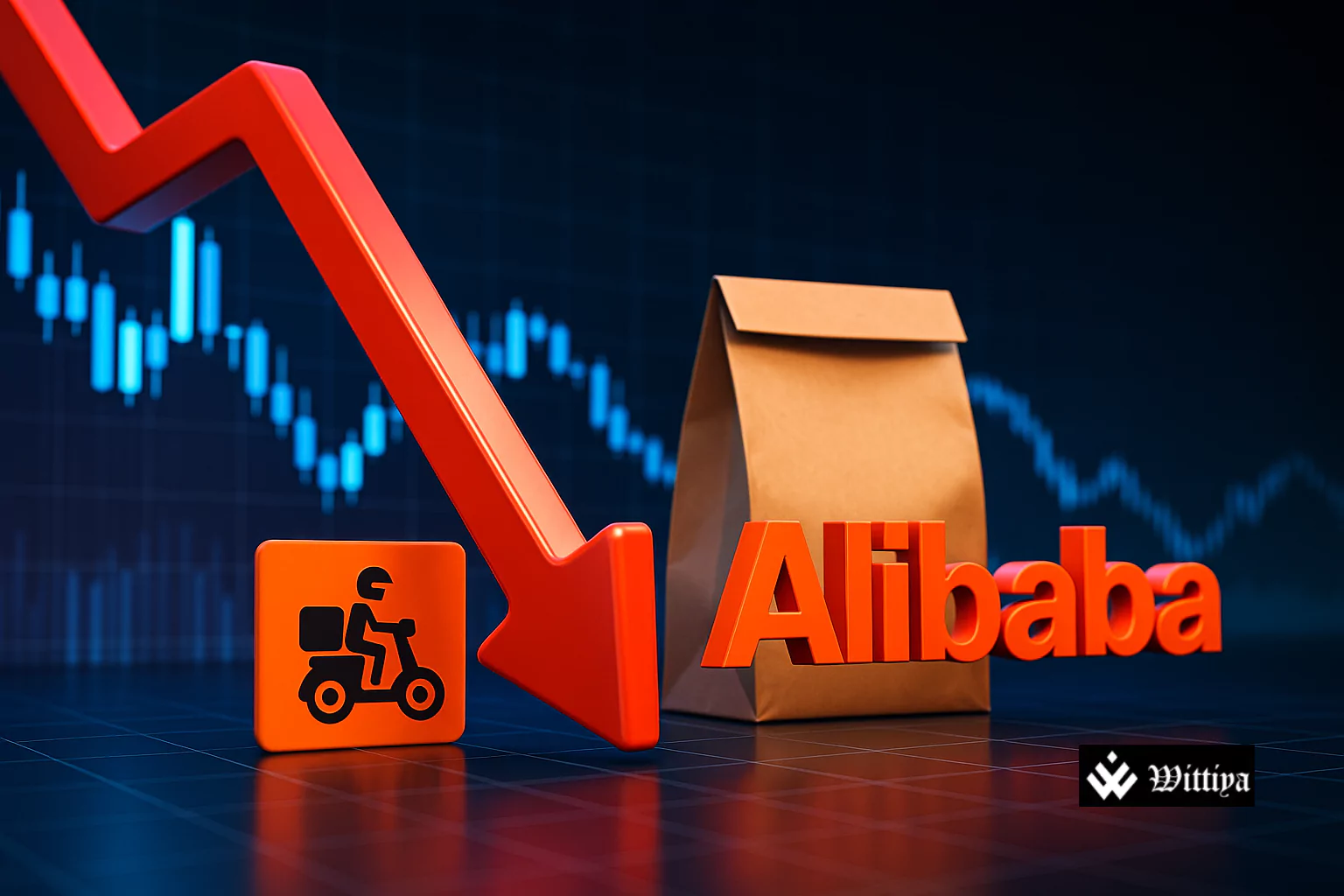
Alibaba Group Holding Ltd. is facing mounting losses as a fierce price war in China’s food-delivery sector has erased $100 billion from its market value. Analysts cite the escalating competition with JD.com and Meituan, as well as government concerns over industry impact and profitability, as key factors behind the plunge.
Alibaba Group Holding Ltd., the e-commerce and cloud services giant based in Hangzhou, Zhejiang, China, is grappling with severe investor backlash as its deepening involvement in the food-delivery turf war has wiped out nearly $100 billion in market value.
Once buoyed by a surge in AI optimism, Alibaba’s shares have now plunged by 28% since their March peak on the Hong Kong Stock Exchange. This decline nearly doubles the losses of its Chinese tech peers and stems from intensifying price battles with JD.com Inc. and Meituan in China’s hyper-competitive delivery landscape.
The company’s delivery division, now integrated into its core business, has significantly ramped up subsidies following JD.com’s formal entry into the market in February. According to Nomura Holdings Inc., the three competitors—Alibaba, Meituan, and JD.com—burned through nearly $4 billion in discounts in the June quarter alone.
Analysts warn that Alibaba may incur a loss of 41 billion yuan (approx. USD 5.6 billion) in its food-delivery segment for the 12 months ending June 2026. This figure is equivalent to a third of its net income in the fiscal year ending March 2025, according to estimates from Goldman Sachs.
Meanwhile, HSBC Holdings Plc analysts have cut their price target for Alibaba by 15%, citing the heavy investments into instant shopping and delivery services that are weighing down earnings potential.
The state has also begun to take note. As the discount race draws scrutiny, the Chinese government is raising alarms over its potential to destabilize the sector and impact food safety and delivery worker well-being.
Despite recent pressure, 44 analysts still maintain a “buy” rating on Alibaba’s Hong Kong-listed shares, though the company’s 12-month earnings per share estimate has dipped by about 6% since May.
While upside risk remains—especially if regulators intervene to stop excessive discounting—investors may remain on the sidelines until there is a clearer path to earnings stability and renewed focus on Alibaba’s AI ambitions through its DeepSeek-led initiatives.
We need to watch for price competition that evolves into a situation where certain companies decide to gain market share at the expense of profitability.”
Nicholas Chui, portfolio manager at Franklin Templeton
As Alibaba recalibrates its business in an increasingly cutthroat delivery sector, the future of its stock performance may depend not just on consumer demand—but on how soon this unsustainable price war comes to an end.