






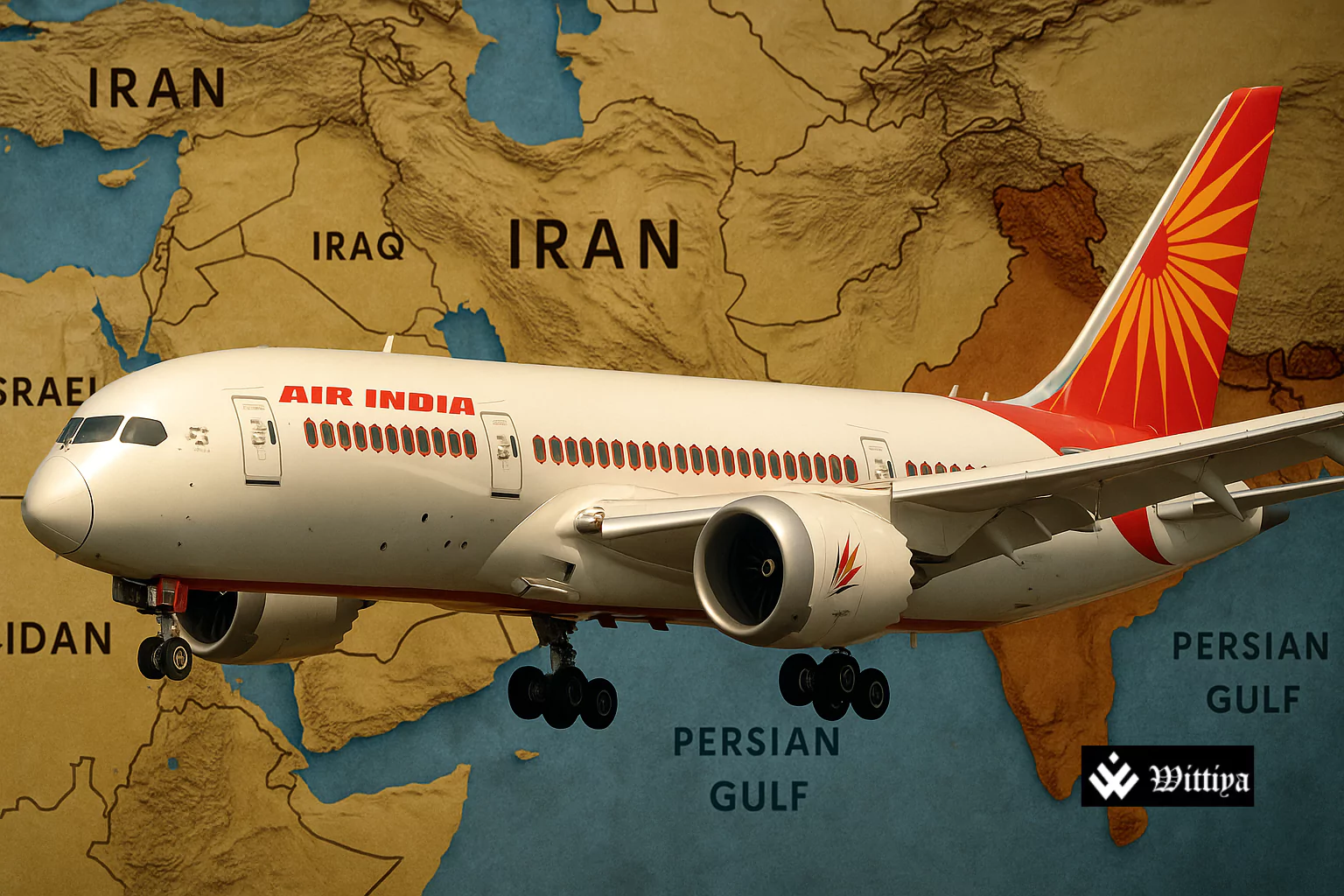
Amid growing geopolitical tensions in West Asia, India’s national carrier Air India, owned by Tata Group, is rerouting flights bound for North America and Europe to avoid Iran, Iraq, Israel, and parts of the Persian Gulf, potentially increasing flight durations.
In response to rising instability in West Asia, Air India, the national flag carrier of India and a subsidiary of the Tata Group, has begun rerouting several of its international flights. The move comes after the United States launched airstrikes on key Iranian nuclear facilities on June 22, heightening geopolitical risks in the region.
The airline announced that while it already avoids the airspaces of Iran, Iraq, and Israel, it will now gradually expand rerouting to parts of the Persian Gulf, including routes over countries like the United Arab Emirates, Qatar, Oman, and Kuwait. This strategic shift may lead to longer travel times on routes to Europe and North America.
According to a notification issued by the airline, “This adjustment may lead to extended flight durations for these services, as well as for select flights to/from Europe and North America.”
Air India emphasized that the decision is part of a preventive safety strategy made in consultation with independent security experts and aligned with international aviation advisories.
“We are vigilantly monitoring the situation and are ready to implement additional measures, if required, to uphold the safety and integrity of our operations,” said an Air India spokesperson.
The rerouting comes in the wake of a major military escalation. In the early hours of June 22, the United States Department of Defense conducted airstrikes on Iran’s Fordow, Natanz, and Isfahan nuclear facilities using B-2 bombers and Tomahawk missiles. President Donald Trump later declared the mission a success, asserting that the sites had been “completely obliterated.” Iranian officials, however, downplayed the damage, citing only “limited tunnel destruction.”
The attack has fueled widespread concerns about the safety of international air routes through conflict-prone areas. The Strait of Hormuz, a critical passage for both oil tankers and passenger flights, remains under heightened scrutiny amid threats of further regional destabilization.
Air India assured passengers that it will continue to issue updates and maintain transparent communication about route changes. “Passenger safety remains our highest priority,” the airline said.