


Japan’s inflation has stayed above the Bank of Japan’s 2% target for over three years. Despite this, the BOJ has kept interest rate hikes minimal, citing food-driven, temporary inflation and concerns over slowing economic growth. While rice prices have surged sharply, the central bank views the inflationary trend as transitory. Ongoing trade tensions with the United States and weakening exports are also restraining BOJ’s policy actions.
The Bank of Japan, Japan’s central monetary authority headquartered in Tokyo, has maintained its policy rate at 0.5% despite consumer inflation remaining above the 2% target since April 2022.
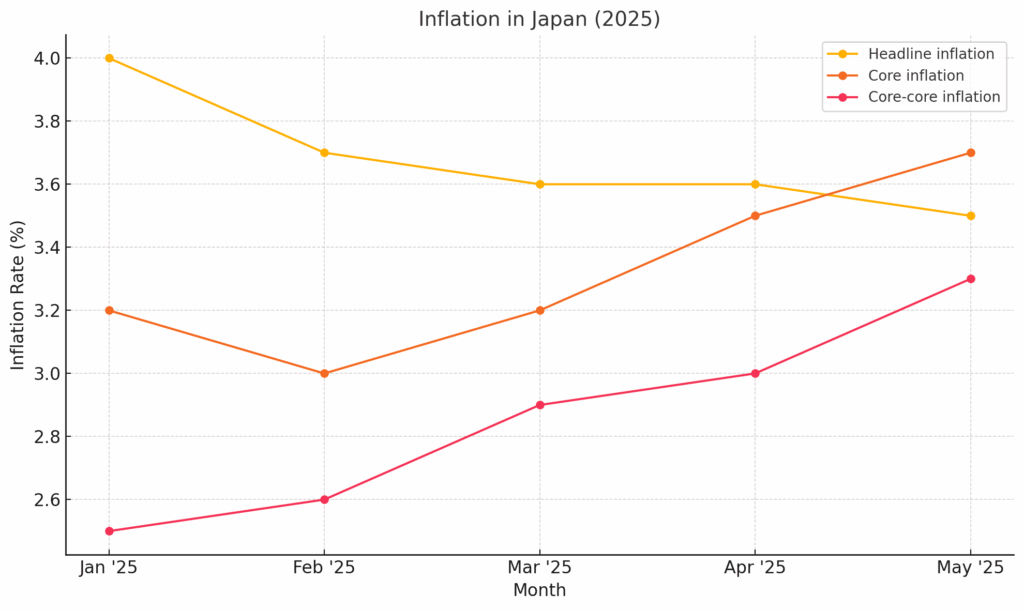
Over the past 14 months, the BOJ has only raised rates by 60 basis points, even as headline inflation peaked at 4% in January 2025 and “core-core” inflation has remained above target since late 2022. The central bank has cited economic deceleration as a key reason for holding rates steady during its most recent policy review in June.
Rice Prices Push Inflation Up
A major contributor to the current inflationary trend is the sharp increase in rice prices. Poor harvests in 2023 and 2024 caused a significant shortage, driving prices up by over 100% in May 2025—the highest rise in over 50 years. Rice alone has had a substantial influence on core inflation in the country.
Despite the magnitude of the surge, the BOJ considers this spike in food prices a supply-side issue and not reflective of sustained consumer demand pressures.
Exports Fall, Growth Contracts
Japan’s export-driven economy is currently facing external challenges. In May 2025, exports declined by 1.7% compared to the previous year—the steepest fall since September 2024. In the January–March quarter of 2025, the country’s GDP contracted by 0.2% quarter-over-quarter, marking the first negative growth in a year.
Higher interest rates could strengthen the yen, which would further challenge Japan’s exports by making them more expensive in global markets.
U.S. Trade Negotiations in Limbo
Japan is currently in negotiations with the United States to resolve tariff-related tensions. On June 20, no clear resolution had been reached, and there remains the potential for a 25% reciprocal tariff on Japanese exports if talks fail.
These uncertainties weigh heavily on Japan’s economic outlook, prompting the BOJ to adopt a wait-and-watch approach.
Cautious Policy Ahead
The BOJ’s decision-making reflects the complexity of its current economic environment. The central bank is navigating between maintaining price stability and supporting a fragile recovery while managing the impact of currency depreciation and trade tensions.
With inflation driven primarily by volatile food prices, slowing external demand, and geopolitical uncertainties, Japan’s monetary policy is likely to stay accommodative in the near term.
Also Read: Japan’s Food Inflation Eases as Rice Prices Dip Below 4,000 Yen