


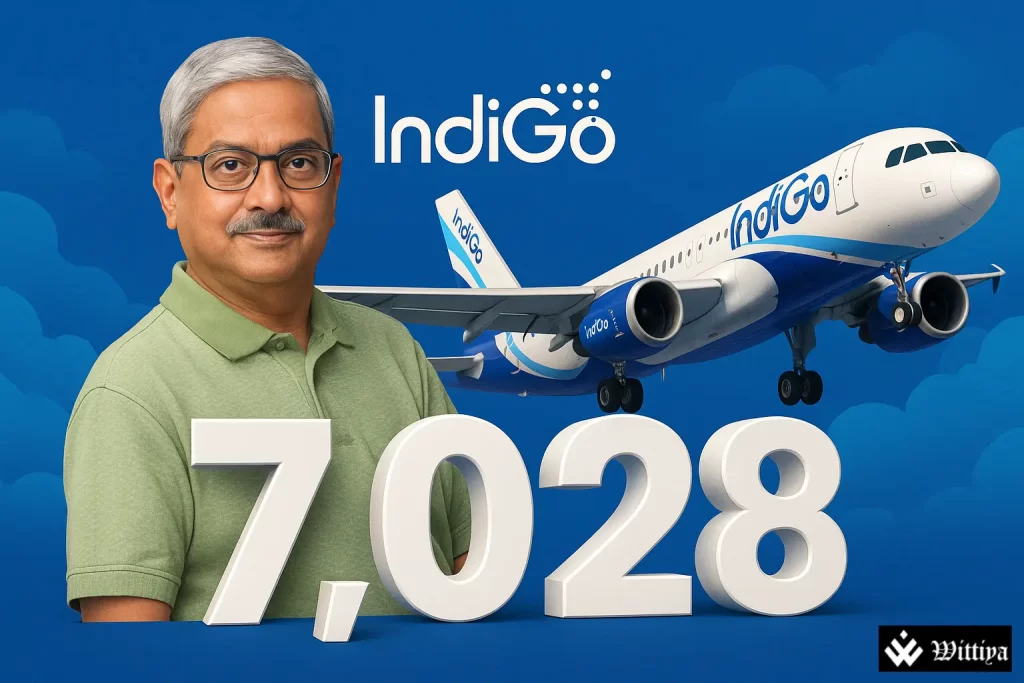
InterGlobe Aviation Ltd, operator of IndiGo Airlines, is set for a major block deal as co-founder Rakesh Gangwal and his family plan to sell shares worth ₹7,028 crore. The move marks another phase in Gangwal’s gradual exit from the company while IndiGo maintains its dominance in India’s aviation sector.
IndiGo Airlines: An Indian Aviation Liner Leader in the Market
India’s no.1 airline by market share is the result of the wonders of the low-cost carrier phenomenon called the InterGlobe Aviation Ltd., a Gurugram, Haryana, headquartered company. The company, which has been around since 2006, has established its business on the low-cost carrier model, thereby providing cheap air travel both within the country and abroad. More than 350 planes make up the fleet of IndiGo, which has kept its top spot in the market by concentrating on the effectiveness, the size of the operations, and the customer-friendliness of the prices.
Rakesh Gangwal’s Stake Sale in IndiGo Block Deal
IndiGo co-founder Rakesh Gangwal, along with his Chinkerpoo Family Trust, has initiated another round of stake dilution in InterGlobe Aviation Ltd. According to the term sheet, Gangwal will offload 12.1 million shares, representing about 3.1% of the company’s equity, through a large block deal.
The offer price is set at ₹5,808 per share, about a 4% discount to the last NSE closing price of ₹6,050. This sale amounts to nearly ₹7,028 crore ($801 million).
Following this transaction, Gangwal’s shareholding will drop to 4.71%, while co-promoter Rahul Bhatia, who currently serves as Managing Director, will continue to hold 35.73%.
The Gradual Exit of Rakesh Gangwal
Once, Gangwal was the owner of 36.6% of the company. Since he resigned from the board in 2022, he has been gradually reducing his shares. He had suggested that he would dispose of his shares within the next five years.
Also Read: IndiGo Just Missed Its Record High — Should You Care?
His previous stake sales include:
- April 2024: 5.83% sold
- August 2024: 5.83% sold
- May 2025: 5.7% sold
This latest deal continues his systematic exit strategy, reducing his once dominant role in the airline’s ownership structure.
IndiGo’s Industry Dominance
Despite Gangwal’s attempts to exit, IndiGo Airlines is still the most powerful air carrier in India and it holds nearly 64 percent of the market share.
In the quarter that ended in June 2025, the airline saw its profit fall by 20% year-on-year to ₹2,176 crore. The profit was affected by external factors such as the Pahalgam terrorist attack, border tensions between India and Pakistan, and the June crash of Air India.
On the other hand, revenue grew by 6% year-on-year to ₹21,543 crore with higher capacity deployment. IndiGo’s available seat kilometers (ASK) was up 16% to 42.3 billion, suggesting a healthy operational growth.
According to CEO Pieter Elbers, the airline managed to deliver a net profit of 11% despite the disruptions in the whole industry, which is a demonstration of its toughness and large scale.
Also Read: Thin Profits Expected as IndiGo Battles Geopolitical Air Blocks
Outlook for IndiGo and Market Implications
The block-deal at IndiGo is likely to bring in a lot of institutional investors as it is an airline that holds the leadership in the market, has a good balance sheet, and has been consistently profitable. Analysts indicate that the reduction of Gangwal’s stake seems more like his personal exit plan rather than a change in the company’s fundamentals.
The demand for aviation in India is expected to increase due to the rise in the country’s GDP, urbanization, and the growth of middle-class travel, so the low-cost model of IndiGo will still be the best choice to continue the expansion in the long run.
FAQ’s
Q1: What is the size of Rakesh Gangwal’s latest IndiGo Block Deal?
He plans to sell ₹7,028 crore worth of shares, representing 3.1% equity.
Q2: How much stake will Gangwal hold in IndiGo after the block deal?
His stake will reduce to 4.71%.
Q3: Does this IndiGo Block Deal impact the airline’s operations?
No, the sale is part of Gangwal’s personal exit strategy and does not affect IndiGo’s business performance.
READ MORE ON