


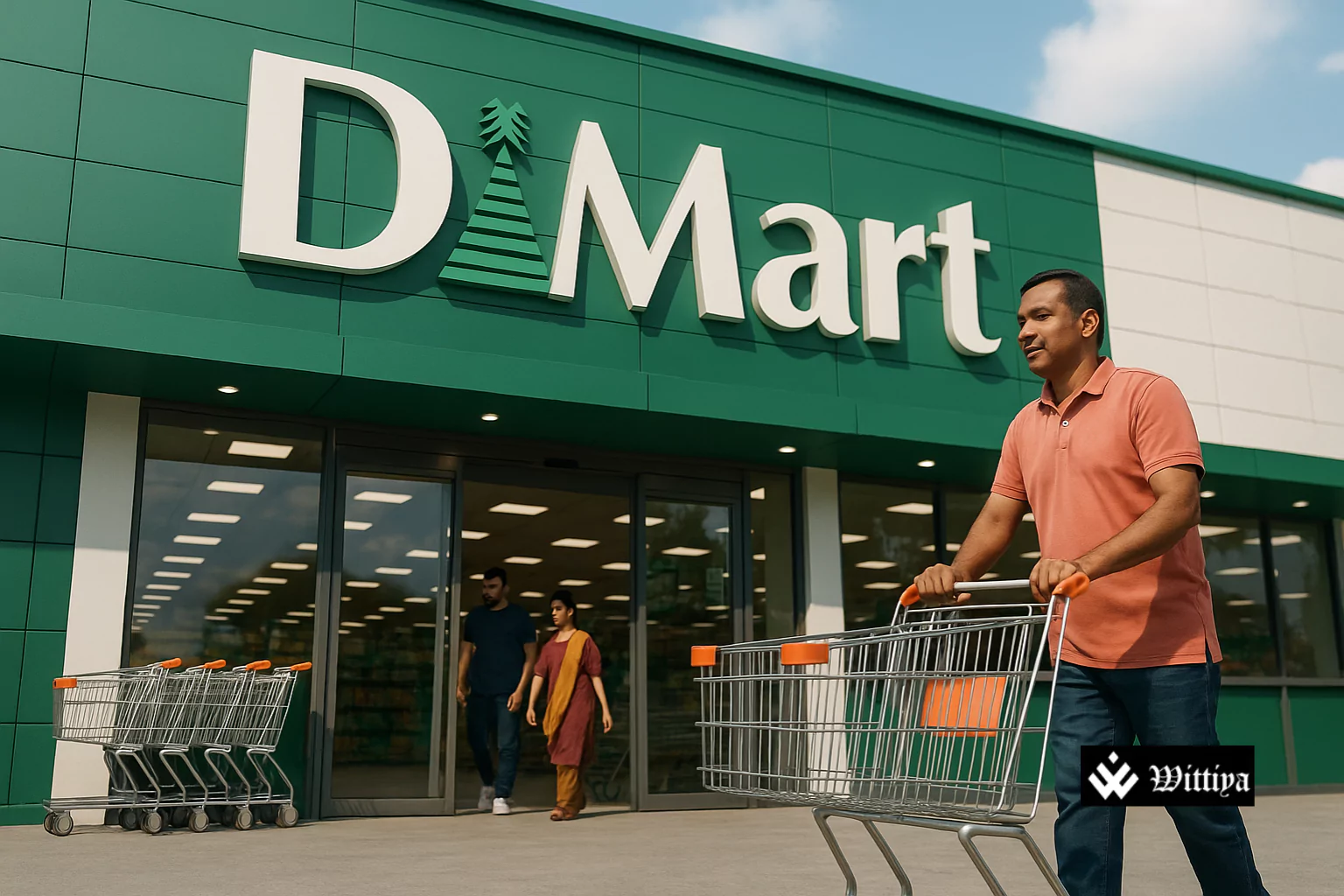
India’s Avenue Supermarts (DMart) continues to defy retail headwinds with strong expansion, efficient capital deployment, and private label growth, despite margin pressures and high valuations.
India’s retail landscape continues to be reshaped by DMart, operated by Avenue Supermarts Ltd., which has consistently defied skepticism with steady growth, disciplined execution, and long-term resilience. Despite persistent concerns over high valuations and margin fluctuations, the company remains India’s most reliable retail compounder.
Financial Performance & Growth
DMart reported revenues of ₹59,358 crore in FY25, a 17% CAGR from FY23, with net profit of ₹2,707 crore. While EBITDA margins moderated to 7.9%, the company continues to deliver industry-leading ROCE of 17.8% and ROE of 13.4%. In a market where consumer companies struggle with mid-single-digit growth, DMart’s ability to sustain mid-teens topline expansion stands out.
Expansion into North India
With 415 stores at the close of FY25—adding 50 in a single year—DMart has entered an accelerated phase of growth. Management reiterated its commitment to expand the store base annually by 10–20%. The next frontier is North India, including Uttar Pradesh, Punjab, and NCR, regions long underpenetrated in the company’s footprint.
A non-metro store with ₹300 crore in capex pays back within five years (2.5 years excluding land costs), showcasing efficient capital deployment rare in Indian retail.
Also Read: DMart Accelerates Store Expansion Despite Quick Commerce Threat
Private Labels as a Strategic Moat
DMart’s private label strategy is built on the “20-20-20” principle: capturing 20% market share, pricing 20% below brands, and securing 20% higher margins. Beyond profitability, this creates customer loyalty by offering affordable, reliable alternatives. Shelf space in categories like home and personal care is increasingly dominated by DMart’s exclusive brands, strengthening its moat against rivals.
Competition and Quick Commerce
Quick commerce platforms remain structurally disadvantaged versus DMart. Operating with higher fulfillment costs, their average basket prices remain 15–20% above DMart. With scale efficiencies and lean operations, DMart’s brick-and-mortar model is strategically better positioned to sustain long-term price leadership.
Leadership and Continuity
The transition from outgoing CEO Neville Noronha to Anshul Asawa signals continuity rather than disruption. Asawa has emphasized maintaining the fundamentals while scaling operations and talent. The cultural and operational discipline that has defined DMart is expected to remain intact, ensuring seamless execution.
Valuation Challenges
Trading at over 100x earnings, DMart’s valuations remain elevated. For investors, this means returns from current levels will hinge on sustained store expansion, deeper penetration of private labels, and consistent cost leadership. While volatility in margins is likely, the structural opportunity from India’s low modern retail penetration provides a compelling long-term growth runway.
The Long Game
DMart’s narrative continues to oscillate between skeptics predicting stagnation and believers highlighting its disciplined growth. Yet over the past decade, the company has compounded consistently, proving that “boring” execution often delivers the most durable returns. As India’s retail market matures, DMart appears well-placed to remain the sector’s benchmark for sustainable compounding.
READ MORE ON