


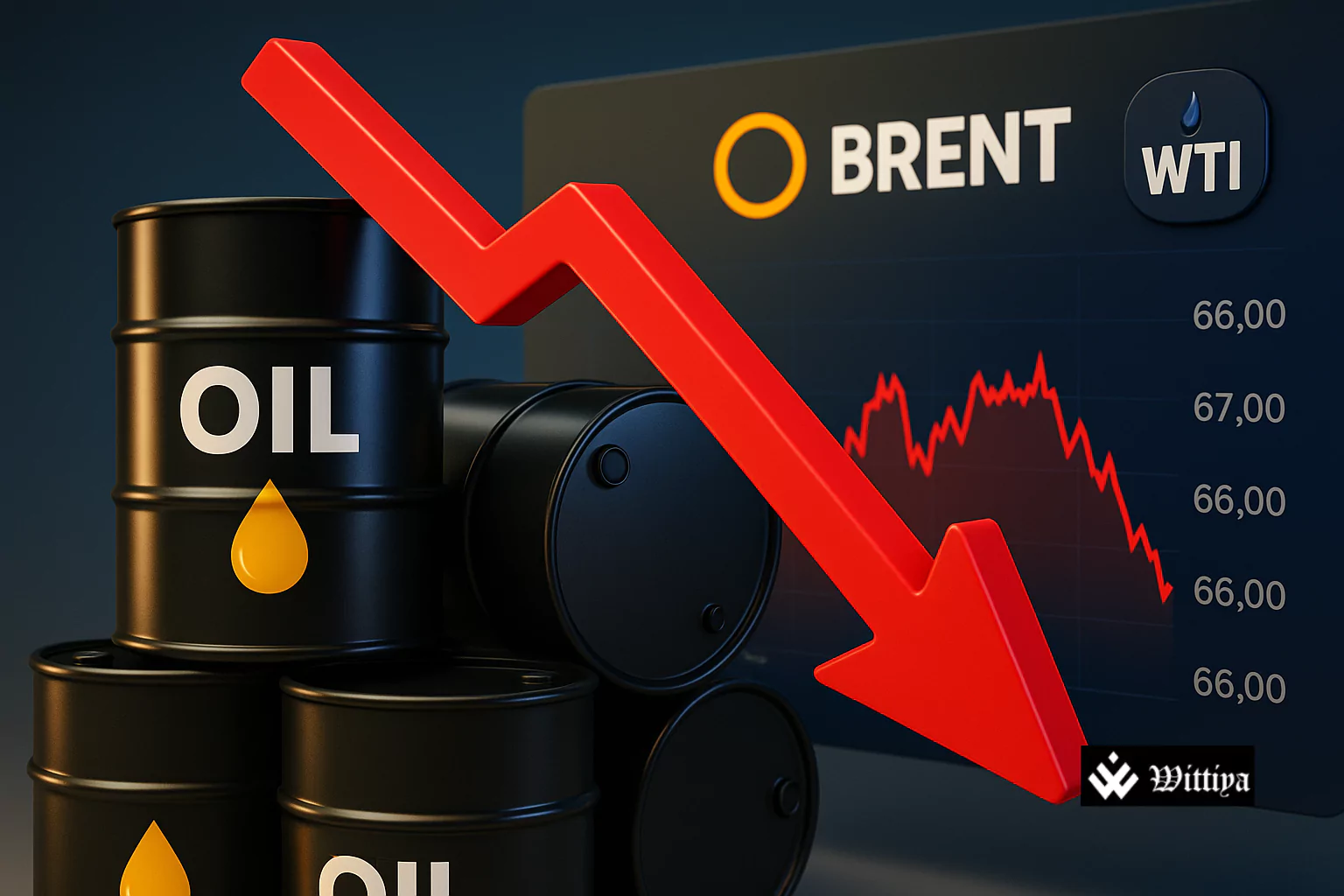
Oil prices fell as global markets turned their focus to the upcoming meeting between US President Donald Trump and Ukrainian President Volodymyr Zelenskiy, following Trump’s recent talks with Russian President Vladimir Putin. The geopolitical uncertainty has kept crude futures under pressure, with Brent trading below USD 66 a barrel.
Oil prices slipped on Monday as traders shifted focus to Washington, where US President Donald Trump is set to meet Ukrainian President Volodymyr Zelenskiy after holding a summit with Russian President Vladimir Putin. Market participants are closely watching whether the talks will lead to progress on a potential peace deal, even as the Ukrainian side faces pressure to cede territory.
Brent crude dropped below USD 66 a barrel, while West Texas Intermediate traded under USD 63, following a 1.5% decline in the previous session. The market reaction highlights how geopolitical uncertainty has weighed on crude futures, keeping them confined to a narrow trading range in recent weeks.
Trump has signaled that his primary demand will be a ceasefire, warning that failure could trigger stricter measures against Moscow and buyers of Russian crude. At the same time, he has shown flexibility toward Russian requests and delayed certain trade penalties, a mixed approach that has left energy traders cautious. India has already faced higher tariffs for purchasing Russian crude, while China has been spared further levies as its energy imports from Moscow continue.
Also Read: Oil Prices Dip Ahead of Trump-Putin Summit in Alaska
So far this year, crude prices have fallen by more than 10%, pressured not only by political tensions but also by OPEC’s rapid return of previously idled barrels. Longer-term forecasts add to the bearish tone, with projections of a record supply surplus emerging by 2026 as production expands faster than global demand growth.
Analysts warn that volatility is likely to intensify if the Trump-Zelenskiy meeting fails to produce clarity on the direction of negotiations. With geopolitics, trade maneuvers, and shifting supply trends intersecting, crude oil remains caught in a fragile balance where any policy move could tilt the market.
READ MORE ON