


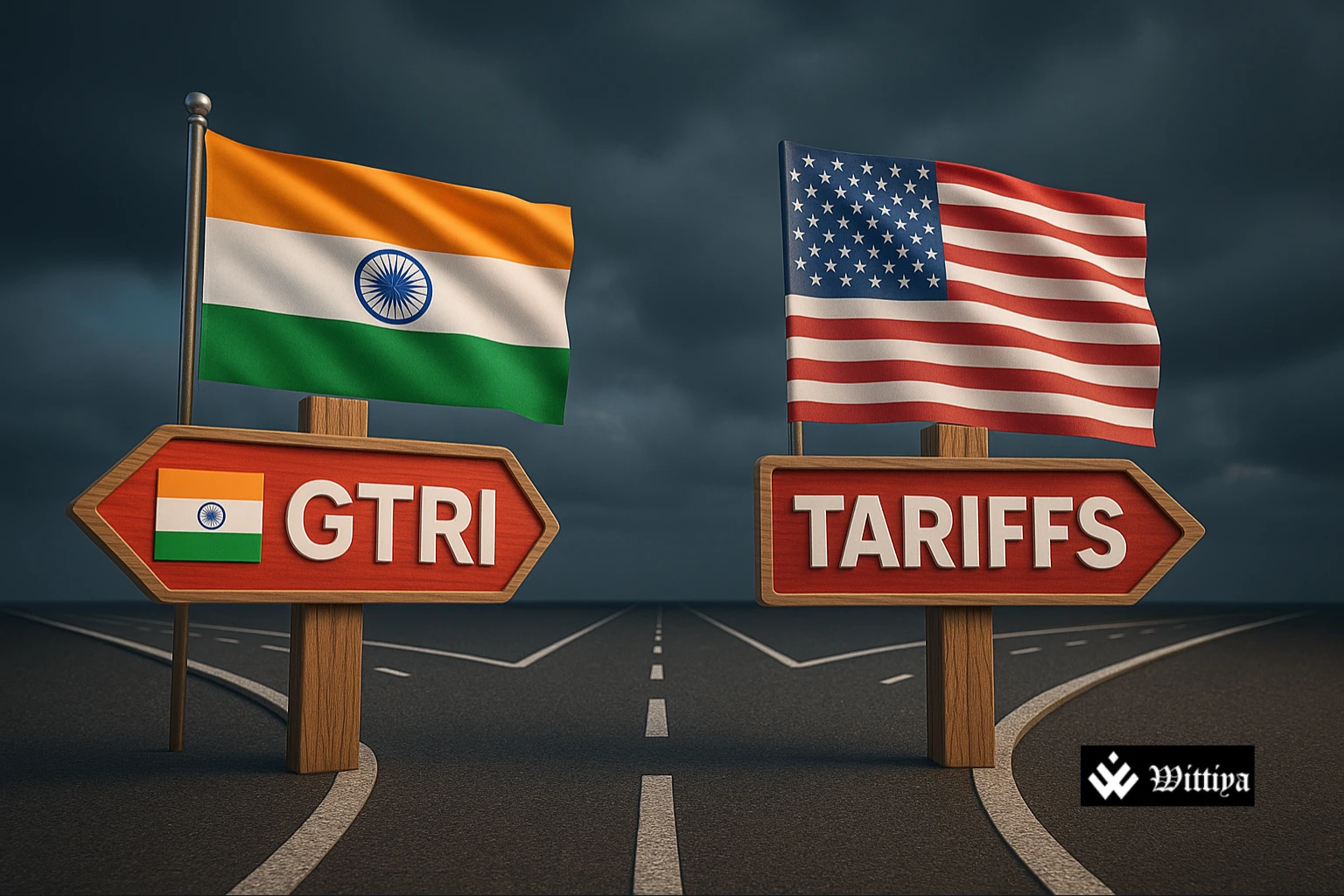
India is grappling with a strategic trade challenge following the US’s imposition of steep, country-specific tariffs. The nation must weigh negotiation, retaliation, market diversification, or trade concessions, each carrying complex economic implications, according to GTRI.
India is facing a critical juncture in its trade strategy after the United States imposed steep tariffs on Indian exports. The Global Trade Research Initiative (GTRI) highlighted that these measures, including a 50% country-specific tariff on many Indian goods atop existing Most Favoured Nation (MFN) duties, present both economic and diplomatic challenges for the country.
Experts indicate that India has several options. It can engage in direct negotiations with the US to seek tariff relief or retaliate with reciprocal duties on American imports. Alternatively, India may diversify its export markets, focusing on Asia, Europe, and Africa, or offer targeted trade concessions, such as ending Russian oil imports, to ease tensions. Each option carries a distinct risk-reward profile affecting trade balances, energy security, and geopolitical positioning.
Also Read: Manufacturers Brace for Crisis: 50% U.S. Tariff Hits Hard
GTRI notes that India’s Independence Day this year is overshadowed by the ongoing trade confrontation, which could have lasting consequences for sectors heavily dependent on US demand, including textiles, agriculture, and manufactured goods. Analysts stress that careful calibration of policy responses will be crucial to maintain economic stability and avoid long-term disruptions in export revenues.
From a financial perspective, the tariffs are likely to affect India’s export-led growth, foreign exchange inflows, and industry earnings. Companies with significant exposure to the US market may need to hedge risks, adjust supply chains, or explore alternative markets to sustain profitability. Additionally, the move signals a broader recalibration of global trade priorities, with India seeking to protect domestic industries while remaining competitive internationally.
GTRI emphasizes that proactive engagement, policy agility, and strategic diversification will be key to mitigating the impact of these tariffs while leveraging new opportunities in global trade. India’s policymakers must carefully balance immediate economic pressures with long-term trade and diplomatic objectives.
READ MORE ON